War is a difficult subject, and the atrocities of World War II can be especially hard to broach with younger readers. So, we’ve put together a selection of books, from real-life accounts and essential facts to historical fiction, that will give children helpful insight into what life was like during this pivotal time.
Fritz & Kurt
It’s 1938 and the Nazis have come to Vienna in Austria where brothers Fritz and Kurt live with their family. The Nazis' arrival means that Fritz, Kurt, and their family are now in terrible danger as they’re Jewish. Fritz and his father are sent to a concentration camp whereas Kurt escapes to the USA – alone. This is a true story that follows two brothers as they fight to survive the hardships of the Second World War as well as wonder whether they’ll ever be able to return home and reunite as a family.
Recommended reading age: 8-12 years old
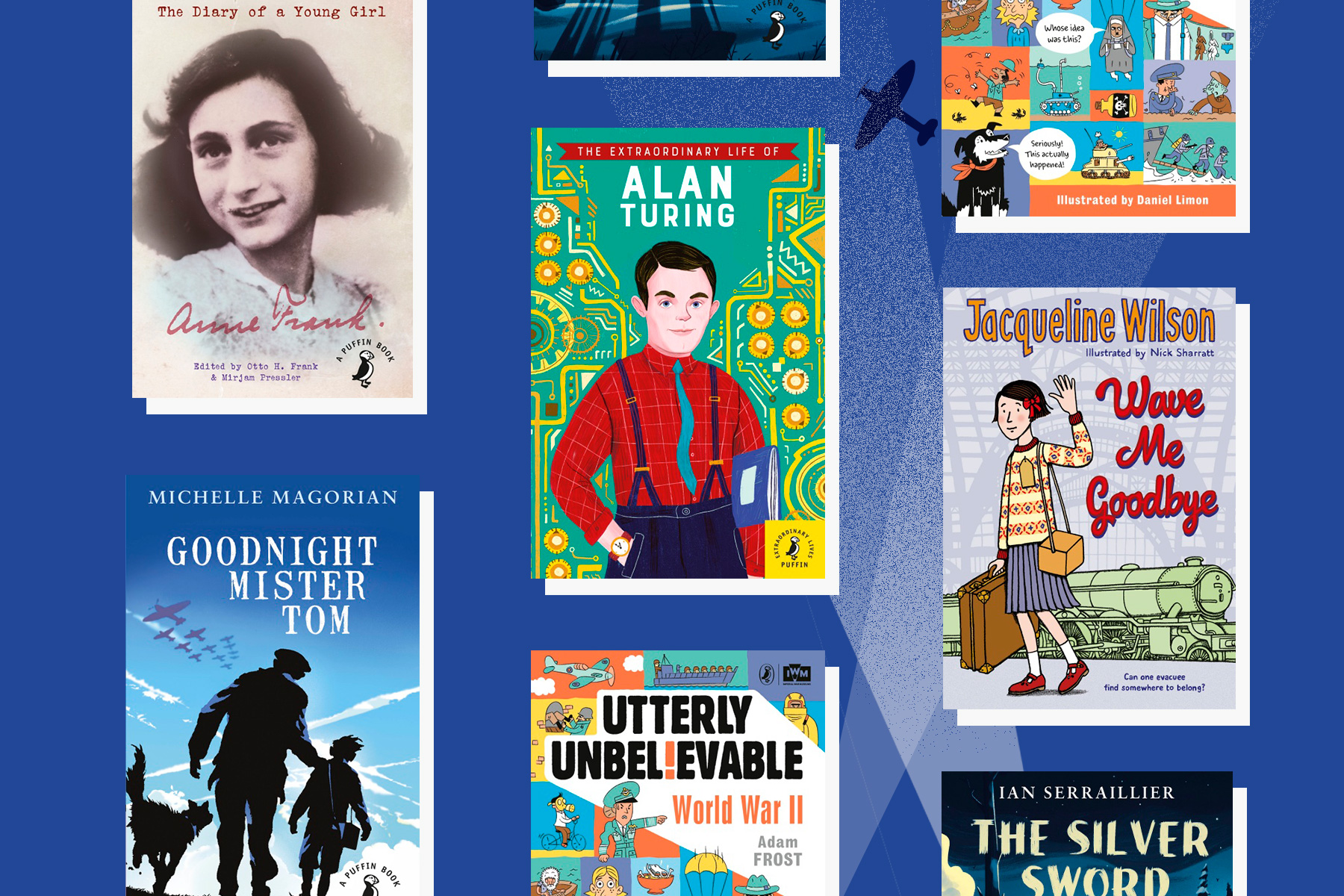
The Diary of a Young Girl is one of the most famous accounts of what life was like living under the Nazi regime in the Second World War. Written by 13-year-old Jewish girl Anne Frank , the diary – beginning simply as only Frank’s teenage musings – ended up documenting the life of the Franks as they hid in a secret annexe in Amsterdam for two years. The family ended up being betrayed, so Anne’s diary ends abruptly, but the effect it had on the world has been everlasting. This poignant and heartbreaking book is one everyone should read.
Recommended reading age: 12-15 years old
There were a great many extraordinary people in World War II, and one of those was Alan Turing. A master mathematician, Turing helped defeat the Nazis with his codebreaking skills. The Enigma was an enciphering machine used by the German armed forces to send messages securely and was believed to be indecipherable. However, they hadn't anticipated the great mind of Turing. Learn all about his life and discover how he cracked the code in The Extraordinary Life of Alan Turing .
Recommended reading age: 7-12 years old
It’s 1939 and the Second World War has just been declared. Willie Beech, a sad, neglected young boy from South-East London is evacuated to the countryside where he goes to live with the reclusive and bad-tempered Tom Oakley aka Mister Tom. The pair find kindred spirits within each other and Willie thrives under the care of Tom. However, Willie’s mum then requests that he come back to London. Tom writes to Willie but when he doesn’t hear from the boy, Tom heads to London to find his young friend. This touching classic is a must-read.
Recommended reading age: 9-12 years old
Based on a true story, The Silver Sword follows the three Balicki children, Ruth, Edek, and Bronia, during the Second World War. Following the Nazi occupation of Poland, their father and mother are taken away, leaving the children to fend for themselves. As they wander their ruined city of Warsaw, they meet a young orphan called Jan. In his possession is a paperknife in the shape of a silver sword that was given to him by a prisoner of war – Ruth, Edek, and Bronia’s father. Spurred on by the hope that he is looking for them, the children and Jan begin a dangerous journey across Europe to find their parents.
Recommended reading age: 8-11 years old
Discover some of the most unbelievable things that happened during the Second World War. Did you know that, due to rationing, squirrel soup became a wartime specialty? Or that the High Street in Southampton once ran with melted margarine and butter after a bomb hit a cold-storge depot? Or that you could go to prison for wasting food? History lovers will race through this comprehensive fact book.
Recommended reading age: 8-11 years old
Another moving first-hand account of life in World War II, Eva Schloss was a young Jewish girl who lived in Vienna before the Nazis invaded. Schloss and her family fled to Belgium, and then to Amsterdam where they spent the next two years separated and in hiding. Sadly, the family was betrayed and sent to Auschwitz. Eva and her mother survived, however, her father and brother Heinz perished just weeks before the liberation. Once freed, Eva and her mother returned to the house Heinz and her father had been living in. There they recovered 30 of Heinz’s beautiful paintings he had hidden beneath the floorboards. A reminder of what Eva's father had once promised: all the good things you accomplish will make a difference to someone, and your achievements will be carried on.
Recommended reading age: 11-14 years old
Shirley Louise Smith is only 10 years old when she’s sent away from her home in London with her school friends. Told by her mother she’s going on holiday, Shirley ends up staying at the Red House with the strange and reclusive Mrs Waverley. Housed alongside two boys called Kevin and Archie, the trio bond via their shared experience as they try to find a way to adjust to their new surroundings and life in wartime Britain.
Recommended reading age: 9-11 years old
World War II didn’t just involve humans, there were also a great many animal heroes who took part. There was Wotjek, a bear who became a friend of allied Polish soldiers and eventually helped them fight in the Battle of Monte Cassino. Jet, a German Shepherd, was a search-and-rescue dog who helped track down and save civilians following the Baby Blitz. Then there was Mary, a pigeon who carried vital wartime messages from England to France and evaded the Germans' trained hunting hawks. Mike Unwin reveals their stories and more in this anthology.
Recommended reading age: 7-9 years old
Once by Morris Gleitzman (2005)
In this powerful book set during the Holocaust, Felix, a young Jewish boy has been living in a convent orphanage in Nazi-occupied Poland for the last three years. Unlike the other orphans, Felix is sure his parents will come back for him. When he sees a group of Nazis burning the nun’s books, Felix becomes terrified that his bookseller parents will be in danger. So, he escapes and sets off to find them. But what Felix doesn’t realise is how dangerous it is to be Jewish in the outside world. Despite the difficult subject matter, Morris Gleitzman manages to write a touching story with both compassion and wit.
Recommended reading age: 9-13 years old
Grey is a young Alsatian pup when he is brought to the War Dog Training School at the height of World War II. Nathan, a paratrooper and his trainer, teaches Grey to be a paradog. Shortly before D-Day, the pair are due to be dropped over occupied France. But their parachute drop goes wrong and they become separated. Grey, along with his friend Wolf, must cross France and go behind enemy lines if they are to ever find Nathan again. This dog’s eye view of the world during the war makes for a great read. Animal wartime books The Lost War Dog The Great Escape The Victory Dogs
Recommended reading age: 8-11 years old
Hitler’s Canary is based on Sandi Toksvig’s own family and the stories her father told her. It’s April 1940 and German troops have just invaded Denmark. Bamse, a 12-year-old boy, lives in Copenhagen and belongs to a famous theatrical family. He is ordered by his father to stay out of trouble but Bamse, along with his friend Anton, can’t help but play some practical jokes on the invading soldiers. However, the fun and games must come to a halt when Bamse and his family join the effort to help smuggle Denmark’s Jewish population safely into Sweden. It's an inspiring story about the heroism of ordinary people.
Recommended reading age: 9-11 years old
Wonder Wonder universe, White Bird begins with Julian – Auggie Pullman’s former bully – calling his Grandmère for a school project. She tells him the story of how as a young Jewish girl, she had to go into hiding in Nazi-occupied France, and it was thanks to the kindness of others that she was able to survive. “It always takes courage to be kind, but in those days, such kindness could cost you everything.”
Recommended reading age: 9-17 years old