Malcolm Gaskill (Author)
In the frontier town of Springfield in 1651, peculiar things begin to happen. Precious food spoils, livestock ails and property vanishes. Children sicken and die. As tensions rise, rumours spread of witches and heretics, and the community becomes tangled in a web of spite, distrust and denunciation. The finger of suspicion falls on a young couple struggling to make a home and feed their children: Hugh Parsons the irascible brickmaker and his troubled wife, Mary. It will be their downfall.
The Ruin of All Witches tells the dark, real-life folktale of witch-hunting in a remote Massachusetts plantation. These were the turbulent beginnings of colonial America, when English settlers' dreams of founding a 'city on a hill', gave way to paranoia and terror, enmity and rage. Drawing on uniquely rich source material, Malcolm Gaskill brings to life a New World existence steeped in the divine and the diabolic, in curses and enchantments, and precariously balanced between life and death.
Through the gripping micro-history of a family tragedy, we glimpse an entire society caught in agonized transition between supernatural obsessions and the age of enlightenment. We see, in short, the birth of the modern world.
Rana Mitter (Author)
,
Rana Mitter (Read by)
Twenty audio portraits telling the story of China through key personalities - plus a bonus edition of In Our Time
Award-winning author and historian Professor Rana Mitter introduces us to some of the remarkable individuals who have shaped the arc of Chinese history. Selecting men and women from ancient times to the modern era - some rich and powerful, others poor and unknown - he explores their sensational life stories, from Mongol emperors to 19th-century factory girls.
Here is China's only female emperor, Wu Zetian, whose path to the top was littered with elite corpses; Mao Zedong, the man who revolutionised China, but at the cost of millions of lives; and Deng Xiaoping, who enabled China's economic miracle, but crushed protests with ferocity in 1989. Alongside them are numerous other extraordinary characters, including celebrated philosopher Confucius, Muslim sailor Zheng He, Jesuit mathematician Matteo Ricci, global film star Bruce Lee - and a pioneering TV documentary series, River Elegy, that started a national debate about regeneration and democracy.
What can Ding Ling's lustful literary creation, Sophie, teach us about 1920s China? What role would kidnapped monk Kumarajiva play in the future of Chinese chanting? And how did Chiang Kai-shek and Soong Meiling become Asia's first power couple? Rana Mitter reveals the answers in this engrossing series, which ranges across time and geography to zoom in on the people and ideas that have made China what it is today. Insightful, stimulating and superbly researched, it shows the astonishing diversity and complexity of Chinese society, painting a multi-dimensional picture of the world's most populous nation.
Also included is an episode of In Our Time, in which Melvyn Bragg and guests discuss China's Warring States period of 400 BC-200 AD, examining how this turbulent epoch sparked a Golden Age of intellectual and cultural productivity and laid the foundations for the first Chinese Empire.
Production credits
Presented by Rana Mitter
Edited by Hugh Levinson
Produced by Ben Crighton
Researcher: Elizabeth Smith Rosser
Contents:
1. Wu Zetian: The Female Emperor
2. Chiang Kai-Shek and Soong Meiling: Asian Power Couple
3. Kumarajiva: Translator Monk
4. Matteo Ricci: Jesuit and Geometrist
5. Ding Ling: Sophie, Sensation and Sex
6. Sima Qian: Grand Historian
7. Kublai Khan: Cosmopolitan Conqueror
8. Confucius: Becoming the Sage
9. Li Qingzhao: Patriotic Poet
10. River Elegy: River and Ocean
11. Zheng He: The Admiral Goes to Africa
12. Robert Hart: Chinese Customs
13. Lu Xun: Compassionate Cynic
14. Wang Jingwei: Revolutionary Renegade
15. Hong Xiuquan v Zeng Guofan: The Duellists
16. Cixi: Ambivalent Empress
17. Factory Girls: Modern Girls, Modern Dreams
18. Mao Zedong: The Man Who Made Modern China
19. Bruce Lee: Screen Warrior
20. Deng Xiaoping: Black Cat, Yellow Cat
21. In Our Time: China's Warring States Period
© 2022 BBC Studios Distribution Ltd
(p) 2022 BBC Studios Distribution Ltd
Robert Darnton (Author)
‘Events do not come naked into the world. They come clothed – in attitudes, assumptions, values, memories of the past, anticipations of the future, hopes and fears and many other emotions. To understand events, it is necessary to describe the perceptions that accompany them, for the two are inseparable.’
When a Parisian crowd stormed the Bastille in July 1789, it triggered an event of global consequence: the overthrow of the monarchy and the birth of a new society. Most historians account for the French Revolution by viewing it as the outcome of underlying conditions such as a faltering economy, class conflict or Enlightenment ideology. Without denying any of these, Robert Darnton offers a different explanation: what Parisians themselves, those at the centre of the Revolution, thought was happening at the time and how it guided their actions.
To understand the rise of what he calls ‘the revolutionary temper’, Darnton draws on a lifetime’s study of pamphlets, books, underground newsletters, songs and public performances, exploring Paris as an information society not unlike our own. Its news circuits were centred in cafes and market-places, on park benches, and under the Palais-Royal’s Tree of Cracow, a favourite gathering-place for gossips. He shows how the events of forty years – from disastrous treaties, official corruption and royal scandal to thrilling hot-air balloon ascents and a new conception of the nation – all entered the collective consciousness of ordinary Parisians. As news and opinion travelled across this profoundly unequal society, public trust in royal authority eroded, its legitimacy was undermined, and the social order unravelled.
Much of Robert Darnton’s work has explained the hidden dynamics of history, never more so than in this exceptional book. It is a riveting narrative, but it adds a new dimension, the perceptions of contemporary Parisians, which allows us to see these momentous decades afresh.
Ta-Nehisi Coates (Author)
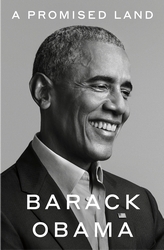
From 2008-2016, the leader of the free world was a black man. Obama's presidency was a watershed moment in American history. In those eight years, the political conversation around race, gender, class and wealth shifted drastically - inspiring hope but also attracting criticism and breeding discontent. That discontent ultimately led to a shocking backlash in the election of Donald Trump.
In this essential book, Ta-Nehisi Coates takes stock of Obama's eight years in power, brilliantly navigating the intersections of political, ideological and cultural perspectives. And he reflects on his own journey through these years, weaving the public with the private to create a startlingly intimate and piercingly relevant memoir.
John Romer (Author)
'A stunning, clear-sighted history of ancient Egypt' Sunday Times
The extraordinary history of Ancient Egyptian civilization - from its earliest origins to the creation of its greatest monument - from specialist John Romer
This exceptional book draws on a lifetime of research and thought to recreate the previously untold story of how a civilization which began with handfuls of semi-itinerant fishermen settled, spread and created a rich, vivid, strange civilization that had its first culmination in the pharaoh Khufu building the Great Pyramid.
The book immerses the reader in the fascinating world of archaeological evidence, the process by which this long vanished world has gradually re-emerged and the rapidly changing interpretations which these breathtaking but entirely enigmatic remains have been subjected to. Whether he is writing about the smallest necklace bead or the most elaborate royal tomb, John Romer conveys to the reader a remarkable sense of how to understand a people so like ourselves and yet in so many ways eerily different.
Christopher Harding (Author)
Japan Story is a fascinating, surprising account of Japan's culture, from the 'opening up' of the country in the mid 19th century to the present, through the eyes of people who always had their doubts about modernity - who greeted it not with the confidence and grasping ambition of Japan's familiar modernizers and nationalists, but with resistance, conflict, distress.
We encounter writers of dramas, ghost stories and crime novels where modernity itself is the tragedy, the ghoul and the bad guy; surrealist and avant-garde artists sketching their escape; rebel kamikaze pilots and the put-upon urban poor; hypnotists and gangsters; men in desperate search of the eternal feminine and feminists in search of something more than state-sanctioned subservience; Buddhists without morals; Marxist terror groups; couches full to bursting with the psychological fall-out of breakneck modernization. These people all sprang from the soil of modern Japan, but their personalities and projects failed to fit. They were 'dark blossoms': both East-West hybrids and home-grown varieties that wreathed, probed and sometimes penetrated the new masonry and mortar of mainstream Japan.
Steven Levitsky (Author)
,
Daniel Ziblatt (Author)
Democracies can die with a coup d'état - or they can die slowly. This happens most deceptively when in piecemeal fashion, with the election of an authoritarian leader, the abuse of governmental power and the complete repression of opposition. All three steps are being taken around the world and we must all understand how we can stop them. From the rule of General Augusto Pinochet in Chile to the quiet undermining of Turkey's constitutional system by President Recip Erdogan, Harvard professors Steven Levitsky and Daniel Ziblatt draw insightful lessons from history to shine a light on regime breakdown across the 20th and 21st centuries.
Based on years of research, they present a deep understanding of how and why democracies die; an alarming analysis of how democracy is being subverted today; and a guide for maintaining and repairing a threatened democracy, for governments, political parties and individuals. History doesn't repeat itself. But we can protect our democracy by learning its lessons, before it's too late.
Eugene Rogan (Author)
Eugene Rogan has written an authoritative new history of the Arabs in the modern world. Starting with the Ottoman conquests in the sixteenth century, this landmark book follows the story of the Arabs through the era of European imperialism and the Superpower rivalries of the Cold War, to the present age of unipolar American power. Drawing on the writings and eyewitness accounts of those who lived through the tumultuous years of Arab history, The Arabs balances different voices - politicians, intellectuals, students, men and women, poets and novelists, famous, infamous and the completely unknown - to give a rich, complex sense of life over nearly five centuries.
Rogan's book is remarkable for its geographical sweep, covering the Arab world from North Africa through the Arabian Peninsula, and for the depth in which it explores every facet of modern Arab history. Charting the evolution of Arab identity from Ottomanism to Arabism to Islamism, it covers themes including the conflict between national independence and foreign domination, the Arab-Israeli struggle and the peace process, Abdel Nasser and the rise of Arab Nationalism, the political and economic power of oil and the conflict between secular and Islamic values.