Extract: A Creative Compass by Emma Gannon
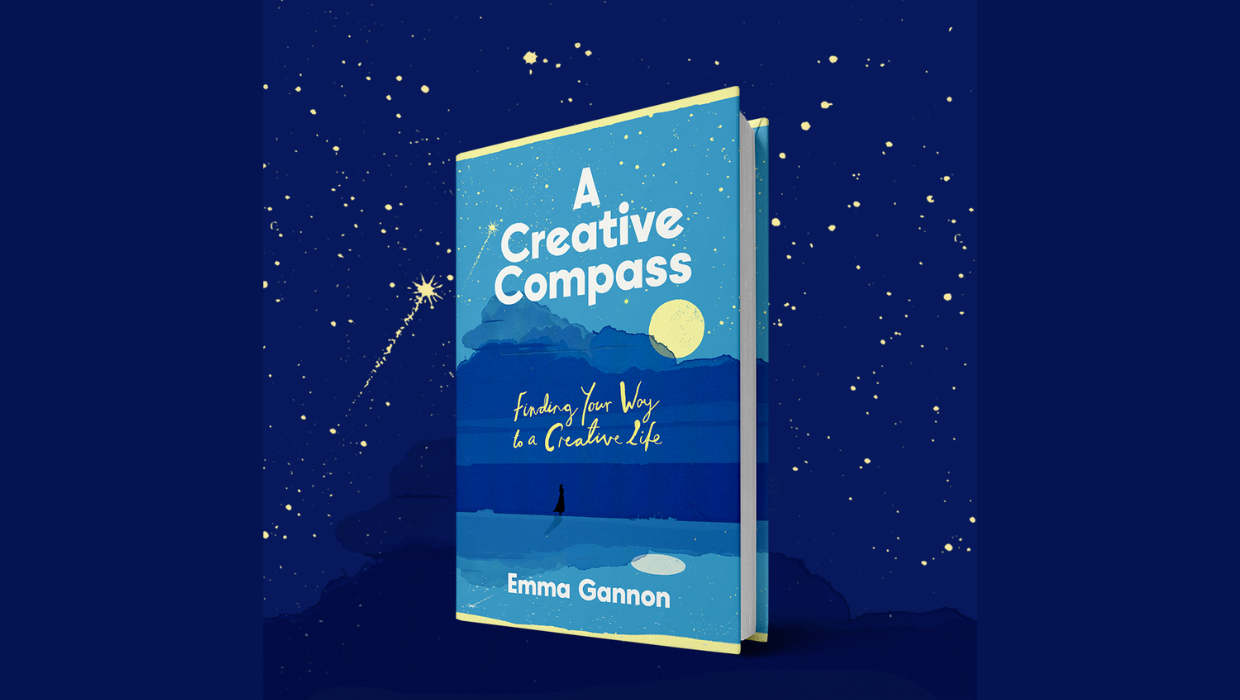
Corner seat, my favourite cafe. Plants dangling from the ceiling, a soft mist of condensation on the window. A large illustrated portrait of Anthony Bourdain is framed on the wall, watching over the room. Outside, tables are scattered with people on coffee dates, catching up with friends, or sitting with their young kids. A golden retriever rests under one of them, calmly gnawing on a rubber toy. The scent of ground coffee beans mingles with cigarette smoke. A woman in a beret sits alone, wearing a thick coat, leather boots, striped socks. The cafe door swings open then shut again. Friendly faces drift through the entrance, accompanied by a slight breeze. Two firefighters come in, order takeaway coffees and make friendly small talk with the server before disappearing back into the day.
The cafe owner knows me well, even though I don’t live in the area any more (I walk for over an hour to get here now, across the Hackney Marshes, to this cafe in my former postcode). By the time I arrive, I’ve walked thousands of steps along canal pathways shaded by tall trees, and I’ve cleared the cobwebs from my mind. The mental fog has lifted, and I’m ready to type. The menu is familiar and comforting: I usually order shakshuka and a mint tea. I glance up at the Bourdain portrait. I remember reading a quote of his once – something about how he preferred food to people. My nails have been freshly manicured, fire-engine red, ready for the keyboard. Fleetwood Mac is playing at a low volume in the background. Fairy lights are strung outside now, ready for the festive season. The temperature is perfect: the radiator is behind me, but the window beside me is cracked open too. I love this corner table, and this time with myself, making things. What a wonderful way to spend a day, I think to myself.
I always try to arrive early to claim this corner seat – my seat. I drape my coat over the back of my chair. It’s ideal: right by the window with a good view of the street, and two power outlets located close by. The table is the perfect height, and the chair has a curved back that feels sturdy and comfortable. The background hum is never too loud. My noise-cancelling earbuds soften it all further. I have enough space to move my hands freely as I type. A flower and a tall taper candle sit on the table. Today, it’s already dark by 4 p.m., and I love to write in the cosy winter months. I don’t mind the rain lightly pattering against the window – it’s calming. Some people need total silence but I like the sounds of other people chatting around me. Some people like to play ‘coffee shop background noises’ on YouTube – and here I am, living the real thing.
When I sit down to write, I start by closing my eyes and taking a moment to check in with myself – to sense how I’m feeling. Wherever I am, I’ll place a hand on my chest and try to settle myself. I spritz a cooling mist over my face and smooth hand cream into my palms. (I always carry both in my handbag.) If I’m at home, I’ll spray a calming mist to create a soothing atmosphere. If the air is warm, I’ll open a window; if it’s cold, I’ll turn on the radiator. I’ll pick up a pebble or crystal on my desk and hold it. My aim is to write from a place of stillness. Even if what emerges is sharp or angry, I want it to come through clearly, rooted in truth and shaped with intention.
Romanticizing our environment helps boost our creativity because it encourages us to tune in to the tangible world around us – the colour of the petals, the hand-painted vase holding our flowers, the shine of freshly painted nails, the smell of incense. These sensory details enhance perception and awareness, grounding us in the present moment – the exact state needed to sit down, zone in and write something. Romanticizing our lives is not a silly or shallow thing – it gives us a boost of serotonin; we feel a sense of agency by designing our little corner of the world, and feel free to express ourselves within it. To romanticize is to soften, to open the heart a little more, to invite joy and playfulness into our day. It breaks up any sense of rigidness or routine. To romanticize is to dream and to remember: we are the author of our own lives.
Even something as simple as placing a vase of daffodils on your kitchen table before creating or writing something can make a difference. You are stating an intention, changing your surroundings, inviting something beautiful in. Uplifting your environment – whether in a big way or a small one – is a signal to yourself: your art matters. It deserves beauty, care and attention. You deserve the space to create.
Try this . . .
How can you romanticize your writing or creating experience and space next time? How can you make your surroundings more inviting for creativity to show up?