Extract: Generation Maybe by Camilla Cavendish
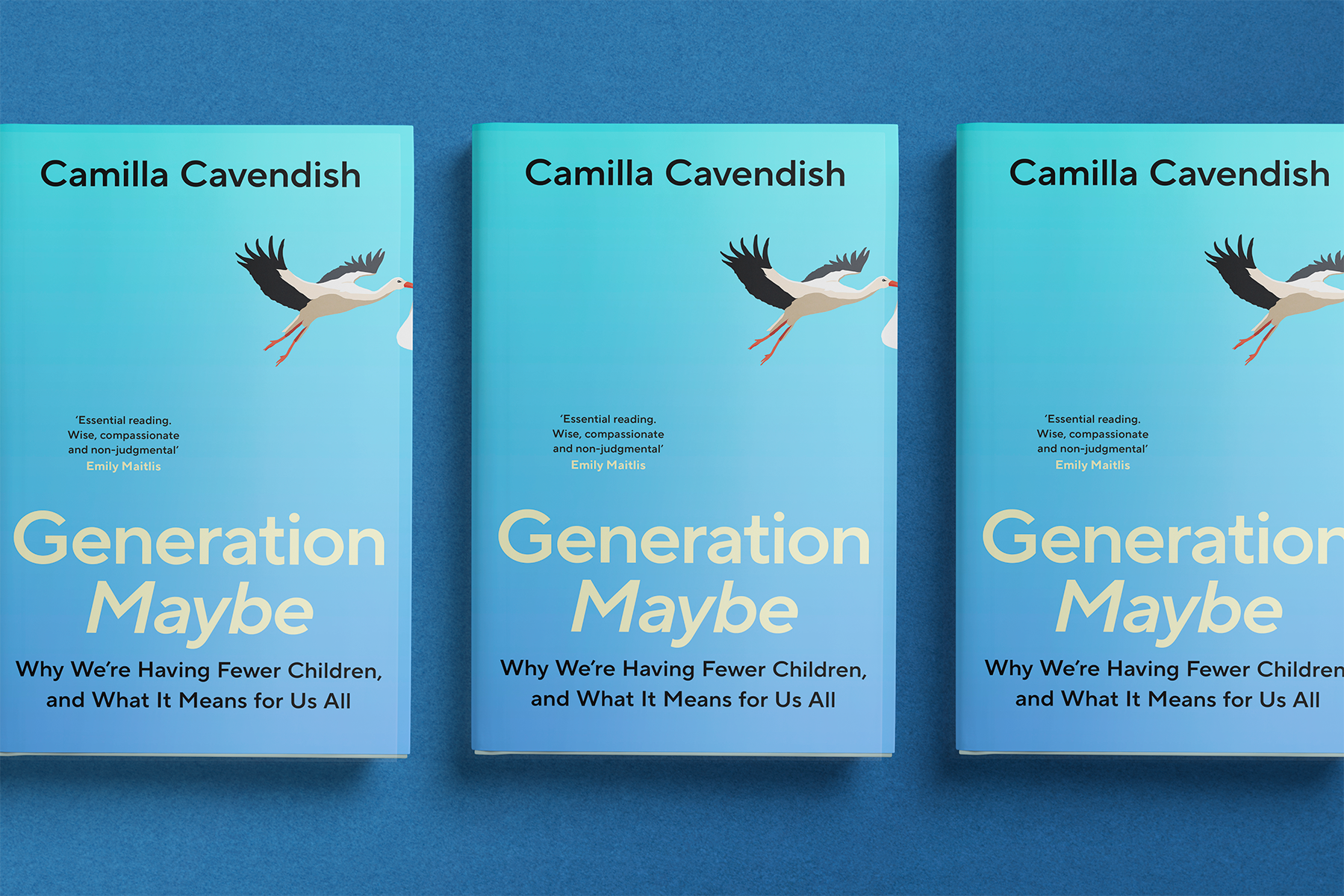
In Generation Maybe, Camilla Cavendish offers a startling blend of data and stories to uncover what is really driving the baby bust. By examining the profound implications of a world in which fewer children are born, Generation Maybe argues for a future in which we respect the happily childfree while genuinely empowering those who long for children.
One of the puzzling things about the falling birth rate is why it’s following such a similar path across so much of the world. Across many different continents and cultures, people are having progressively fewer children. The UAE, Chile and Tamil Nadu in India have even lower birth rates than Germany. China is growing old before it gets rich, and Russia has maintained its population size purely by annexing Crimea and parts of Ukraine. Only the Black Death in the fourteenth century is comparable to what is happening now. What we once thought of as the most profound human instinct, to continue the line, is on the wane.
Childlessness doesn’t inevitably lead to a birth crunch. In the 1920s roughly one in five women in Britain had no children: a similar proportion of childless women to what we’re seeing today. But the numerous spinsters and widows of the First World War didn’t result in population decline because other women had big families. It’s the combination of rising childlessness and smaller families that is driving today’s numbers, with many families having only one child.
'I assumed that falling fertility was about empowerment...but after five years of investigation, I have come to believe that it is not the whole story.'
When I embarked on this project, I assumed that falling fertility was about empowerment, and that the main question would be how to adapt. The standard explanation is that as women get educated, they choose freedom and autonomy over family. That’s partly true, and it should be celebrated. But after five years of investigation, I have come to believe that it is not the whole story. In fact, I have become convinced that many men and women are missing out on a deeply meaningful experience they would have loved to have had. Twenty years ago, it was ambitious women with fancy degrees who had the fewest children: the price for breaking the glass ceiling. Now we are seeing an uptick in births among that group, while birth rates are falling fastest for less educated women whose options are more limited. Meanwhile low-income men are the new ‘have-nots’, the group most likely to end up unwillingly childless, with grim implications for their sense of self- worth and engagement in society.
A din of raised voices, mostly male, accuses modern women of being selfish, ignorant and picky. I’m not so sure. It feels like the conversation is in the wrong place. I’ve interviewed women of all classes and ages who have painstakingly researched their fertility, while praying they’ll meet someone, or hoping to earn enough to move near to extended family. What has surprised me most in researching this book is how many people are struggling to find a reliable partner to settle down with. This relationship crisis is driving the postponement of parenthood, to a point where it sometimes collides with the harsh reality of the biological clock.
Almost overnight, it seems as if we’ve gone from worrying about overpopulation and the state of the planet, to fearing that falling birth rates will overwhelm economies and societies. Funeral parlours replacing schools, young workers taxed to the limit to pay for pensions they’ll never receive themselves, and only children bearing the burden of two parents and four grandparents: what the Chinese call the ‘4- 2- 1 problem’.
Important though the economy is, my motivation for helping more people choose children is because of the heartache behind the numbers. The anxiety, frustration and sadness I have encountered has been startling, especially among single women in their late thirties who are deciding whether or not to go it alone. One recent study has found almost half of Canadian women saying they’d had significantly fewer children than they wanted, and reporting lower life satisfaction as a result. This disappointment gap is global. Children have become an option rather than an obligation, yet they remain a profoundly human and humanising experience, a call to something beyond ourselves, which we have made too difficult to answer.