When was the last time a book made you cry? Was it in a novel, when a plucky group of underdogs finally found common ground and came together against all odds? Or in a memoir perhaps, when a narrator experienced a moment of closeness with their eccentric cat?
The things that move us are sometimes surprising, sometimes universal. It could be a great love crumbling in a novel, or a non-fictional account of a life coming to an end. Either way we are moved because we identify with the emotions presented by the author, united by sadness, grief, gratitude, or hope.
Whether you’re looking to let something out, or just love an affecting read, below is a selection of books that made us cry – and might just get your waterworks going, too.
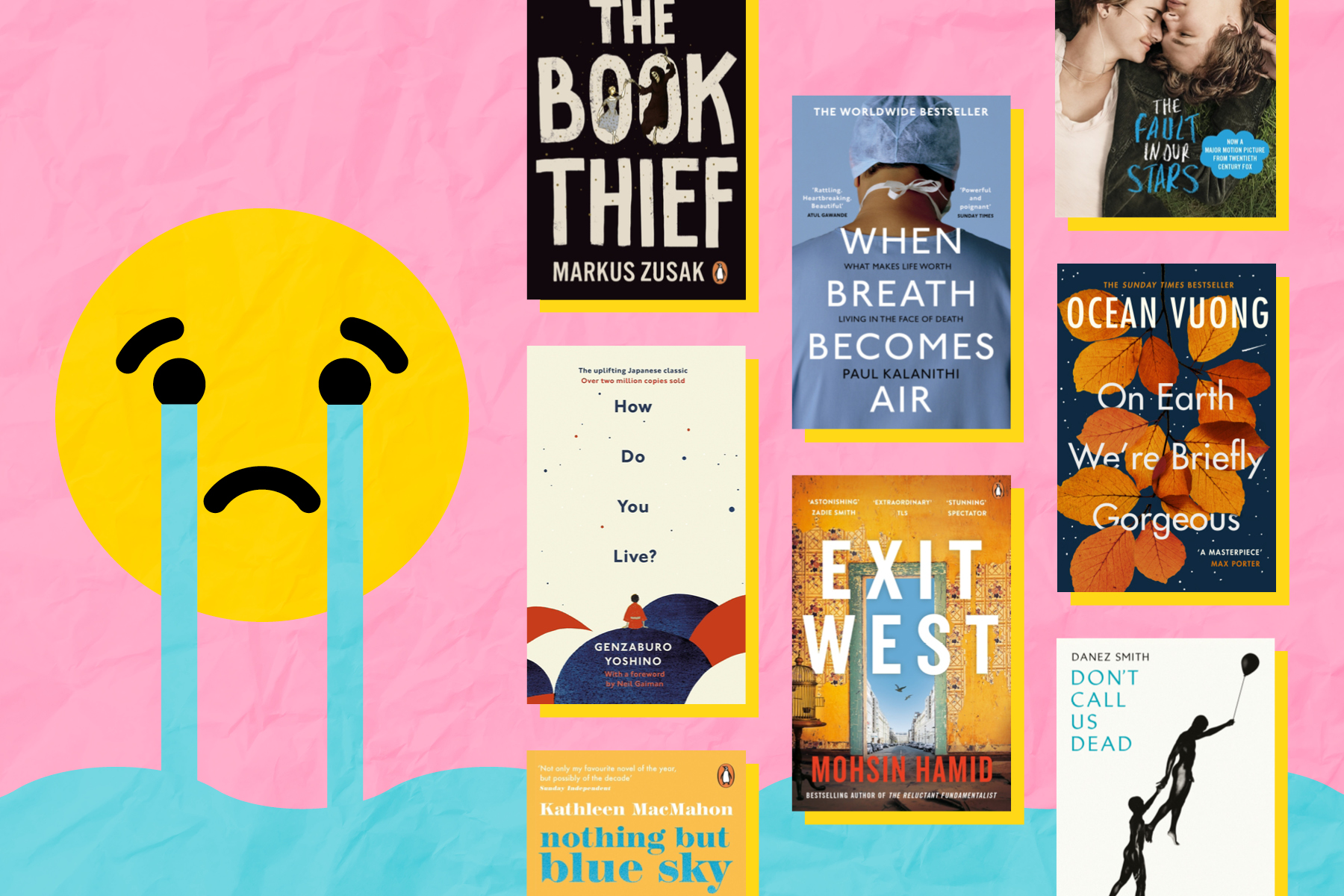
At 36, on the verge of finishing his decade-long neurosurgery training, Paul Kalanithi was diagnosed with terminal cancer. When Breath Becomes Air explores his life first as a doctor and then as a patient – a deeply thoughtful assessment of living and dying from the vantage point of someone who spent much of their life surrounded by both.
Kalanithi died before finishing the book, and the afterword comes from his wife, Lucy. In it, she shares an excerpt from one of Kalanithi’s emails to a friend, where he writes that the book might allow readers to momentarily step into his shoes and see what a life facing death looks like, before stepping out of them again. Sooner or later, he wrote, we'll be back there in our own shoes.
You absolutely will cry when reading this – it’s hard not to – but perhaps, afterward, you might ask yourself: What makes life meaningful? And that, I think, is an unexpectedly life-affirming gift to take from this extraordinary book.- Indira Birnie
It is difficult to talk about why One Day had me sobbing uncontrollably without giving away any spoilers. My advice for those who haven’t read the book is to skip onto the next recommendation on this list and order your copy immediately. Otherwise, if you'd like a sense of what happens, or have read it already and would like to wallow with me, then read on…
The premise of David Nicholls’ bestseller, which follows Dexter and Emma on the same day each year, has you invested from the start. From their awkward one-night-stand at university to their blossoming friendship as they navigate the challenges of adulting, we as the reader know they are really meant to be together. I'd like to say this book has a happy ending, but it might not be on this list otherwise. It is, however, a life-affirming story, funny, engrossing and one of the best coming-of-age novels you'll ever read. - Sarah McKenna
I'm not usually a YA reader, but this YA novel from Japan, first published in 1937 and translated to English for the first time in 2021, captivated me. Originally written as a paean to a humanist way of life in the face of mounting authoritarianism in Japan, How Do You Live? follows 15-year-old Copper as he slowly comes of age, learning from history, philosophy and literature how to be a good friend, a good citizen of an increasingly globalised world, and a good person.
There is a moment, in the book’s penultimate chapter, when events with Copper’s friends at school, the time he has spent studying, a story from his mother, and lessons from his uncle all converge in a single moment: while transplanting daffodils in the garden, Copper finds a flower so deeply rooted in the rich soil that he can hardly believe its tremendous growth. Its astonishing bloom, he can see from its roots, is the product of hard work.
The metaphor might sound obvious described here, but rarely have I read a moment rendered so beautifully, which pays off a patient novel so exquisitely and completely – and which moved this reader to tears. Perhaps there’s a reason Genzaburo Yoshino’s book, 84 years after its initial publication, is still a beloved best-seller in Japan .- Stephen Carlick
Don’t be fooled by MacMahon’s sunny title, and sunnier cover – this is a love story that starts sweet and slowly reels you in to quiet, sobbing devastation. MacMahon’s portrait of a marriage is written from the perspective of David, the widow of the frankly marvellous-sounding Mary Rose. His grief for her is a stumbling thing, which MacMahon delicately explores over the course of the novel. But what perhaps hits harder are the revelations he learns about his beloved wife only after her death. It is these unspoken things that will have you reaching for the tissues.- Alice Vincent
The last book that made me crumple into a moist mess at the final page was Exit West by Mohsin Hamid. One of most talked-about novels of 2017, I expected the heady mix of magic realism and political satire – it follows Saeed and Nadia, a young couple forced to flee an unnamed civil through a series of transportation portals, from one hostile refugee crisis to the next – but I was completely unprepared for the love story at the heart of it which, brilliantly, despite the high dramatic stakes of the story, ends as most real love affairs do: not with tragedy but a whimper. Five years later I still don’t feel ready to reread it. - Sam Parker
I’m not the type who cries very often – I’m partially convinced this is to do with my serious and unyielding Capricorn sun – but Markus Zusak’s The Book Thief got me. And it got me good.
Of course it has something to do with the unspeakable horrors the Jewish people and German citizens experienced at the hands of the Nazis, and the seemingly never-ending losses characters like Liesel and Max face throughout the book. It’s probably also to do with my own grandmother’s German background, and the upheaval and fear I know that she and her parents faced during the dark times of World War II. This is a spectacular book and well worth a read – but be prepared for some heartache.- Imogen Rayfield
A beautiful blend of both poetry and prose, this book is a letter from a son to a mother who cannot read. Our narrator, Little Dog, draws you in with his coming-of-age story that explores his childhood as a young Vietnamese boy growing up in America, living with both his mother and grandmother. It is steeped in tenderness and love but also violence and cruelty, highlighting the often vast and heartbreaking differences between generations.
The writing style is (suitably) gorgeous, and at some point I gave up on trying to follow exactly what was happening and just let this visceral and utterly original story wash over me, as I watched Little Dog grapple with cruelty, belonging, identity and sexuality. At just over 250 pages, it is the perfect length for when you want to wallow in a little bit of sadness. - Lucy Hall
Hazel Grace is a 16-year-old with thyroid and lung cancer. She spends her time watching the same TV shows and re-reading her favourite book until one day, at a cancer support group, she meets Augustus Walters – a larger-than-life, charismatic 17-year-old who is a cancer survivor. Their love story unfolds like poetry, as they both question the meaning of life and how to leave their mark on the world.
The Fault in Our Stars - Katie Russell
I often go for books that aren’t afraid to tackle painful, complex topics head-on, but there are very few — if any — that have ever actually made me cry.
Don’t Call Us Dead,
Smith’s poetic style is stunning, but also gut-wrenching and explicit as they write about loss, trauma, passion, grief and the fragility of human life — and overwhelming anger for those who disproportionately experience the worst of it.- Rachel Deeley