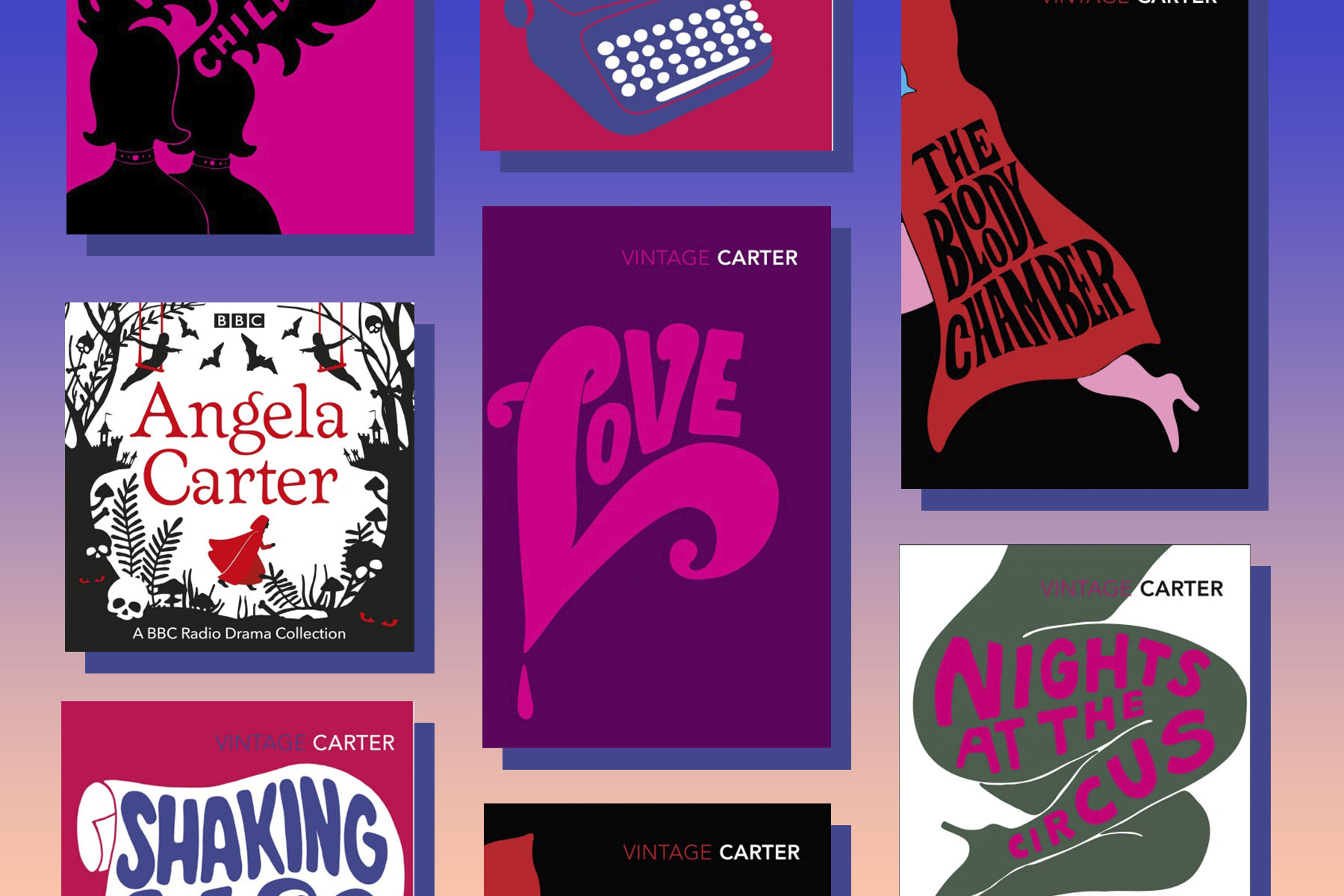
HomeDiscoverArticlesWhere to start with Angela Carter’s booksWhere to start with Angela Carter’s books·min read·2·Image: Ryan MacEachern for Penguin The Angela Carter BBC Radio Drama Collection (2021) There is arguably no better introduction into Angela Carter's imagination than this landmark collection from the BBC. Carter found radio the perfect medium to bring the magical and fantasy elements of her books to life in ways theatre was unable to which is brilliantly demonstrated with this audiobook of her work. Highlights include five new dramatisations from her dark and brooding fairytale retellings, The Bloody Chamber collection. An adaptation of Nights at the Circus as well as a world premiere of Carter's unproduced screenplay The Christchurch Murder - the story which inspired Peter Jackson's film Heavenly Creatures. The recordings are brought to life by a stellar cast of actors including Andrew Sachs, Jessica Raine and Anton Lesser to name but a few. Alongside these works of fiction there are insights into the author's life from her friend and literary executor, Susannah Clapp and a fascinating documentary consisting of an interview with Carter recorded shortly before her death in which she discusses her writing and examines the impact of Britishness. A must listen for fans and new fans alike. Shaking a Leg: Collected Journalism and Writings (1997) When you think of Angela Carter, it’s often her fiction which comes to mind first. But she was also a prolific, passionate writer of non-fiction, covering everything from politics to parenthood via film and travel, and Shaking a Leg, first published in 1997 five years after her untimely death, is a must-read. Like the best essay collections, it is one to read with pencil in hand and to come back to again and again, whether it’s to chorus ‘yes’ as she laments the demise of the NHS (in ‘Notes from a Maternity Ward’, 1983); to see how conversations around vegetarianism have moved on (‘The New Vegetarians’, 1976); or to revel in her brilliant mind as she connects the sometimes deadly blowfish with a pornographic film (‘Japanese Erotica’, 1976). The Bloody Chamber and Other Stories (1979) Much to Angela Carter’s own chagrin, The Bloody Chamber is sometimes described as Carter’s collection of updated, adult fairy tales. In fact, it’s a much darker, more subversive cycle of stories that stray far and wide from their original sources. From the French Marquis, who keeps the mutilated corpses of his ex-wives in a locked room, to the sexually curious and confident Little Red Riding Hood, each tale explores the concealed desires at work beneath the stories we tell each other – yes, with vampires, werewolves, countesses and crooks thrown into the mix. Relishing in the magical interplay of violence, desire, dominance and fantasy, The Bloody Chamber is Angela Carter at her most alchemic, and the perfect primer for those peering over the precipice of her towering, twisted imagination. Love (1997) Don't be fooled by the title of the third novel in Carter’s loose Bristol trilogy, following Shadow Dance and Several Perceptions. Love is all but absent from this ménage à trois between Annabel, her husband Lee, and his brother Buzz. Laced with violence and surrealism, Carter’s depiction of their destructive relationships is claustrophobic, vivid and violent. She shies away from nothing, debunking the myths of increased female freedom in her descriptions of sex and the mythology of family. Just as the characters are trapped within its 120 pages, this novel will linger in your head long after finishing. Nights at the Circus (1984) Sophie Fevvers is a much-lauded acrobat in Colonel Kearney’s circus when she meets journalist Jack Walser. Abandoned at birth, and sprouting wings as she grows up, Walser is fascinated by Fevvers’ story, but something doesn’t quite add up. As the circus embarks on its Grand Imperial Tour to Asia, all the magical madness of Carter’s imagination bursts forth – including one wonderous escape inside a Fabergé egg – until Fevvers and Walser find themselves lost to each other in the Siberian wastelands. If you couldn’t guess from the description, Nights at the Circus is epic and unpredictable in its scale. Carter described the book as her “psychedelic Dickens”, but don’t expect any of the fustiness of a great Victorian novel: this is as electric and alive as one of Fevvers’ own high-wire acts. Wise Children (1991) Carter’s final novel is a joyous, carnivalesque affair. It has its roots in Shakespeare’s comedies, with a proliferation of twins – identical and fraternal, partner-swapping, and incest. It begins on the 75th birthday of twins Nora and Dora Chance (the latter is our narrator). Abandoned by their biological father and legally the children of their father’s twin, they are raised by their Grandma Chance. The family tree starts as it means to go on. It’s fantastic fun, and also a deeply intellectual exploration of society. In her own words: ‘I wanted it to be very funny, and at the same time I wanted the complex ideas about paternity and the idea of Shakespeare as a cultural ideology.’