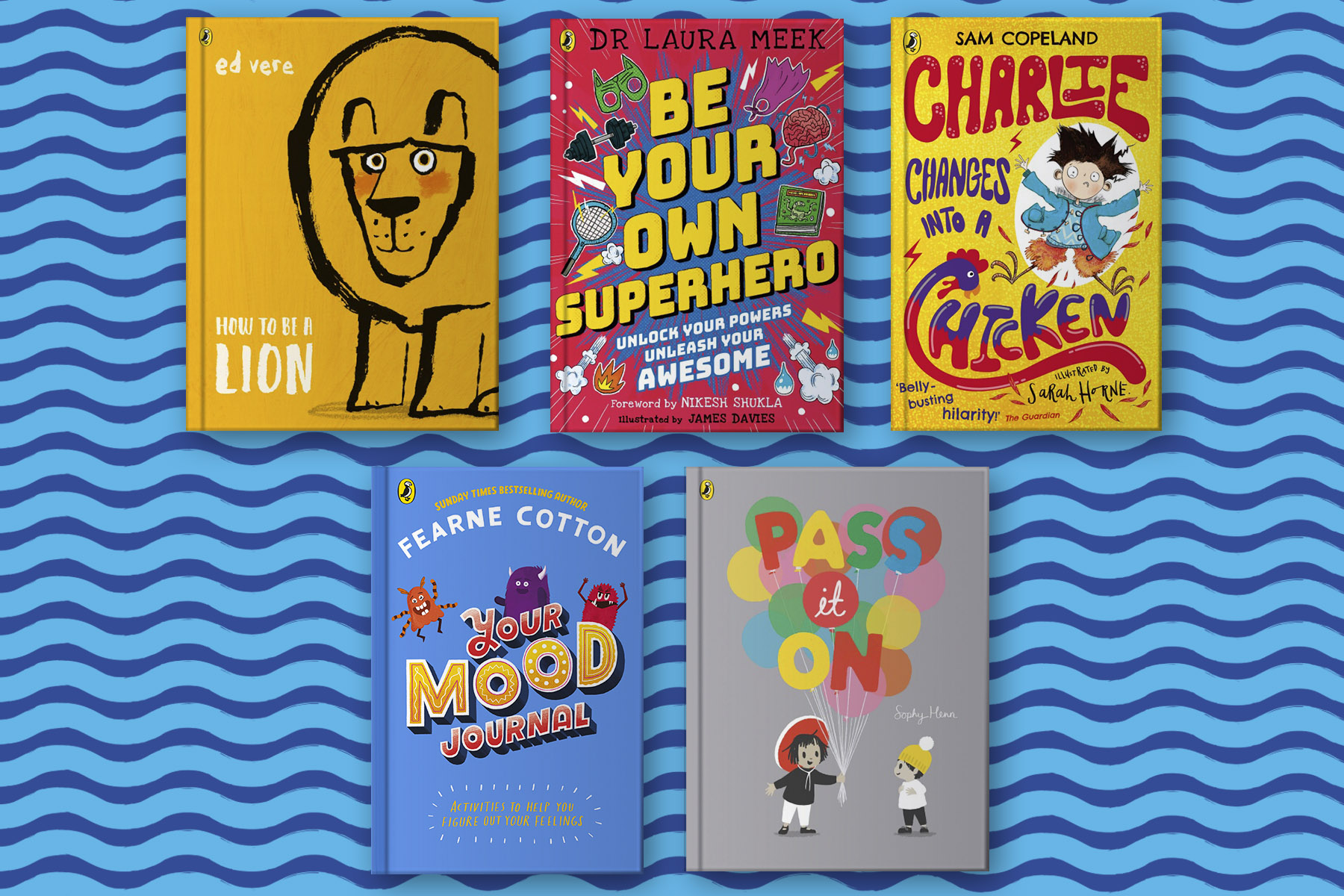
We’ve picked out a selection of the best picture books, interactive journals, middle-grade novels, and practical guides to help everyone effectively communicate their feelings and deal with their emotions in a healthy way.
This may surprise you, but did you know that your body and mind are connected in many incredible ways? If your body is hungry or hasn’t slept enough, that can effect your mood. Alternatively, if you feel anxious or stressed, your body might experience headaches or tense muscles. In her new book, Happy From Head to Toe , Fearne Cotton explores all the different ways our minds and bodies are connected, and with the help of doctors, nutritionists and fitness experts, shares all the different ways you can help make yourself feel better.
Recommended reading age: 7-12 years old
We all worry now and then but whenever Alex Allen worries, his brain produces a living, breathing llama! Usually, the pesky creature goes away quite quickly. But today Alex keeps worrying, and the llama just gets bigger and bigger. Soon it’s causing all sorts of mischief. If only Alex could figure out a way to rid himself of this troublesome llama… This heart-warming and hilarious tale from Rachel Morrisroe offers some great advice for young children with anxiety.
Recommended reading age: 5-7 years old
Fans of Pixar film Inside Out will love this fun tale from Jion Sheibani. Sohal is a worrier. He can’t help it. There’s a lot to worry about: the dark, not having friends, mutant sheep. But his worries can sometimes become too much, so one night Sohal decides to draw them to make himself feel better. And it seems to help! Except, when Sohal wakes up the next day, his worries have turned into five furry creatures! Hurt, Fail, Anger, Big and Alone unintentionally turn Sohal’s world upside down – will he be able to keep his worries under control?
Recommended reading age: 5-8 years old
Charlie McGuffin is a worrier – and he’s got a lot to be worried about. His brother is in hospital, his parents are panicking, the school bully is on his heels – and worst of all, every time he feels worried, he changes into an animal. Trying to deal with rhino poos the size of a six-year-old child, fend off amorous French pigeons and learn his lines for the school play will take everything Charlie’s got – can he and his three best friends find a way to deal with his new, unwanted superpower before he gets sent away to be experimented on? As well as being a funny and uplifting tale, Charlie Changes into a Chicken weaves in the message that if you’re experiencing stress and anxiety you are not alone, and that it's ok to ask for help.
Recommended reading age: 8-11 years old
The key to managing big emotions begins with understanding them, and this activity journal by bestselling author and TV presenter Fearne Cotton offers kids a way to express and document their moods. With illustrations, interactive exercises, notes from Fearne herself and even stickers, Your Mood Journal will help readers learn how to communicate their feelings in a fun and creative way, and that it's perfectly ok to feel every type of emotion.
Recommended reading age: 8-12 years old
Watch out, The Scribbler is on the loose in your book, and armed with her crayons she could ruin every page! A superhero is here to save the day – but it’s up to you to unlock his superpowers, using the power of your imagination. Tom Fletcher and Greg Abbott’s latest book in their interactive, bestselling series celebrates the true meaning of being a hero and the power of being kind.
Recommended reading age: 2-5 years old
Amy Forbes-Robertson and Alex Fryer have delivered health and relationships lessons to children in over 200 schools. Here they’ve collated the best questions they’ve been asked over the years, covering growing up, sex, birth, puberty, pregnancy, gender, relationships, sexuality and consent, offering non-judgemental and inclusive answers to potentially tricky or embarrassing topics. There’s also a whole chapter dedicated to feelings with tips on how you can make yourself feel better when sad or angry, and how to talk to friends when they’re feeling low.
Recommended reading age: 7-12 years old
Everyone at some point is sure to come up against outside voices telling them how they should live and who they should be friends with. This is the case with Leonard – a gentle, poetry-loving lion, whose best friend is a duck called Marianne. But don’t lions like to chomp ducks? At least, that’s what the other lions think. Ed Vere’s colourful illustrations make Leonard’s journey to accepting himself as he is even more delightful.
Recommended reading age: 3-5 years old
Child psychiatrist Dr Laura Meek’s practical guide for unlocking your inner superhero offers you the opportunity to master helpful skills, including reading people’s minds (empathy and listening skills), balancing the elements of fire (anger) and water (anxiety) and becoming a shape-shifter (flexible thinking). If low confidence is your kryptonite, or if your spidey senses never stop tingling, this book will give you the tools to grab your cape and fly high.
Recommended reading age: 8-12 years old
"When someone is scowling or upset or hurt, you could busy yourself with your own concerns, or you could ask, What might I do to help them?" This is just one of the teachings in The Dalai Lama’s picture book that aims to teach lessons of peace and compassion. The Nobel Peace Prize Laureate, who grew up as an ordinary boy in a small village in Tibet, shares the ways he learned about treating other people with kindness and empathy, and how you can begin to adopt these practices.
Recommended reading age: 3-7 years old
Waterstones Children’s Book Prize-shortlisted writer and illustrator Sophy Henn encourages readers to celebrate and share the joys and discoveries of everyday life in Pass It On . This reassuring tale shows the power of positivity and how a simple smile can be incredibly effective in times of loneliness.
Recommended reading age: 2-5 years old
Wonder
August Pullman, born with a severe facial deformity, just wants to be a normal 10-year-old. He’s been home-schooled by his parents his whole life, but now he’s starting fifth grade at Beecher Prep. Will his classmates be able to look beyond his extraordinary face and get to know the real Auggie? R. J. Palacio’s million-copy bestseller is a funny, life-affirming story about trying to fit in when you can’t help but stand out. It also teaches valuable lessons on how to be kind to others and why it’s important to look beneath the surface.
Recommended reading age: 9-11 years old
Eric Carle may be famous for a picture book about another, extremely peckish bug, but The Bad-Tempered Ladybird is just as creative and hilarious as its caterpillar predecessor . The grumpy insect is in such a foul mood, it just keeps trying to find bigger and bigger animals to fight with – even a whale! As the animals politely but firmly stand up for themselves, readers will absorb a useful lesson about bullying as they follow along with the story.
Recommended reading age: 2-5 years old
Love is something we all hope to experience in life. And there’s nothing nicer than telling someone you love them. If you need some help expressing how much a loved one means to you, this picture book built around a heart-warming poem and starring Beatrix Potter’s classic character is perfect. It will get you right in the feels and melt even the coldest of hearts.
Recommended reading age: 5-10 years old
Part of a board book series distilling deep questions about life into an accessible, colourful package, Happiness with Aristotle outlines the Greek philosopher’s thoughts on happiness. If you know a little one with questions about why we are here and the best way to be happy, you’ll find the answers in this book.
Recommended reading age: 2-5 years old