- Series: Vintage Classic Russians Series
- Imprint: Vintage Classics
- ISBN: 9781784871956
- Length: 992 pages
- Dimensions: 217mm x 45mm x 156mm
- Weight: 866g
- Price: £12.99
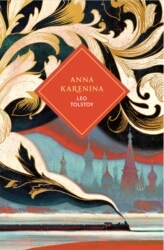
Anna Karenina (Vintage Classic Russians Series)
Format:
Buy the book from:
A glittering affair begins in Russian high society.
Tolstoy follows its consequences through marriage, family and the search for meaning.
Anna is a beautiful, intelligent woman whose passionate affair with the dashing Count Vronsky leads her towards ruin.
Yet Anna Karenina is far more than one of world literature’s great love stories. Twinned with Anna’s story is that of Levin, an awkward idealist whose happy marriage and domestic trials become part of his own search for meaning.
Moving between Moscow, St Petersburg and the Russian countryside, Tolstoy creates a rich social novel about desire, family, morality and spiritual uncertainty. Anna’s defiance of society is set against Levin’s attempts to understand work, faith, marriage and goodness, giving the novel its extraordinary emotional and philosophical range.
Tolstoy’s power lies in the patience with which he follows every contradiction of feeling: tenderness and resentment, duty and longing, self-deception and moral clarity. The result is a Russian literary classic that feels vast in scope yet intimate in every judgement, gesture and private crisis.
TRANSLATED BY LOUISE AND AYLMER MAUDE
VINTAGE CLASSICS RUSSIAN SERIES: sumptuous editions of the greatest books to come out of Russia during the most tumultuous period in its history.
'One of the greatest love stories in world literature' Vladimir Nabokov
'I've read and re-read this novel and every time I find another layer in the story' Philippa Gregory
Details
All editions
- Paperback 2017
- Ebook 2010
- Audio Download 2020