Ask Penguin: Why are generations at war with each other?

Which multi-generational novels inspired White Teeth? Where does Zadie Smith turn for her next great read? And our Penguin team is back to solve your reading dilemmas - whether you're after fascinating memoirs, this year's pick of prize-winning books, or stories perfect for Autumn.




Episode transcript
Rhianna Dhillon:
Hello and welcome to Ask Penguin, the podcast that's all about books and authors. I'm Rianna Dillon, and this week I'm in conversation with an author that I've been a fan of for a very, very long time. One of the most distinctive, exciting, and widely loved writers of her generation. Winner of the Women's Prize, shortlisted for the Booker. She's been twice named among grant's best young British novelists. Her debut White Teeth blazed onto the bestseller lists and established her as a defining generational voice 25 years ago. Her follow up work includes the critically and commercially acclaimed NW on beauty and swing time. Zai Smith's latest work is Dead and Alive, the keenly awaited new collection of essays in which she brings her unique skills and observations to bear across a dazzling range of subjects. From a close look at artists toying Oji O dela, Kara Walker, and Celia Paul to a trip to the movies to see and to think about Cape Blanche's tar or to Glastonbury's pyramid stage to witness the ascendants of Stormy from the countryside to the city.
We're taken on a walk down Kilburn High Road in her beloved northwest London and invited to mourn with her the passing of writers, Joan Didion, Martin Amos, Hillary Mantel, Philip Roth, and Tony Morrison. Za Smith. Welcome to Ask Penguin. We are really, really delighted to have you here. Thanks for coming. Thank you. So I've already given a kind of brief overview of some of the subjects that you essays touch on. It's so wide ranging, which is what's so gorgeous about it, and it gives the reader a real sense that you are curious about absolutely everything and anything. Is that how you feel as you go through the world? Do you feel as though you are a very curious person?
Zadie Smith:
I don't know. It's hard to know how other people are. I'm just me, so it feels normal to me to be interested in stuff. I am interested in stuff, but I don't think to an unusual amount. I don't think of myself as a connoisseur or anything like that. I just like books, like movies, like music, like
Rhianna Dhillon:
Everybody. You have written a lot of essays over the years, but you never set out to be an essayist, I suppose. So how did that come about? Has it sort of taken you by surprise that you have?
Zadie Smith:
It was just a job. I was writing novels and then I was kind of flattered when somebody asked me to review something. I was so green and I didn't expect anybody to be interested in my views on anything.
Rhianna Dhillon:
So is that how you think of it as reviews? Primarily how it began?
Zadie Smith:
I don't know. It's hard for me to talk about it. I don't really bring it to mind very often. I just sit at my desk and I do what's in front of me. If I think about it too much, I get really self-conscious. So publication is hard for me. This whole period is hard for me because I've just always rather be writing.
I think I realised as I started that there's a lot of different kinds of writers. You just had Carl over in here. He's another one. He likes to think about things. There's lots of different kinds of novelists and he's got a kind of, I would say a slightly philosophical bent and sometimes a novel won't contain the things you want to think about. I love his essays, but I think his essays come out of a very pure place. He just wants to think at length. And I guess I do that under the guise of you want 5,000 words or something. Okay, here's 5,000 words.
Rhianna Dhillon:
I really like your introduction because you are sort of trying to ease the reader in who might not necessarily be a Nonfic reader. So tell us about that. Tell us how you do that and why.
Zadie Smith:
I really feel that there's no idea that's so complicated. You can't find open and shared language to talk about it. And that's always what I'm trying to do because I'm always thinking about the kind of people I come from, the kind of background I come from. So I just wanted it to be open. It gets complicated. Writing is not like I always envy musicians. You don't need a certain level of educational comprehension to understand even the greatest music that has ever been made, classical or rap or pop or whatever it is. The kind of door is wide open. Obviously writing isn't quite like that, right? At the very minimum you need to be able to read and then there are layers of complexity, of levels of reading. And of course I'm aware of that, but I still think just as a principle of democratic access that you should try and make a sentence as open as possible. That's what I try to do. I don't always succeed.
Rhianna Dhillon:
I guess each sub genre of writing has its own, I don't know, accessibility issues. Do you think there are issues around the word essay? Do you think that in itself is intimidating to people?
Zadie Smith:
I don't know. People seem to be reading a lot of essays these days online. All they do is read essays. So I think maybe that idea of it as an academic matter has kind of passed. Actually. People seem to me to find essays a lot less daunting than fiction. Fiction is like this. You have to bring quite a lot to fiction, this energy for this imagined world, whereas essays don't ask you to do that for the most part. So I think it's the other way around these days.
Rhianna Dhillon:
I kind of really love how you encourage your reader to dip in any order they want.
Zadie Smith:
I mean, you don't have to read the book at all, sorry, bang. But if you do read it, you don't have to read it in any particular, I really do always want readers to feel as free as possible,
Rhianna Dhillon:
And
Zadie Smith:
That also includes the rejection of all of it.
Rhianna Dhillon:
But then you also, I guess by putting it together, you have to shape it in some way. So you've kind of grouped them in five sections, eyeballing, considering reconsidering, mourning and confessing. So tell us about the umbrella terms, how you came up with those.
Zadie Smith:
I always do it quite quickly, that kind of thing. Titling and because subconscious, it kind of comes from your gut and I don't want to think about it too much. So I just kind of looked at what I had in front of me and I'm quite simple writer. I just say what I see and I just saw a section of things that seemed to me like confessions. Others are obviously about looking at things, others are about thinking about things. So I just try to make it basic. And also because I know that people who aren't interested in visual arts, for example, some people are more interested in ideas. Some people want to know about your life, the life of a writer. So I try to make it easy for people to move through it. And also just for me, it's a way of organising a book. I guess I never thought of my book, the essays as just random essays. They always have a shape and mainly the shape is when I come to add things. So I never plan to write a book of essays. What usually happens is Simon, who's editor here says something like, oh, you've got a certain amount of essays. Have you thought about collecting them?
And my first reaction is usually I don't want to do that. And then he kind of persists a little bit. But then the condition of course is that you can't just publish old essays. So then usually there's this thing about, well, can you write six or seven or 10 more? And I usually really don't want to do that. But then once I get started, the ones that you add start to bring a shape to the book as a whole. And also usually when I'm writing the book, somebody set me a new task, a magazine or a journal. So then you end up writing something again and that sometimes can go in. So it is just a kind of, I follow my gut really. I know some essay books are more like a single argument I guess, but mine are really just about where my head's been over a period of time.
Rhianna Dhillon:
Community feels like something that comes up. There's one about community in New York about people coming together. Also your final essays about Kilburn, which is really affectionate and
Zadie Smith:
Gorgeous.
Rhianna Dhillon:
So how does the city as a place, whether it's in London or New York or both, how does that influence you as a writer? People coming together in the city?
Zadie Smith:
It's two things for me, it's community for sure though that word is overused everywhere
Rhianna Dhillon:
You got. It's true, it's true.
Zadie Smith:
But also privacy. Those two things to me are together in the book. I feel like that's what a human needs, they need to be amongst people and in relation to other people, but they also need privacy. So for me, I feel incredibly lucky usually that I have this job that involves a lot of privacy between me and the reader. It's not filmed, it's not live. It's just someone in their room with my book, having whatever feeling they, and I like to write essays that are kind of aware of that intimacy and kind of recreate it. It's just you and me in a room. I like that. And that you go back to your own self and I can't intrude, I can't collect comments or wonder what you're thinking. And I go back likewise when I'm not in a podcast to my life and have that moment of privacy. Yeah,
Rhianna Dhillon:
You recorded the audio book Near
Zadie Smith:
Bury. It's the craziest thing, but this audio book studio happens to literally be not even, I would say it's about five and a half seconds from my front door. So it's incredibly convenient for me. I dunno how it's for all the other writers in the world, but yeah, it's strange. It's a strange coincidence. I have no idea why it's in on the top of Salisbury Road, but it is. And I live on the corner so it's easy.
Rhianna Dhillon:
Was there something kind of lovely about talking about Kilburn while you were recording in Kilburn? Around Kilburn?
Zadie Smith:
It was weirder than that. It's one of these kind of, I grew up in the flats behind that studio and that studio was just garages when I was a kid and a kind of wasteland where we would go and actually it doesn't matter what we were going toland, but from the podcast window, I could see my old flat. I can see the communal space of that estate. So it was weird. Yeah, it was a really weird experience.
Rhianna Dhillon:
When you're writing, it does feel like sometimes we're between two communities or two worlds or whatever. Do you find yourself in a sort of liminal space between the UK and the US when you're writing and does your sort of nearness to one affect?
Zadie Smith:
I mean, not anymore. Me and the US are broken up for the time being, so I'm there between Wilsdon and Bury Queens Park and Killbourne. These are essays from an earlier period for the most part. I didn't know. It's funny when you said liminal space, I didn't think you were going to say between New York and London. I thought you were going to say between reader and writer. I guess that's where I feel a lot of the time. I know I am a writer, I've been doing it for long enough, but I feel myself on the reader's side of things, collegiately speaking.
Rhianna Dhillon:
How does that inform your writing then, if you're more on the reader's side? Are you constantly thinking about their interpretation?
Zadie Smith:
No, but I want to be on their side and I want to kind of make space for them and I want to be generous to them. Sometimes you read people and you feel like you're being almost punished, right? Or disapproved of, or the writer has contempt for you in some way or I don't enjoy that experience, so I want these essays to be somewhere where you feel smart as you read them maybe, or you feel like something is broadened as you read them rather than being shut down.
Rhianna Dhillon:
Was there anything, as you said some of these essays are from the past, so returning to them, were there kind of things either that you'd forgotten about that you really enjoyed relearning?
Zadie Smith:
It's weird with essays, they'd always seem smarter than you are or more interesting than you are. Or I think when you're writing and you're in a heightened state of thinking and feeling, normally I'm not in that heightened state. I'm just like anyone else, I'm just vegetating on a sofa or doing whatever. There's a gap between me and the essay. Quite often I'll read it and think, oh okay, that's quite good thought or whatever, or interesting.
But it feels quite distant sometimes. And it depends. Some of them are about such sad things or things that are so anger making and one of the things that writing is always for is to contain a feeling. You get it off you and you contain it in this thing. So when you reread it, you have all those feelings again. But my main feeling like reading out loud, I very rarely read an audio because I think I've done it twice in my life, whereas I felt at a distance like, okay, yeah, which is about as good as it gets to my end. I was like, okay, you did that. Yeah.
Rhianna Dhillon:
Do you have the same experience with your fiction?
Zadie Smith:
I don't reread my fiction.
Rhianna Dhillon:
So once it's sent off,
Zadie Smith:
Yeah, I had to read the Fraud as an audio book with double braces on my teeth and a very bad Scottish accent. So it was like a week and a half really. It was a struggle. But most writers don't reread their work generally. I'm not unusual in that there's just no time. And why would you? And there's always something else to do. So an audio book is a rare opportunity to be confronted with yourself. I don't know. I don't know how many people, writers or not would like to be confronted with themselves for seven hours a day for a week and a half. I don't think anybody would be that sharp by doing that. But I was proud. I was proud. Some of the essays were hard to write and there was a lot to put in particularly the tar essay that it's hard to write, but a movie that long with so many aspects. And so I was glad that I kind of did
Rhianna Dhillon:
It. The tar essay, because I also work in film and TV was really fascinating and it was really nice reading it now after a couple of years had passed because obviously in the moment there's always a lot of heat. Yes.
Zadie Smith:
And then myastas are certainly for the time when the heat has passed and you're able to think for yourself.
Rhianna Dhillon:
Tell us about the, because you talk about artistic monsters and in a way you're sort of reflecting on the way that we deal with those artists and also in a way cancel culture as well, although you never use that term. But tell us about kind of reflecting on that a few years after the fact, even though the issue goes on. I mean that wasn't really
Zadie Smith:
What interested me about the movie. The movie I like, but it's not really about whether the movie's good or bad or whether I like it or not. It's whether it's symptomatic. That's what interested me, the reactions to it and everybody's mania around it. That's always what interests me more than the thing in itself. Practically, it just interested me. Certain structures of discourse interested me. It's perfectly obvious to me that there should be violent and antagonistic discourses between people who have completely different contingencies. So between black and white, there's always going to be this antagonism. You can't become black, I can't become white. But the funny thing about the age discourse is that you are fighting people you are about to become tomorrow. It literally makes no sense. And that's what kind of made me laugh is that the idea that this age discourse is so violent, what do you imagine is about to happen to you and wouldn't you allow a discourse that allowed for the fact that you too genuinely faster than you can imagine are going to be 40 than 50 than 60 and 70? Wouldn't you like to make a landscape that allowed for your own existence? That's what made me laugh more than anything. It's just such a crazy structural error. You are going to become this person. You also were this person. So some sympathy and compassion on both sides would seem practical and humane. Yeah.
Rhianna Dhillon:
Do you think that is the curse of every generation though, because
Zadie Smith:
Oh, it happens every single time. Yeah, well,
Rhianna Dhillon:
Exactly. So do you think the conversation will ever move on? No,
Zadie Smith:
But you can find more humour in it. I remember for my generation we had the people of the sixties who were genuinely intolerable going on about their wonderful youth and their free love and the amazing music and you wanted to kill them. But I also remember simultaneously, secretly you were jealous. I remember that.
Rhianna Dhillon:
Oh, massively jealous.
Zadie Smith:
I was jealous. I didn't want to hear about Woodstock and John Lennon, Jim Hendrick didn't want to hear it. But at the same time, in the privacy of my own life, I would listen to it, but I didn't want to hear my parents talk about it. I didn't want to hear anybody. It's a double movement always. It's always love and hate and it's normal. It's natural.
Rhianna Dhillon:
Yeah. I mean try shutting my dad up when he's talking about seeing Jimi Hendrix on stage for the time.
Zadie Smith:
Yes. Now it's nineties nostalgia and actually I'm from the nineties and nineties. Nostalgia drives me up the bend as well. It's just what people do
Rhianna Dhillon:
And
Zadie Smith:
It's fine. It doesn't have to be such a violent argument.
Rhianna Dhillon:
I also really love the way that you talk about adolescence. I mean obviously in your fiction, but also depictions of yourself as a teenager. But do you think, I dunno, the intensity of the experience of being a teenager now is very different from when you were grown?
Zadie Smith:
No, I think it's exactly the same. It's just weaponized in a different way. It's just got a different medium. But the teenagers, the teenagers, there's nothing so unusual about these ones. They just have a different medium in which to experience all the feelings of adolescence. So no, I don't think it's so different. The structure is different, but the human, it not takes us a long time to actually change evolving over millennia, not generations.
Rhianna Dhillon:
Yeah. Just do you think that we have access to how teenagers feel more than we ever used to? Perhaps now any generation can hear about how a teenager feels, whereas presumably before it was either if you were a parent or a teacher or yourself, a teenager.
Zadie Smith:
I don't know. We always had a lot of music. We always had a lot of access to teenage emotions. I don't really find that to be the difference and I actually would not exaggerate when I think about the kind of behaviour modifying structures that we're all in, I wouldn't put it on teenagers. I've seen grandmas more modified than the average 12-year-old, so I don't think it's a teenage problem.
Rhianna Dhillon:
There's a really lovely Celia Paul quote that you use, which is, I've always been, and I remain at nearly 60 the same person I was at a teenager, which I think is just hugely relatable to be honest. How does that present itself in what occupies you?
Zadie Smith:
It's a really weird role, this role of writer because you're being spoken to as if you know things and feel that way. I don't have that experience. I'm some great, I just don't feel that way. A lot of me does feel adolescent. I think a lot of the thing which is maybe unsaid by a lot of writers, but seems to me true is that particularly if you publish young and you stay writing, it's a very childish occupation and a lot of things that real adults have to deal with, primarily colleagues and a workplace every day with people that you're up against the world is something you're up against. A writer sitting in their room for 25 years is up against some things, but mainly themselves. And the main trait I notice in writers is childishness. To be honest, I don't dislike it. I love writers, some of my favourite people, but I would be wary of imagining that there's something other than that. I think their teenage lives are very, very strong in them, particularly novelists. I'm not talking about serious writers who write books about facts and science and that's a different matter, but what we are talking about is a very particular kind of person and they're kind of adjacent to actors and that's another group of people you shouldn't try and get wisdom out of.
Rhianna Dhillon:
That's a very good point. I mean you write about Stormy or King Michael as you
Zadie Smith:
Call it. Yes.
Rhianna Dhillon:
How do you think that we can get wisdom from musicians then?
Zadie Smith:
I just think what they do is much, it's the same, but it's more intense and it's more direct and it's more effective when people die at their funerals, they're not reading out passages of Zad Smith. It's songs,
Rhianna Dhillon:
Be it's
Zadie Smith:
Poems. I'm very much doubt it. It's what people actually feel in their, for lack of a better word, souls. That's just how I feel about music. I love Stormy. There's a rapper from my neighbourhood that he's worked with called Knuck, who's from the other bit of Kilburn from me. I'm from North K, he's from South Kilburn. And if you listen to one Knuck album that's like eight novels, it's just a very intense form. It has so much more. I dunno why. Maybe it just gets to you into your emotions so much quicker that you don't have to have this high bar of a certain kind of literacy. So I find music very affecting and I love to write about musicians and I love to admire them. I genuinely do.
Rhianna Dhillon:
How do you use music in your writing, in your fiction writing in your
Zadie Smith:
I don't man, because of copyright. When I first started writing white teeth, it was full of hip hop lyrics and then Penguin said to me, how'd you like to pay 200 grand for these hip hop lyrics? And I was like, no, I've made the mistake a few times on Beauty. I left lyrics in and it cost me a lot of money with some NAS lyrics, so I don't do it anymore. It's a real tragedy actually, because it would be lovely for novels to be filled with music because I think a lot of novelists have this experience of music, but it's expensive.
Rhianna Dhillon:
Yeah. Are you somebody that needs music?
Zadie Smith:
Not when I'm writing. Never. I just listen to Brown noise, but I need music in my life. Yeah, for
Rhianna Dhillon:
Sure. When you were sort of early in your career, you cited writers like Don Dlo others in that postmodern grouping is very admirable. As you've grown up, have you found that your literary influences have changed at all or are you still influenced by the same things that you loved when you were young?
Zadie Smith:
No, things just die for me. I just don't read any of those books anymore. I always want something new. So it's a mixture. My reading is a mixture of a lot of debut writers, I guess I read a lot of new things. It's just anything that comes through the door, anything that right now I'm reading an Icelandic epic, which by the guy who won the Nobel Prize in the thirties, I've just never read it before. Halor Laxness is his name. It just has to be good. I don't have a particular genre or kind of writing, I'm just try to stay as open as possible to anything that comes through the door. Yeah.
Rhianna Dhillon:
Is there someone whose book recommendations you really trust? You will read anything they tell you to read?
Zadie Smith:
My tastes are, they just depends. They're different people I rely on for different things. That's the best way I can put it. So it just depends. I have people who are really good at recommending to me like West African literature. I have people I know who know all about Japanese writing. It's that kind of thing. I know who to ask for what I'm in the mood to read.
Rhianna Dhillon:
Yeah. I'm sorry to use another quote from your book, but you wrote, you have to cherish the world at the same time that you struggle to endure it.
Zadie Smith:
Yeah. That's not me. That's flying around the corner.
Rhianna Dhillon:
So that's why you pulled out. And it is a really powerful one and it obviously resonated for you and I think it resonates for so many. What power do you think that writing anyone's writing can offer in quite difficult or turbulent times? Not just politically, but
Zadie Smith:
A lot of it is if we're honest, when I write about phones, I write from a personal experience of escapism. I understand why people want to look at their phones 12 hours a day. I want to look at a book 12 hours a day and it's not that different. So a lot of it's escapism, but it's also a quiet, like today, you always have the choice. I could spend three hours getting wound up online or I could lie on my sofa and read this Icelandic epic about a man and his wife and a sheep croft. I just find my brain is calmer
Then and I go into the world with a different attitude and a different insight. It makes me think in a different way. And all the books I read do that service for me. It's just like I can be somewhere else. It's just a different kind of news. I read this wonderful book called CC by Emily Prophete. She's a Haitian writer and it's have you read Very good and it's about what's happening in Haiti right now, but about the lives of some of the poorest people in Haiti. And it's unexpected. It's kind of funny. It's incredibly violent. I could listen to that news on the World service, I suppose I could click for it online, but I had it from the inside. I had it in this novelistic form. And it's what I always say, it's not like some magic pill. Like I empathise with Cece in this book and I suddenly rush to Haiti to solve all the Haiti problems. Everybody knows fiction doesn't work that way, but I would make the claim and I do feel it that I read this book and some part of me next time is open to this situation,
Like my eyes, my ears, my heart. I'm hearing it. I'm not hearing just, oh, this is happening in Haiti. I know something about it now. And even if it's only fictional or virtual or it means something to me. And to me, that's what fiction can do. I don't experience that confidence as a writer. I never sit down thinking, oh, here I am opening up the world. That doesn't happen. But as a reader I feel it all the time. All the time with all kinds of books for all kinds of reasons and from all over the world. Yeah.
Rhianna Dhillon:
Do you experience fear when you're writing?
Zadie Smith:
I mean it's more like self discussed. I think that's the more accurate description. There's a book just came through my door this morning by Elizabeth McCracken who's written a book about craft. She's a wonderful writer in America. And on the second page she has two pages about self discussed. It's a very common in writers I think, who are you to sit and then hear on a podcast more of it. And it's not, maybe when you're young and you're 24, it seems really exciting to talk about yourself with strangers. But over time it really is not something that makes you feel particularly good. And I think that can expand to the very idea of writing a book. The bottom line is who cares? That's what everybody thinks when they sit down to write a book and why should anybody care what you have to say? And that is a hard thought to keep out. But I dunno, it's a compulsion of me to write. I realise now at this late stage, so all I can do is just keep going. And yeah.
Rhianna Dhillon:
How do you allow that to not cripple you then to
Zadie Smith:
I don't write for months and months at a time. Sometimes I don't write, the only thing that's consistent in my life is reading. I read every day and I feel really bereft if I don't get to read. But it almost never happens. I can't think of a day in my life. I don't at least read a page or two. But writing if I feel really bad about it and then I just don't do it. Don't tell Penguin they might hear it. I just don't do it. It's essentially the truth. But I don't know. I think as I've got older, I am more anxious. That's just I guess being my age and the menopause and certainly more depressed. It does. I think when you're young, you think writing is going to solve something for you. It just doesn't do that. But then all kinds of artists I talked to, I saw Little Sims recently or something and I found myself saying to, it's not for you, it's for other people. And she kind of nodded. She knew what I meant and that's how it is. It's not going to cure you of anything,
Rhianna Dhillon:
But
Zadie Smith:
As a reader you know that it does. Sometimes it's good for readers. I know as a reader that I'm grateful that people write. I'm really grateful.
Rhianna Dhillon:
So we have a couple of questions, kind of general questions that people have been really keen to find it out more from you. So some of our listeners have commented that it feels like your work has moved from a place of optimism to exploring darker corners. Do you think that's a fair observation? And if so, what do you think has prompted that
Zadie Smith:
Shift? I mean, I think you'd be a very strange human if you called her. You didn't get slightly more pessimistic given what's heading to you
Rhianna Dhillon:
Agreed
Zadie Smith:
At the speed of knots. Of course, the times are as dark as they can be though. Actually, I was listening to T Ey recently on Ra Klein's podcast and he makes the point that they're actually not as dark as they can be. That dark times are a continual matter. In America particularly, they're consistent and there've been many. So it's important to historicize it and remember on the arc of things, this is very bad, but it can get worse. So there is that, I don't know. I mean white teeth, is it optimistic? It's definitely funny.
Rhianna Dhillon:
It's
Rhianna Dhillon:
Very
Zadie Smith:
Funny and I'm writing a funny novel right now, and so I don't feel kind of lost from funniness. Things still amuse me all the time. It's hard sometimes to convince yourself that there's any point in such a small, funny novel as I'm trying to write now. But then again, when I read them I'm like, oh yes, thank you. Thank you for writing this. Thank you for frightening my day in some form or reminding me of the joy that is everywhere if you look closely. So I don't think it's a one way journey for me, but certainly in the essays, particularly writing about things like climate, I'm angry. It's hard to disguise angry when you are that angry and you have children and you're looking to the future. Everybody has that feeling of despair. I just try and there's nothing unusual about my feelings. All I'm trying to do is articulate them in a way that other people can use those words for something for their own inha feelings.
Rhianna Dhillon:
You just mentioned white teeth and given it's the 25th anniversary this year, it feels like a lot of people are going to be revisiting it, talking about it, I'm
Zadie Smith:
Guessing my age the first time. Yeah, it's annoying. Is that happening? You mean It's extremely ageing to have a book that's 25 years old, wandering around. Even my children aren't that old God's sake.
Rhianna Dhillon:
Does it feel like a child of yours in a way, one of those writers.
Zadie Smith:
I mean, I don't know. I was a child when I wrote it, so it just feels like a weird thing that I did. Yeah, essentially
Rhianna Dhillon:
A weird thing. How has the anniversary felt for you? What has it thrown up? Anything
Zadie Smith:
Surprising? I mean, the one difference it really did make, which I think is quite psychologically to me is kind of a big difference, is that in my study, I never kept any of my books. I never liked to have them around and I give 'em to my mum, my poor mum is drowning in them or in the basement or anyone who will take them usually. And then when it came out I thought, well, because you spent 25 years basically not looking up. That's kind of how I would describe writing time passes. I was aware of time passing, but I was always thinking of this other book I had to write and not really, to be fair, nothing to do with Penguin saying, can I have another book? Just because in my mind there was this almost preordained line of books that had to be written.
So that was my job. But when this happened, I kind of stopped and was like, okay, well what was that? As Lord says, what was that? And I got a copy of each book and I just put it by the wall near my desk. So now when I looked aside, I can see these, whatever they are, 13 or 14 books and it's okay. It's quite a nice feeling. I guess I was always scared of, I dunno what narcissism more self just being. So I always wanted to keep it out of my view. But now when I see them I'm like, okay, it's kind of nice that happened and I am proud. So it's nice to see them.
Rhianna Dhillon:
One of our listeners asked if there were any multi-generational novels that inspired white teeth in the first place.
Zadie Smith:
White teeth is mostly ripped off from London Fields, isn't it? I would say if you look at those texts closely, I'm sure I know Martin felt that way. There's a lot of London fields. It isn't really a multi-generational novel, but it is a kind of big, messy novel about London. I dunno, I've been reading at that point I was studying, so it was a lot of Victorian novels, a lot of Elliot and that kind of thing. Beloved, maybe it was that kind of scenario. There were books I was reading on that scale. Yeah.
Rhianna Dhillon:
Are there any of those sort of genres that you particularly enjoy? The multi-generational novels that you could recommend?
Zadie Smith:
Oh God. Ridiculous thing about being a writer. When you're actually asked to recommend a book, it's as if no books exist in the history of the world. Never read one exactly name. I mean, one of my favourite writers remains Tol story. Those books are unbelievable to me. Yeah, any Tol story? I dunno if multi-generational tomes a particular love of mine, but I do. I just read Ham Amda, which I guess is five women, but I do love a large spread of a novel and I'm very cheered recently. Have you read the new Brandon Taylor?
Rhianna Dhillon:
No.
Zadie Smith:
That's also, I mean, it's just about two lovers really. But it's got this kind of novelistic scope that makes me really happy that people still think it's worthwhile writing. Not a chic little novella, but a novel you can live in and spend time with and miss these people and love them when they're gone.
Rhianna Dhillon:
Yeah, I think we were talking about that on another podcast and I think the last time I felt like that was probably the Beasting.
Zadie Smith:
Oh, amazing. I mean, Paul, it's amazing. That is an amazing book and God
Rhianna Dhillon:
Bless it. I really miss those characters living in
Zadie Smith:
That. Yeah, he great. It was great. And it was a really good example. A novel doesn't have to be, it's nice if a novelist chic great and it looks good with what you're wearing and you took it on the tube, but it's also nice. Sorry. Do people do that? Yeah, I think they do. But it's also nice when you're just completely immersed and you miss your stop because you're with these people. It's a great thing. Yeah.
Rhianna Dhillon:
This is another question that's come in. Was there a particular book that you read that made you decisive about becoming an author? Was there one that felt like a real turning point?
Zadie Smith:
I always say the same. I'm just repeating myself. I'm so old and boring at this point, but there's a book called Hurricane, which is by a Jamaican writer called Andrew Sulke. He's kind of a kid's writer, also an adult writer. He was Jamaican and it's just about a hurricane is coming. They've been warned. The island has been warned, and it's just about the kind of lead up to the hurricane. And then the hurricane actually happening. I think I read it when I was about 10. I don't know if I'd seen a Jamaican hurricane at that point. I definitely saw them later. But it was a little introduction to my mother's island and there's so much anticipation and so much old fashioned novelistic. This thing is about to happen and then it happens. It's so simple, really. But I absolutely loved it. I remember thinking that the feeling it gave me is something that I would like to create in people, which I then went on to not do at all by writing novels with almost no plot that did not do that in any way.
Rhianna Dhillon:
It feels like 10 is such a prime age for falling in love with, I mean from a younger age of course, but 10 feels like you're making decisions more for yourself.
Zadie Smith:
It's really key. And also it's sometimes as an adult writer, I think sometimes you can wish you could go backwards and change some of your influences, but there's nothing can be done.
It's really interesting to me, thinking about someone like Na Guard. I can see similarities in our work, which are about a joint interest in certain things, certain writers to existentialists and this and that. But then there are places I went to as a child he never would've read. And there's books. So that's where these suddenly these other landscapes open up. And it's just so interesting that every writer has that in them. And when you meet other writers, you can see the little Venn diagram of where you meet and then you can also see where you separate and I dunno, it's just interesting.
Rhianna Dhillon:
You talk in one of your essays about how no one externally, or at least not any educational institution had given you a book where you felt like you saw yourself. And so that kind of had to come from you, your
Zadie Smith:
Family. Yeah, I mean there were absolutely no black writers anywhere on the syllabus when I was a kid, and none in university and none of that anyway. But I don't mean to say that I was deprived. My mother was a very great collector of diaspora literature. So
Rhianna Dhillon:
Yeah, it came from your mother. Exactly.
Zadie Smith:
The flat was kind of heaving with black writers of all kinds. And she was friends with Margaret Busby who, so that was the kind of lucky thing in my life. And she knew Benjamin Zeff and and people, I didn't realise who they were until I was an adult, but sometimes we'd go to Wilson Library and people like that would be talking. And I was always aware my mom knew some of these people and certainly knew Margaret. So it didn't feel like a denuded world, but I was lucky.
Rhianna Dhillon:
Well, I was going to ask, as a parent then yourself, did you feel a responsibility, well, not even a responsibility, I guess it would've just been a natural thing, but were you thinking about the books that you wanted your children to read that you knew were going to shape and influence them?
Zadie Smith:
I guess I don't think of reading that way. I'm always glad when you said see yourself, that's not exactly how I think of it. I don't think white readers move through the world thinking they see themselves in characters. I think that's a kind of narrow concept for us. I was glad to know more about the diaspora because I come from it. But that's different from seeing myself. Like the characters in Zore Hurston are not me or in Tony Morrison or Alison Walker. They live in a completely different life with a completely different history. But there's a kind of cousin diaspora history, which of course I'm interested in. So in our house, there's a load of Irish writing, there's a load of Caribbean writing, but there's a load of everything. And I guess I want my kids to enter the world of literature as open as possible. I was very aware of identifying myself all over the place in sometimes very inappropriate places. And in that, when I read Baldwin for the first time, I felt so seen. As the cliche goes, he said the same thing. He said, this is all mine. It's all mine. From Mozart down to the cathedrals and whatever it is, if it's human, it's mine.
And to be honest, that's how I feel about human cultural production. It's too impure. There's too much exchange all the time to pretend that this corner is yours and that corner is theirs to me. It's all mine. I have my particular interests of course, because I have my roots, but it spreads all over.
Rhianna Dhillon:
You mentioned you were writing a novel at the moment.
Zadie Smith:
I mean, when I say I've written four pages of it, and I was late for this because I suddenly lost track of time. It never happens. I haven't written in so long. So I've written four pages of a novel. Yes, that's true.
Rhianna Dhillon:
So can you tell us anything about it?
Zadie Smith:
No.
Rhianna Dhillon:
Is there anything that is coming out after this between
Zadie Smith:
No, I really would. How do I put this? I am embarrassed sometimes to publish so much. I don't mean to, I like to write. So it would be better if I just wrote and just kept to myself and then published occasionally. So I think it'll be a while before you see me again. That's the good news.
Rhianna Dhillon:
Well, dead and Alive and all of Sadie's other titles are available now from wherever you get your books. Thank you so much for joining us. Thank you. Thank you. So as well as our author interviews, one of our favourite bits of the podcast is answering our audience's questions and requests. And regular listeners will know that we always spend some time thinking about book recommendations. So we will send you away with a very long list of exciting new reads to discover. So joining me to help answer some of those questions are our penguin colleagues, Nile for O'Brien and Kay Shang. Hi, welcome to Ask Penguin. Hello. Hi. It's really, really lovely to meet both. Thank you for coming on. Now, before we get into the books themselves, can you tell us a little bit about what you do at Penguin? Start with you Kaya.
Kaiya Shang:
Yeah, so I'm a commissioning editor at Chatter and Windows. It's one of the imprints within the vintage division, which essentially means that I work with authors, I buy books and I publish them, which is a really creative and enjoyable job.
Rhianna Dhillon:
Sounds so much fun. That I think is possibly the job that I'm most envious of here at Penguin. What about you, Nile? Am I going to be envious of your job as well?
Nile Faure-Bryan:
Maybe. Maybe. I'm an audio editor, and so I do the audio books for all of Vintage and all of Penguin Press. So I work with Kai sometimes. Actually
Kaiya Shang:
Quite a lot.
Nile Faure-Bryan:
Yeah, quite a lot. She's got great books. So this involves casting the book, reading it, finding the right voice for it, and then spending some time in the studio getting the tone and just finding the sound for the book. And then all the other administrative stuff which we don't need to talk about.
Rhianna Dhillon:
So obviously to listen to having an audio book with a full cast is incredible. Very exciting, very cool. I imagine hellish to put together.
Nile Faure-Bryan:
It can be. It can be, but it can also be a joy when people, you've got six people who all love the same thing, bringing their own perspective and their own take on it. Yeah, it can be joyous, but oh, it's logistically difficult. Yeah, that
Rhianna Dhillon:
Good, very diplomatic answer. Is there a book that you are really excited to see come out this year for people to read or to listen to?
Nile Faure-Bryan:
Yeah, it's unfair, I guess because I've worked on it and it's kind of like I'm selling it, but that's
Rhianna Dhillon:
Okay. Everybody does that.
Nile Faure-Bryan:
The Janni Fer Raise Your Soul and it follows five women in his family from his mother whose grandmother and others, and their experience with imprisonment fascism in Greece in the early nineties and how that shaped him into the revolutionary, I mean, hardcore revolutionary years today, and him telling you the story Ask Beautiful. I thought I had enough of this period of history, but him telling me was amazing. And it's all in Greece. So he talks about Athenians and Mount Olympus. Oh my God, this is like a mythological tale. It's brilliant. Yeah, can't wait.
Kaiya Shang:
Oh, I'm really excited for that as well, actually.
Nile Faure-Bryan:
It's good.
Kaiya Shang:
That sounds incredible.
Nile Faure-Bryan:
Yeah,
Kaiya Shang:
I haven't read it yet, but he came into, one of the great things about working here is brilliant author coming all the time and just turn up upstairs and we get to hear them talk is in today. No, no. A couple of years ago when I first started, he came in and spoke about this book.
Rhianna Dhillon:
Same just
Kaiya Shang:
To seed the idea for it. Amazing. I'm really forward to that.
Rhianna Dhillon:
And it stuck with you over those few years. Yeah.
Kaiya Shang:
Kay. What am I excited for? So many things. I feel like it'd be remiss to not mention Margaret at Edwards incredible memoir Book of Lives, which is coming out this Autumn.
Rhianna Dhillon:
Great.
Kaiya Shang:
What Remarkable Woman and Remarkable, remarkable Life. And that's a big part of what we do at Chatter, really inspiring trailblazing women. I love that. I feel like I have to mention that, but
Rhianna Dhillon:
Margaret is not going to be a hard sell, I don't think. Okay. So we have some listener questions. Our first one is a really easy one. What are you reading at the moment?
Kaiya Shang:
I'm embarking on Big Rereads of a lot of books that were hugely inspiration to me when I was in my early twenties.
Rhianna Dhillon:
How come? What's prompted that?
Kaiya Shang:
Just seeing how I read them now. These were sort of life altering for me. So I'm rereading everything by Don DeLillo, who's one of my favourite writers ever. I'm currently on Libra, which I think is his finest work actually. I think I used to prefer Underworld perhaps, but a decade ago. So yeah, I'm reading a lot of what I consider classics.
Rhianna Dhillon:
Oh, fantastic.
Kaiya Shang:
That's, I'd be interested to see what someone, particularly someone like Del Lilo who obviously was writing these amazing systems novels. What would something like that look like now? What would a reinvention of that genre be? Or that's a version of it, or taking on to a new place in 20 26, 25.
Rhianna Dhillon:
Has anything surprised you from the Rereads?
Kaiya Shang:
Just how good they are?
Rhianna Dhillon:
Maybe I took that for granted. Noah, what about you?
Nile Faure-Bryan:
The one I'm reading that I'm most enjoying is a reread of a book called The Fall of Light, which is book 16 or 17 in a series called Maza Book of the Forum, which is published by Trans South. And it's like a high fantasy, completely original world that I read with my brother, or started reading with my brother maybe 10 years ago. And I'm rereading book number 16 or 17 because the next one is about to come out after a seven eight year gap.
Rhianna Dhillon:
Oh my goodness.
Nile Faure-Bryan:
It's probably the best book I've ever read, but I try not to mention it in polite conversation because people would have to read 16 or 17 books to get there.
Rhianna Dhillon:
So it can't be read as a standalone.
Nile Faure-Bryan:
Nah, absolutely not. Although you could read the book before and read that one and come away with something,
Rhianna Dhillon:
But you've been missing out on a, you'd
Nile Faure-Bryan:
Be missing out a lot, a lot of context, but just fabulous writing. Incredible writing.
Rhianna Dhillon:
I mean, it's a great cell to say it's one of the best books that you've ever read. But also, yeah,
Nile Faure-Bryan:
I've read a lot of books though,
Rhianna Dhillon:
16 books before. I just could not at this point, I don't think.
Nile Faure-Bryan:
But I would absolutely recommend everyone go and check out Book Wine, which
Rhianna Dhillon:
Is called
Nile Faure-Bryan:
Gardens of the Moon. Beautiful.
Rhianna Dhillon:
That's the gateway.
Nile Faure-Bryan:
Yeah,
Rhianna Dhillon:
Exactly. Exactly. Somebody said, I'm really interested in real life stories and on the lookout for memoirs. So do you have any favourites that are life or perspective changing and you can't have Margaret Atwood again?
Kaiya Shang:
Yeah, I do have a couple. I adore Just Kids by Patty Smith. It's a really obvious choice, but I just think I'd mention it briefly. I think it's so beautifully captures what it feels like to sort of have surging inside of you. But if we're talking about I guess life or perspective changing, I want to mention there's a Chinese writer and film maker called Shalu Gu, who Nile has worked with as well. And she wrote a triptych of memoir spanning growing up in extreme poverty in rural China, moving to the uk, grappling with language, with being an artist and a mother with connecting to the history of her adoptive nation. And so she's written this incredible trilogy and she plays with language and form in such inventive ways, and she's also lived such a singular life that I would highly recommend her work to anyone. I was really blown away when I read her first memo, what Full time in the East, many years ago.
Rhianna Dhillon:
That's a really, really great recommendation. Thank you. Nile.
Nile Faure-Bryan:
I think I would recommend Hisham the Return, which I read not so long ago, much to my shame, I should have read it five, six years ago when it came out. But this changed my life and perspective. And I remember reading a particular passage about a Libyan poet that Hisham Metar referring to. So the book is him going back to Libya for the first time to find out what the regime did with his father,
Rhianna Dhillon:
Which
Nile Faure-Bryan:
He already knows, but he needs someone to tell him and say the
Rhianna Dhillon:
Words,
Nile Faure-Bryan:
But they refuse to. But he talks about a Libyan poet from the early 19 hundreds who's taken by the Italians imprisoned forbidden pen paper, or probably pencil and paper, and compose a 30 stanza poem, which he recited over and over and over again, and this through the walls and the prison gates to other prisoners who also began to recite it. And he was then whipped many years later for inciting belief into the rebellion through those 30 stans of poetry, which he created in his prison style. And this just to me, this is why I do what I do. The power of words is beyond anything that anyone can control. So yeah, he's really great on words and why I need to be told my father was taken by you, even though he knows
Rhianna Dhillon:
This,
Nile Faure-Bryan:
This changed my life. So you've got to say something, you've got to hear it said. So, yeah,
Kaiya Shang:
Everything he writes, to
Rhianna Dhillon:
Be honest,
Nile Faure-Bryan:
Unbelievable.
Rhianna Dhillon:
Can you just give me goosebumps just talking about it? I can't
Nile Faure-Bryan:
Imagine a beautiful writer
Rhianna Dhillon:
Reading the book would be like,
Nile Faure-Bryan:
I couldn't believe what I was reading. Really? It's shock. Yeah.
Rhianna Dhillon:
So this person has said, I'm currently reading books from writers of colour, so can you recommend any authors and books from writers of colour or from the Caribbean in particular?
Nile Faure-Bryan:
The one I'd love to talk about a little bit is Passion Tide, which is by Monique Rafi, who wrote the Mermaid of Black Crime a couple of years before. But this is her most recent book from 2024. And it is about Trinidad and about Femicide and Trinidad at about Japanese steel pan players killed at the beginning of the novel.
And by her death, I'm starting to realise all my novels, books, I'm choosing quite political anyway, A revolution begins, and women from across Trinidad, there's sex workers, journalists, the wife of the president, we get her perspective to, they start to come together to protest combat, bring eyes to this ongoing problem of femicide. But really what, again, I'm talking about audio books because I love audio books, is what really is in the book, is that carnival airiness, because I guess it's all about murder and femicide. And you hear the steel pans throughout the book as a kind
Rhianna Dhillon:
Of
Nile Faure-Bryan:
Ghostly refrain because the woman who's been killed at the beginning talks back to us throughout the book. And in the audio book there is a original musical score.
Rhianna Dhillon:
Oh, incredible.
Nile Faure-Bryan:
Played by kids on the steel pants that kind of, yeah, it really brings you to the place. But yeah, it made me feel like I could be a revolutionary too. It's ordinary people getting together and making things happen. Yeah, I dunno about that. Thank you.
Kaiya Shang:
Kay. Oh, there's a couple. I love this question. Thank you to whoever asked it. I just wanted to mention this is a classic, actually book Invisible Man, Ralph Elli, and I think everyone should read that book. I think it's one of my top 10 books of all time. So if you haven't, I would really, really highly recommend. And then I also wanted to mention first for Everett, but some of his lesser known, because I've been a fan of him for ages and ages, and obviously you crossed, everyone's just jumped on the band with the last couple. I'm so thrilled he so deserves that recognition. But yeah, I'd really encourage people to go through his backlist in particular, a book called I'm Not Sydney Potty, which actually is concerned with some of the, I would say arguably some of the same things. And it's just so funny and so intelligent and yeah, I think one of his best works. So yeah, I'm sure everyone's heard of him now, which is great. But I'd really recommend going through, he's really prolific and each book is so unique.
Rhianna Dhillon:
That's a really great one. Thank you. As we're in book award season, the book prize winner announcement is just around the corner. What is your favourite prize winning book that you'd recommend to others?
Kaiya Shang:
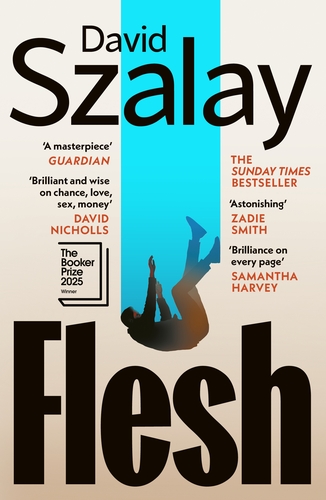
That's a tough question. In terms of winning, I often love the ones that make the shortlist and don't win, but I'm going to mention them. I'm never going to go on a podcast or do anything without talking about Rachel Kushner. I'm so sorry. Ocean Lake. No. Well, yes, but also the Mars Room. I think that is one of the best novels I've ever read. And I think it really combines what David Foster Wallace was talking about, and he was lamenting a lack of novels that both challenge and entertain and move and provoke. And I think that does all of those things. And it's just so much fun to read. And I'm really rooting for flesh as well on the Booker. This hasn't won hopefully yet, but I thought that was really phenomenal. Agreed.
Nile Faure-Bryan:
I've been shoving flesh down people's
Kaiya Shang:
Face. Me too. Me
Rhianna Dhillon:
Too.
Nile Faure-Bryan:
Yeah. Oh yeah. Fingers crossed. Fingers crossed. I'm going to have to say Orbital, because I've been a huge fan of Samantha Harvey since the Shapeless unease, or even before that, the Western Wind. But Orbital is fabulous because number one, it's slim and lots of my friends are not readers
And lots of my friends are not interested in space and looking at the world from an outside perspective, literally. But this was very, very, at least on the surface, accessible. But I mean, if anyone's read Orbital, they'll know that once you open it, it's not a one day book. You really got to take your time with it. But I thought it was incredibly clever in its construction, beautiful in its reflection, and also tender with each of the astronauts on the Space Station. I loved it and I love her, and I think everyone should read more of her.
Kaiya Shang:
The Wilderness is amazing. Her
Rhianna Dhillon:
First book.
Nile Faure-Bryan:
Oh man,
Rhianna Dhillon:
I read that recently. I still will always be talking about the Safe Keep, just Can't Stop Again. Talking about shoving books down people's stories. Have you read this? Have you read it? It's so easy. It's so easy to read. It's so short. Please read it. And our final question from the listeners is can you share some of your favourite books with Autumn settings? And that's from Astrid.
Kaiya Shang:
Oh, I found this so tough. I was thinking about this. Me too. Because I was wondering if this person wanted sort of cosy autumn reeds. And I was like, I'm such a not cosy person. But I think my idea, my interpretation of autumn reeds would be, obviously campus novels have a begin and fall a lot of the time or feature fall. So from the obvious ones, like the Secret History, stoner Prep Fel is a classic, but also maybe there's some kind of lesser, lesser known ones. One of my favourite novels ever is the Sanje by RO Kwan, which is technically sort of a campus novel. I think she's one of the finest stylists of our time, to be honest. So campus novels, obviously gothic classics are quite, they're not sort of technically with an autumn setting, but they have that kind of slightly horror, slightly Halloween, Halloween feels of them, autumn by Allie Smith. It's not so much a setting is the symbolism, but obviously it's an incredibly beautiful book.
Nile Faure-Bryan:
I struggled a big time with this as well, and this is super roundabout, but you have to forgive me because it's all I've got. My favourite poet is John Keats, and he's got this beautiful poem called Autumn. But my favourite John Keats poem is actually Hyperion. And there is a book called Hyperion by Dan Simmons, which is not set in autumn per se. And the second book is called The Fall of Hyperion. So you've got fall in there. Oh my goodness. You see what I'm saying? People know for Two Autumn, but Hyperion is beautiful because this is getting roundabout, but it's like the Canterbury Tales in space and there's a priest and there's a detective and so on. We just
Rhianna Dhillon:
Talking about Keats a second ago.
Nile Faure-Bryan:
Yeah, yeah. And there's a poet. There's a poet that is like a cyber facsimile of Keats.
Rhianna Dhillon:
Oh, I see. And
Nile Faure-Bryan:
The book Geology turns on the poem Hyper. So it follows that line, and it's about the end of humans as we know. So you could say the end of the summaries we know, which is kind of like
Rhianna Dhillon:
You are reaching, but I love it. Yeah,
Nile Faure-Bryan:
There
Rhianna Dhillon:
I'm sort of lost, but I love it. There we go. I read the artistic licence that you took with that question. Then
Nile Faure-Bryan:
I was thinking Dracula SP
Rhianna Dhillon:
Books because
Nile Faure-Bryan:
I love Dracula.
Rhianna Dhillon:
Thank you so much to everybody who submitted a question. And thank you very, very much to Zad Smith, N for O'Brien and Kaya Shang for coming to speak with me. It's been so lovely to have you all here. Links and information on all of the books that we've talked about today are available in our show notes and you can find lots more episodes and loads of other recommendations on the Penguin podcast feed and do subscribe so that you never miss an episode. Thank you so much for listening, and I will be back in a fortnight. Until then, happy reading.