Is death metal the secret to writing a bestseller? with Elif Shafak

What can Little Women teach modern boys about sisterhood? How does food become a language of love and grief? How does writing in a third language shape your creative rhythm? And why can finishing a masterpiece feel like a tragedy?
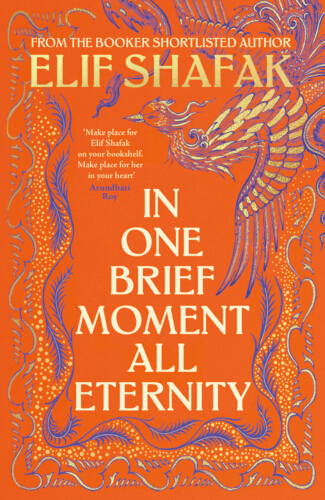
This week on Ask Penguin, Rhianna is joined by bestselling, award-winning novelist Elif Shafak to talk about her latest novel, In One Brief Moment All Eternity, a vivid reimagining of Gustave Flaubert’s life, told through the women who knew him, including his most famous creation, Emma Bovary.
Together they explore the stories and people history often forgets, why the world needs fiction more than ever, and what drew Shafak to Flaubert’s world.
About the author
Elif Shafak is an award-winning British-Turkish novelist and storyteller. She has published 21 books, 13 of which are novels and her books have been translated into almost 60 languages.The Island of Missing Trees was a finalist for the Costa Award, British Book Awards, RSL Ondaatje Prize and Women’s Prize for Fiction
Listen to the episode and subscribe to Ask Penguin wherever you get your podcasts.


Non-Penguin titles
Episode transcript
Rhianna Dhillon: Hello and welcome to Ask Penguin. The podcast all about books and the people who write and publish them. I'm Rhianna Dhillon and on this week's podcast, I'm joined by Elif Shafak. Elif has published 21 books, including There are Rivers in the Sky, 40 Rules of Love, and The Island of Missing Trees. Her work has been translated into almost 60 languages and she's been nominated for the Booker Prize, the Women's Prize for Fiction, and named by the BBC as one of the most inspiring and influential women alive. Her new novel, In One Brief Moment all Eternity, is a reinvention of the life of French writer Gustav Flaubert. The man who created literature's most scandalous heroine, Madame Bovary. Told through the eyes of the women, real and fictional, who shaped the writer, we're given an intimate portrait of a great artist through a rather unusual lens. Through Elif's signature rich, emotive prose, we're taken on a journey through his childhood, to 19th century Paris during the revolution, and onwards to the Middle East. It's a moving love letter to untold stories, neglected communities, and the enduring spirit of humanity. Elif a massive congratulations on the book. It is absolutely gorgeous. Welcome to Ask Penguin. Thank you so much for being here.
Elif Shafak: Thank you so much for having me.
Rhianna Dhillon: Now I want to start by asking you what drew you to writing about Gustav Flaubert because you know you do have some similarities you talked about on desert island desks that you were both quite lonely children he clearly was you've been on trial for your writing as was he and you have this mutual love of collating collecting stories so tell us about where the idea to write about him came from.
Elif Shafak: I so appreciate this question. It started from a very personal place to be honest a while ago a few years back I felt quite depressed about everything that's happening in the world it was so overwhelming you know like many of us I felt anxious frustrated there are wars violence immense divisions climate crisis accelerating technological uncertainties so I felt like in the middle of all this what is the point of writing a poem what is the meaning of writing short stories novels spending an entire afternoon looking for the perfect synonym I felt like I wanted to renew my faith in literature and that question and that quest took me to the 19th century you might agree or disagree with me but I think in many ways the 19th century is not over yet we're still dealing with the consequences of the 19th century it was a time of immense change revolution counter-revolution brother killing brother and in the middle of all that madness chaos and confusion there lived a French novelist called Gustav Flaubert and as you so well know he wrote this iconic novel Madame Bovary and he was regarded as the connoisseur of the female mind I wanted to take that premise and turn it upside down and let women tell his story so it started with this question of creativity in a time of crisis and then I journeyed into the life of Flaubert. But if I may very quickly add this. One doesn't have to know anything about Flaubert
Rhianna Dhillon: I was gonna ask you yeah
Elif Shafak: Or you don't need to know much about even Madame Bovary. If you do I think that's an additional layer of hopefully perhaps pleasure you know for readers but at the heart of this story in my opinion is a lonely boy who was misunderstood by almost everyone around him including his closest his dearest and he was regarded as a failure as a disappointment everyone around him was very successful and so intelligent and so on and he was even called the family idiot so he was always an outsider always treated as the other and how interesting it is that 175 more than 180 years later of that esteemed family he's the only one we remember today so the book is dedicated to anyone who might have felt like the other for any reason whatsoever I just wanted to be able to say you're my brother you're my sister that was the starting point.
Rhianna Dhillon: So how aware of his life and his background were you before you started writing this And was your way in Madame Bovary or was it the author
Elif Shafak: Whatever I write about, I do a lot of research on that subject I read anything and everything I can find I do a lot of thinking but also listening I try to listen to what the universe is telling me also I try to pay attention to oral storytelling not just written culture because sometimes oral culture remembers what written culture has conveniently forgotten so I try to pursue silences as well as stories in the case of Flaubert I had read Madame Bovary when I was younger when I was young and I hadn't liked it much to be honest and then over the years I read again and then I started to appreciate what the novelist had done with the form with the long narrative Flaubert changed the way we write novels he changed the way we write characters so he creates this very scandalous the most scandalous female character in world literature Emma Bovary but he doesn't judge her he doesn't condemn her he tries to understand her Emma is a complicated character you know she's obviously no saint but not a wicked devilish person either she's a combination of good and bad like all of us but at the same time of course he gives her arsenic he poisons her and in some editions it takes her 13 pages to die so I thought what would happen if Emma were to speak back and ask questions to her author
Rhianna Dhillon: And it's such a great pull into your novel because we sort of think that he's talking about a great love of his life we think of course that she's a real woman until we realize that actually it's the character of Emma Bovary and it's so clever and she's so outraged. She's so cross with him for writing her this pain.
Elif Shafak: I think she has every right to be outraged I mean to ask if you loved me so much you know why did you make me suffer so much but if I may quickly add this there are 30 different female voices throughout this book there is a reason why that number is 30. Some of those female voices are real like Flaubert's mother sister nursemaid who I think played an important role in his life she was the first storyteller she was the person who raised him when everyone else was in their own world this servant of the house showed so much compassion and love towards him and she introduced him to the oral culture storytelling of France at the time the superstitions all the tales about werewolves and everything I really think that opened up his imagination as a child so when we think about this great French novelist today we don't remember the nursemaid but I think we should remember so there's an attempt in this book to try to bring back the women whose voices have been forgotten erased written out of history.
Rhianna Dhillon: I think one of the great payoffs as well is seeing all of the connections that as you read on you you kind of see how characters that have come up much earlier in the book are connected and so when you're writing this network of characters that are interlinked in some way or another how do you start that how are you keeping track of that what does that web look like for you in your process
Elif Shafak: I always say to myself when I start writing a new novel this time I'm gonna keep it minimalistic it's gonna be a single thread it's gonna be linear this time you know and it doesn't evolve that way because of who I am my own writing I think every writer should do what comes naturally to them there isn't just one single path that works for everyone in my case I've always loved interdisciplinary readings I love learning from different disciplines history philosophy sociology poetry but also neuroscience water science you know nature environmental studies in my mind all of them are connected anyway and then I've always loved intercultural conversations so the title of the book for instance is comes from a Persian poem from a Persian poet called Attar his name meant perfumist when we think about East and West today unfortunately we think of these categories as mutually exclusive boxes it was never like that it was a much more fluid world ideas travelled people travelled stories travelled and literatures literary heritages of different regions contributed to each other so for instance when we think about Goethe this great German thinker writer poet he was very much influenced by Hafez the Persian poet in this case in my novel I'm gonna claim actually that at the heart of Emma Bovary this iconic French literary heroine there is an Egyptian belly dancer because Flaubert travelled extensively across the Middle East and those travels left a big impact on him and in that sense I want to bring together the European novel the canon with the literary and cultural heritage of the Middle East the Levant and the Balkans that's important to me.
Rhianna Dhillon: Just as you were talking about that I was thinking about the the leftovers of the 19th century that fluidity but also about how our perceptions of women have changed over that time as well his you talked about him being a connoisseur of the female mind which of course then he perhaps was but now we have a very different idea of what that might be um and having more agency as a woman etc. So do you think that there was like an element of Emma Bovary needing to be punished because that was the thinking at the time about women that yes she's extraordinary and it's so exciting not to have a woman that's evil or pure you know to have that mixture of the two but the fact that she still needs to be punished. Do you think we've ever really gotten over that
Elif Shafak: I think that's a brilliant question and actually it is one of the questions that Emma asks back to her author you know did you want to make an example of me so that you could teach a lesson to your readers particularly female readers but on the other hand when you read Gustav Flaubert's letters you earlier kindly asked me about how I discovered his world of course it's mostly through his fiction many of his novels not only Madame Bovary Salammbo Sentimental Education and so on but also his letters it is in his letters that you see how vulnerable he is the generosity and delicacy of his soul so there are moments when he says he so much identifies with his characters without judgment not only with his characters but also with the leaves in the forest with the trees the horses you know as they are galloping through this forest so nothing is insignificant nobody is ordinary and he wants to become each and every character in the book and I think he's sincere in that so it's almost like a transcendental journey all of that resonates with me so I don't think he wanted to punish Emma in a malicious way but of course Flaubert himself is also a flawed character he's not perfect and I would leave it up to the reader to to decide.
Rhianna Dhillon: Going back to your sort of writing process and that web of characters and which part of the research process gets you really excited you know like if you're you're maybe in a bit of a slump and you're like oh I'm excited to get out of bed today because I have this to do which element works best
Elif Shafak: What I learned over the years is that writing never gets any easier as you get older it's not like you've cracked the code and you know what you're doing not like that at all it doesn't matter whether it's your first book fifth book tenth novel you always go through these valleys of self-doubt anxiety panic attacks one week you feel like wow I have an amazing story it's gonna be so great and then the next week literally you're crawling on the floor because everything you've written the week before is so bad and you just have to chuck it out you have to
Rhianna Dhillon: I'm sure it's not Elif
Elif Shafak: Honestly so it's like this you know all I learned over the years is that that's okay that roller coaster that those ups and downs are really part of the creative process and I try to keep this in mind I like it when my characters surprise me I like it when they lead me guide me and I'm always thinking if they can surprise me maybe they can surprise the reader as well also sometimes it's the cadence the rhythm of the language that you follow Virginia Woolf talks about this sometimes you put a word on the paper because the previous word demanded that company so language has its own rhythm rules and I try to respect the art of storytelling I always feel like I've tapped into something older than me bigger than me and wiser than me and that I call the ancient art of storytelling so it's a very different chemistry energy when you sit down at your desk and you have to respect the flow of storytelling.
Rhianna Dhillon: Which character surprised you the most in the writing of this
Elif Shafak: Oh I cried really I mean this is gonna sound strange but there's a camel in the book and I really cried when I wrote about the camel I cried when I wrote about Eleanor Marx I wanted more people to know about her incredible woman of course she's known as the daughter of Karl Marx but she was a very strong personality on her own incredible woman with a strong sense of justice she is the translator of Madame Bovary for a very long time in the English language we have read this novel through her words and in fact when Nabokov was teaching Madame Bovary at Cornell and different American universities it was Eleanor Marx's translation of Madame Bovary that he preferred and used in the classroom so for a long time it was Eleanor Marx who was the bridge builder and I wanted more people to know about her.
Rhianna Dhillon: I love that. Um because you you are you're drawing on these real people you're drawing on real historical events but you've also said that everything is fictional. So tell us about weaving the two making sure that you're pulling from different elements so that there feels like a real truthfulness to it but that you are always erring on the side of fiction.
Elif Shafak: So there are amazing biographies of Gustav Flaubert and I would really encourage readers to take a look at the note to the reader at the end of the book to see the sources that I have learned so much from there are amazing biographies of female writers in particular like George Sand Eleanor Marx Louis Colet so all of these books were very important for me I read extensively about the 19th century trying to absorb the cultural political economic history of the time this was a time of siege starvation war civil war so you want to get all that information I wouldn't call it information the knowledge right however this is a work of fiction so to me fiction is where my heart beats and so this is my Flaubert this is how I imagined him and it's a very difficult balance because you don't want to diverge too far away from historical facts but at the same time you have to let your imagination guide you wherever it takes you and I like writing such books off it's the broad canvas of the novel that very much speaks to me because in our daily lives there's almost no room for multiplicity nuance calmness wisdom whereas
Rhianna Dhillon: That's so true
Elif Shafak: hide the novel Yeah all of these things are welcomed I love that complexity those multi-layered structures and fiction is the thread that keeps everything together.
Rhianna Dhillon: It's so true I think if you're reading a book you don't necessarily you're not going to remember all of the facts but you're going to remember the feeling
Elif Shafak: Yeah
Rhianna Dhillon: Of course Yeah of reading a scene for example. I mean he goes he goes through a lot
Elif Shafak: Yeah
Rhianna Dhillon: Yeah Flaubert in this book. Um he has some like you know really beautiful life-affirming moments and as you say some really agonizing ones especially by people who misunderstand him willfully or not. But I kind of love this idea about him writing his enemies sort of then become like the bad guys. And you know that must be kind of like talking about like his headmaster and for you is that something because you know that's not a new thing for an author to do authors have done that forever. And is that something that you enjoy doing sort of mining real life characters and then inserting them in whatever way in your books?
Elif Shafak: I'm not claiming that you need to have a broken childhood in order to become an author but I think all literature starts from a wound. you know there are scars there are wounds and it's almost healing to be able to write. The poet Robert Frost he says every poem starts with a lump in the throat. and you can't swallow it back so you have to express it starts I think from a place of lovesickness or homesickness some gap you know some melancholy a sense of loss. Um so all of these things are very visible in Flaubert. But of course there's also the opposite which is hope and resilience and renewal empathy connecting with humanity. Those are also very visible these contrasts. To be honest I think we're living in the age of three As right now. It's the age of anxiety anger and AI. Not an easy age. But if this were to become the age of four As meaning if apathy were to be added into the equation I think it would have become a much more difficult world to live in. The reason why I say this is because I genuinely believe that literature is the antidote to apathy. It's the antidote to numbness. It holds our hand it holds us by the hand and very gently guides us into someone else's psyche into someone else's life. In our daily lives we all occupy a tiny corner of the universe and we're so used to looking at the world from that little window. But when we are reading a work of fiction for a few hours for a few days we become someone else. That's a very humbling exercise for the ego. the author Iris Murdoch she used to call that unselfing. And so when I look at Flaubert he does that all the time unselfing and journeying into the psychology of other people. This is why I think particularly in times of crisis like the one we talked about in 19th century or today I think in times of confusion crisis and huge social political changes our need for literature is all the more vital and all the more urgent.
Rhianna Dhillon: Yeah. And you do you do such a brilliant job of pulling us into so many different perspectives as you say throughout the book so many different characters and we're seeing it first person seeing them through first person eyes as well. Were there any that you just really loved writing that just came sort of really naturally really easily to you and were there any that were just much more of a challenge?
Elif Shafak: Honestly each and every character I felt like there was a connection. If you don't feel that connection you cannot write. Right. So when I look at these 30 different female voices among them there are real people as mentioned like George Sand for instance. There are some completely imagined unknown quote unquote ordinary people like the baker there's a mad woman nobody pays attention to her pain um there's a cleaner I loved all of them. But then there are some surprising voices as well and these are non-human voices for instance syphilis the disease or the city of Istanbul which I've always thought of as a she city she is also there or opium for instance opium is associated with femininity or like a female voice. So I wanted to follow those as well. What I'm trying to say is Flaubert learned so much from the women around him some of them were not nice not all of them are necessarily kind to him like the tutor but he learned something very valuable from each and every one.
Rhianna Dhillon: Is there like another level of enjoyment that you take from writing from a perspective that you know will surprise your reader?
Elif Shafak: I try not to assume what the readers are going to think. I have to forget about the real world when I'm writing a novel. I try to stay in that imaginary world for as long as I can as deep as I can and really these imaginary characters fictional characters they become my friends. They become my companions. So for weeks months for two years you live with them day and night and that's why every time I finish a novel it's very painful for me. I don't feel a sense of achievement or anything like that. I really feel very sad. So by the time I hand it to my editor that is a very weird process. Also I start getting some panic attacks anxiety attacks because I start worrying well what are people going to say what are authorities going to say because I come from a country where as a writer you can be put on trial for writing about history sexuality gender anything that you touch as a novelist can get you in trouble. But all of that you have to think about later. You know by the time the book is done and independent of you by which point it's too late you know you cannot worry about such things and that's the way it should be if you are worrying while you're writing or if you start thinking or planning what the readers are going to say or think you cannot write. So you have to be truthful to that imaginary world.
Rhianna Dhillon: But that's why you write so beautifully that wrench of him sort of saying goodbye to Emma Bovary because you know it personally.
Elif Shafak: Yeah. Indeed. I mean it's to me fascinating he makes Emma take arsenic poison and then he himself suffers from stomach pain as if it is him who has been poisoned. Empathy pain.
Rhianna Dhillon: So there's immense yeah identification. I can understand that. I love also love I mean it's partly why I'm wearing this jumper today this electric blue jumper because colors are so vital to the structure of this story. Blue in particular. As you talked about the arsenic that's why I wore this jumper arsenic color. But um it's also like a really joyful thing to kind of return to this like the chapter headings they are items of clothing or um diaries things like that. So tell us about yeah why colors why was that a one route into this story?
Elif Shafak: So as I was reading about Flaubert's life I also started reading extensively about different kinds of epilepsy and the one that he had in my opinion was very much triggered by flash of light. And I think at least in my book every time he had a seizure he saw almost like fireworks of colors bright vivid hues. So that's why every chapter is associated with a color. Maybe he had some kind of synesthesia we don't know. I am very interested in this subject maybe a very mild and limited synesthesia is something I experience from time to time.
Rhianna Dhillon: Can you just explain for listeners who might not know what that is?
Elif Shafak: So it's almost like a convergence of sensory experiences in the sense that for instance when you utter a word it leaves a taste in your mouth or some people when they see a word in their mind's eye it comes with music or a melody. So for me the flavor of words is something that I'm very interested in. I'm always interested in food the culture of food I think food is more than just ingredients food is a language I was raised by a grandmother who was a bit of a storyteller and when she didn't know how to talk about difficult subjects my grandmother would feed you instead. That was her love language. That was how she expressed her emotions. So I think I have a lot of respect for the culture of food I read cookbooks a lot you know the rituals around food. So coming back to synesthesia I think in his case colors were very important.
Rhianna Dhillon: I love that he sort of quite literally consumes books. What they taste like gives him an emotional resonance with them as well. And I was thinking you obviously so incredibly widely read. What is your consumption of books? How do you you know how do they stay with you how do they stay in your mind how often do you read how many books do you have on the go at any one time I'm always fascinated by authors reading habits.
Elif Shafak: You know as you can hear in my accent I am not a native speaker in the English language. So for me this is an acquired language. It's my third language growing up Spanish was my second Turkish of course is my mother tongue. And the reason why I say this is because when I'm writing I'm always speaking to myself. Every immigrant knows what I'm talking about there's a gap between the mind and the tongue. Always the mind runs faster and the tongue in its own clumsy awkward way tries to catch up but never quite can. I think as immigrants we always want to crack better jokes but we can't quite do it the way we want. You're very much aware of that gap which is intimidating but it can also be inspiring. So when I'm writing in my own small room I'm always speaking out loud every sentence that I write I recite to try to hear the rhythm so I'm constantly talking to the furniture around me. As I was doing research about Flaubert I was struck by this I loved discovering that he was constantly talking to the furniture to the lamps and the chaise longues and the carpets. Of course he didn't stop there he would go out of the house and he would talk to the river the trees. He was obsessed with this. broadly speaking I think there are three types of novelists. The first group they're very much plot driven the engineering the structure of the novel is very crucial for them. There's a second group of novelists for whom characters are very important they're very character driven and then there's a third group for whom language is a passion they want to write prose that reads and flows like poetry. Flaubert was one of them. I've always felt close to that third approach. So the rhythm of the language is very important for me. So coming back to your kind question when I read as a reader I try to read across the board. I love reading non-fiction and fiction. Fiction is always where my heart beats. But let's read anything and everything that speaks to us talks to us nothing is high nothing is low I've never believed in highbrow literature versus lowbrow literature who makes those dualistic assumptions I'm sorry. So let's read political philosophy let's read graphic novels they're wonderful for imagination let's read cookbooks but let's also read neuroscience about environmental studies and then let's read extensively fiction because inside fiction I think there is emotional intelligence. There is wisdom. Not because we writers are wise people not at all but fiction is the accumulation of centuries and centuries of emotional intelligence. And in an age in which everything is guided and misguided by emotions such as anxiety such as anger we really need the guidance of literature.
Rhianna Dhillon: Yeah. You might have slightly touched on this but a listener Joanna has been in touch with us to say I admire your ability to write beautiful stories that have purpose meaning and emotion. Is it emotionally taxing for you to write them?
Elif Shafak: Yeah beautiful question. It affects me you know so there are times when I feel quite sad because something very sad has happened. However I also feel very inspired and motivated. The way I explain this is with one word actually love. I think we have to love what we're doing. I'm not claiming that every day you enjoy sitting at your desk and writing. There's we writers complain a lot we suffer a lot while we're writing but underneath all that there has to be love for what you're doing. Rumi has this beautiful poem when he talks about you know let love be your guide in everything you do whether we're bakers designers students professors writers if we love what we're doing then that's not a chore it's not a duty. It's not a career. It's not a job. It's definitely not a profession. It is how you live it's how you breathe it's how you exist.
Rhianna Dhillon: Thank you Joanna. Lovely question beautiful answer. Um but you also as well as talking to the furniture you also listen to music as well while you work. So do you have particular soundtracks to each novel and what was the soundtrack to this one?
Elif Shafak: I don don't like silence I cannot focus or concentrate think or write in silence. So music is very important for me. I've always been a metalhead since my youth sometimes people are surprised that a middle-aged Turkish woman is listening to heavy metal but I love subgenres of heavy metal so usually melodic death metal industrial Scandinavian bands particularly progressive heavy metal. I love all of that. I love discovering new bands. What I do is I don't just move from one song to another I put on my headphones I choose one song and then I listen to the same song which usually has very high energy contrasting sounds wow over and over maybe 80 times or 90 times and it becomes a loop it becomes a cycle or circle and I can then concentrate you know zoom in and zoom out. So I've listened to lots of heavy metal bands as I was writing this book. I've also listened to French heavy metal bands this amazing Mongolian heavy metal band called The Hu for instance um yeah they've all been brilliant.
Rhianna Dhillon: Oh wow different from The Who the English band presumably.
Elif Shafak: Yes yes different exactly you're very yeah that's a very good point actually indeed so this is Hu spelled as HU so The Hu yeah.
Rhianna Dhillon: Oh okay oh great. I like that we're getting music recommendations as well on this podcast.
Elif Shafak: You know they're amazing they use this old Mongolian traditional throat singing and they use old instruments typical traditional instruments they combine that with heavy metal. There's also for instance a Ukrainian band called Jinjer um and she the female vocalist singer she can do incredibly deep guttural sounds... ounds and then very gentle sounds so when you see the range of what she can achieve
Rhianna Dhillon: Yeah this I think many heavy metal musicians are actually very gentle souls
Elif Shafak: Yeah I like I like that this genre very much
Rhianna Dhillon: I'm immediately going to go and google both of those bands
Voiceover: Whatever you're into reading takes it to a whole new level Because you might be into football Stepping up to take the penalty But imagine stepping into their boots Chapter 12 The weight of 60,000 fans was on the shoulders Would I become the all-time hero or the ultimate villain You might know their lyrics But have you read their full story I grew up with my mum's choir Those harmonies they spoke to my soul If you live it read it go all in for the national year of reading
Rhianna Dhillon: Um now before we answer some more listener questions this is a big year for books we're celebrating the national year of reading which is a huge campaign designed to ignite people's passion for reading and books so we wanted to ask you which book in particular sparked your love of reading
Elif Shafak: You know I I really mean it when I say books changed us because it it happened to me I was a very lonely child I was an only child raised by a single working mum and partly by my grandmother also there were ruptures you know migrations I was born in France my parents got separated we came to Turkey to Ankara a very conservative very patriarchal and inward looking neighbourhood where I felt like we didn't quite fit in and then around the time I was a teenager I moved to Spain and so on the reason why I mention all these things is because throughout those movements and that feeling of loneliness books became my companions In my grandmother's house there were not too many books she didn't have an amazing library there were only few books and I would reread them I learned the importance of rereading and I would try to imagine different endings for the existing books But it was especially when I moved to Spain with my mother I started learning Spanish I started learning English and then one day I discovered a book called Don Quixote It was a children's edition a shorter version and it just it was incredible I didn't know books could do that I didn't know novels could be written like that not only the beauty of the imagination the sense of freedom that it gave me I could connect with this crazy knight roaming La Mancha with with Sancho the squire um not only the characters whom I loved but also the craftsmanship how the the novel was written stayed with me and I think it was life-changing so in my novel fast forward in one brief moment all eternity there's a big salute to Cervantes to Don Quixote but particularly to this female character called Dulcinea
Rhianna Dhillon: Yeah I love it all ties back together again with you Elif Um and what is your sort of favourite habit to fit reading into your life to make sure that you're always reading
Elif Shafak: We have to make books our our companions in our daily lives and just try to keep the curiosity of the mind alive Children they're so sincere they ask the biggest questions about mortality God earth we stop asking these questions because we're so worried about other people's judgments um we little by little kill our own creativity so just to reconnect with the chutzpah and confidence and creativity that all of us had naturally when we were children That is important I try to read not only eurocentric literature you know try to read from different parts of the world from different disciplines I don't like it when we are atomised I think we're too much in our own little spaces I like it when a novelist becomes interested in water science or neuroscience or physics I don't know anything about these fields but I'm ready to learn so I become a student of these realms
Rhianna Dhillon: And just finally before we move on to listener questions what can we expect from you next
Elif Shafak: I appreciate this question when I finish a novel I don't immediately start a new one there's always this pendulum because while I'm writing I become very reclusive I become like a hermit
Rhianna Dhillon: Right So this is party time for you
Elif Shafak: And then when the book is done I become the pendulum swings to the other end and I become a more social normal human being I am always an introvert I mean if you put me inside a social setting I feel very awkward but it's an endless mystery to the introvert in me just how much I enjoy doing literary events so when I go to a book festival I love it when we talk about literature that public space is very important and then naturally the pendulum swings back So right now I am doing literary events and trying to listen to what people are saying but also what the universe is saying
Rhianna Dhillon: I love that so much Elif Shafak's in one brief moment all eternity is out now and Elif is going to be sticking around to answer some of our listener requests for book recommendations Elif thank you so much
Elif Shafak: Thank you so much it was such a pleasure for me I'm very grateful thank you
Rhianna Dhillon: Now joining me and Elif are our Penguin colleagues Rachel Dealy and Izzy Levine Thank you so much for joining us and joining me and Elif we've had a lovely conversation and now it's time for some listener recs So Lahite asks what is one book you think every young adult should read at least once and why Izzy do you want to kick us off
Izzy Levine: Yes so my precursor a little ramble before I pick something is I do think anything and everything that grabs your attention I think when you're young is just the most amazing time to discover lots of things and soak up as much knowledge because oh it's just the best but my personal pick would be Little Women A classic I think it taught me so much about sisterhood and female friendship and just growing up and you know the different routes in life that you can take and the sort of complexities of that I think it's great for for girls and women to read as they grow up I think it's also really important for boys that are trying to understand you know sisterhood and women and the unique experiences that they go through and yeah it's just a brilliant novel
Rhianna Dhillon: So That's a lovely recommendation Rachel
Rachel Dealy: Um thinking about this like I I feel like so much of it hinges on like who you are and what your like experiences or your challenges are when you're in that formative stage of life I think one book that for some reason really resonated with me was This Side of Paradise by F Scott Fitzgerald I know a lot of people come across The Great Gatsby when they're in school and whatnot but there was just something about the gorgeous nature of the prose that really stayed with me and I feel like it's perfect for someone who's kind of wishing their life away you know and kind of romanticising maybe that next step of life I'd also recommend a more recent book that's come out Open Heaven by Sean Hewitt It's great for anyone who's going through that kind of again a formative experience of unrequited love especially if you're in the LGBTQ community it's just a beautifully written sort of I guess coming of age story about a very like quiet reserved boy living in like rural England in the 90s and this kind of friendship that he strikes up and this unrequited love that kind of forms from it that really stays with him
Rhianna Dhillon: Oh god unrequited love is the most heartbreaking though God okay But if you're recommending it okay fine Elif what about you
Elif Shafak: I was thinking as I was listening to your recommendations about the books that left a big impact on me when I was much younger and one of them was definitely Charles Dickens A Tale of Two Cities I remember that was the summer my parents got officially divorced and I spent half of the summer with my maternal grandmother half of the summer with my paternal grandmother they were very different women and I was commuting between these two very different lifestyles cities Ankara and Izmir and I was reading A Tale of Two Cities and it somehow stayed with me But I would also say for particularly younger readers as you said you know anything and everything that speaks to them is the right book In addition to that I think I would say books by James Baldwin are very very empowering inspiring and there's a moment when he says you think your sadness your loneliness your wounds I'm just paraphrasing it's only happening to you but then you read and then you realize you're not basically alone and that's a very strong feeling so James Baldwin would be I think my choice
Rhianna Dhillon: Yeah I know you don't believe in highbrow and lowbrow However You said James Baldwin I'm going to go with like the Angus Thongs and Full-Frontal Snogging series um Louise Rennison who to me because she wrote about Brighton which is where I grew up as a teenager and she's writing about teenagers growing up in Brighton and I think just that experience of laughing along with your friends and being being idiots and being unapologetic about it And it was really nice to read that and be like oh you don't have to be cool all the time It's fine that you're not it's fine that you're like an in-betweener like as a girl because the in-betweeners didn't exist at that point So just as a young adult I felt like that spoke to me quite a lot but slightly lower brow than some of those suggestions but those are really lovely ones Beautiful Um if you could only read one book for the rest of your life what would it be and why That's so hard Torture So hard It is it's kind of torturous Rachel
Rachel Dealy: Um I was going to say like I'm not a fan of rereading books so it's just anything I haven't gotten around to reading yet Like I think I've been a fifth of the way through Anna Karenina for as long as I can remember so I need to pick that up again
Rhianna Dhillon: It would it would make you finish it
Rachel Dealy: Yeah probably
Rhianna Dhillon: There must be a reason why you can't
Rachel Dealy: I'm terrible at just flitting between books it's not a reflection on the book itself Um I feel like if I just have an excuse to sort of hunker down and read something long book then that'll be it
Rhianna Dhillon: That is a long book so you so you would find new things each reading hopefully
Rachel Dealy: Okay yeah Anna Karenina's a great one
Rhianna Dhillon: Elif
Elif Shafak: This is a very difficult question I guess any book that has like stories within stories like 1001 Nights the tale of Genji or Don Quixote in which yeah the sub-stories also open up your imagination I would choose one of these three
Rhianna Dhillon: Great idea Izzy
Izzy Levine: I promise it's not just because the author's sat next to me
Rhianna Dhillon: Oh so far
Izzy Levine: But we were talking about this before that 10 Minutes 38 Seconds in this Strange World is my favourite book
Rhianna Dhillon: Oh Remind us who that's by
Izzy Levine: Um and there's a couple of reasons I think for me like the power of reading is the book itself but also when you receive the book and like what happened to you like the story behind that My auntie actually really randomly for my Christmas present found a bundle of all the six books that were shortlisted for the Booker Prize And obviously that gorgeous blue hardback was in it And it was the first one I read of the six which I pretty much read them all back to back and like loved them all And it was kind of the first time that I'd like discovered like modern day fiction and I was like this is it like I need to I need to basically like be reading stories all the time And then obviously the book itself is sat in Istanbul and Leila Tequila Leila has just been found like in a dustbin and it's like the last 10 minutes 38 seconds in her life before her brain fully shuts down And through her senses she sort of discovers she sort of goes back through all her memories and when you talk about the five friends it's just like the most heartwarming and like just yeah every time I reread it which is pretty much once a year I am a rereader it just I just take something new from it every single time So yeah the power of friendship power of female experience how you talk about cities yeah
Elif Shafak: There's always something new in there That means a lot to me Thank you so much
Izzy Levine: It meant so much to me as well like having read it and I do really look back on like my career in publishing and that point of receiving those six hardbacks is actually where it began So thank you for listening to this
Elif Shafak: That's incredible That's lovely What a great catalyst Beautiful yeah very grateful
Rhianna Dhillon: Um what is your favourite read that captures the beauty of the environment either fiction or non-fiction
Rachel Dealy: Um I think I'd go with a non-fiction pick Braiding Sweetgrass by Robin Wall Kimmerer Yeah it's this beautiful blending of sort of the scientific sensibility because the author is a botanist but she's also indigenous um so it's sort of blending these like sort of two approaches to wisdom and the environment and also brings in a kind of feminist strain and I think it's just beautiful and it's like it's a sort of cult classic and a favourite for a reason
Rhianna Dhillon: Yeah Fab Beautiful
Elif Shafak: Can I just poetry
Rhianna Dhillon: Of course Yes
Elif Shafak: I think people like Walt Whitman maybe Emily Dickinson for a different reason they they to me the way they see the universe the environment paying attention to every little detail nothing is insignificant nothing is ordinary To me this was an important guide also when I was writing There Are Rivers in the Sky You know I was looking at this raindrop I mean maybe the novel itself looks a little bit epic in the sense that it does span countries continents and cultures but everything started with a very humble raindrop And I was looking at this raindrop and thinking can I tell his story So maybe it's the same question that William Blake was asking about a grain of sand It felt like almost a spiritual question not only a literary one and that's why I might choose Blake William Blake Walt Whitman and Emily Dickinson I think they bring us closer to nature
Rhianna Dhillon: I think you're right I think I studied William Blake too young To appreciate I think I would appreciate his work a lot more now Now yeah I think at 15 16 I didn't quite have the maturity
Elif Shafak: Yeah But that's yeah that's the importance of rereading
Rhianna Dhillon: Yes Rachel Izzy
Izzy Levine: Um I'm going to say Richard Powers' books um his last book Playground in particular the way he just talks about the ocean is just magical there's some amazing descriptions in there And in the book it's sort of set around an island I think in French Polynesia can't remember exactly and it has different sort of strands of stories that are all woven together through the ocean and it looks at technology and our relationship to the environment in just such a beautiful and magical way so I think Playground would be my choice
Rhianna Dhillon: I love that I know that Sarah who works on the podcast would talk about Rob Macfarlane's Underland
Izzy Levine: Yes Very much
Elif Shafak: Wonderful book
Rhianna Dhillon: Yeah Gorgeous So just to throw that in for her Um what is the last book that made you smile
Rachel Dealy: I feel like all books make me smile actually I always find humour in books but yeah I was going to say the same thing like whether it's a little dark and twisted honestly little reasons to smile I think I was thinking about this and I think it made me laugh and smile that All In by Clare Powell It's just genuinely laugh out loud funny it's um a story it's about a family on a somewhat doomed all-inclusive holiday It's sort of two brothers who really don't get along they couldn't be more different from each other their sort of elderly widowed father their respective partners and it's just a sort of clash of personalities all against a very sort of realistic backdrop right from the sort of the Wetherspoons in Gatwick
Rhianna Dhillon: Oh wow yeah
Rachel Dealy: You know to when you get to the the hotel and it really evoked that sort of summer holiday vibe um for all the wrong reasons
Rhianna Dhillon: I feel like I've been on that holiday That's so that's really fun The doomed all-inclusive I just feel like those are already synonymous with each other Um Izzy what about you
Izzy Levine: I'm more of a crier than a smiler typically um but I do always go back to like a Nora Ephron book like Heartburn or the essays they will always make me smile with like a little twinge of sadness as well Her humour I think as well growing up Jewish like it just resonates so perfectly So I think that would be my answer
Rhianna Dhillon: That's a great one Yeah Elif
Elif Shafak: This year I was a judge for the Baillie Gifford Prize and uh me and my fellow judges we read over 130 non-fiction titles
Rhianna Dhillon: Oh
Elif Shafak: Many of them with quite heavy subjects So I didn't you know I wasn't smiling a lot as I was reading I it was lovely I I really encourage everyone to check our long list and the short list But one of the books was Barbara Cartland's uh memoir my Matthew Sturgis The Great Dictator It's very interesting you know so there are moments when I chuckled and very interesting this woman writer and her intelligence in a very also patriarchal world maybe that that title
Rhianna Dhillon: Yeah Nice I love the range of books that we've got there Thank you so much all of you Thank you to Elif Rachel and Izzy for all of those wonderful suggestions If you want more information on any of the books that we've mentioned today you can find links to all of them in the show notes and if you've got a question for the Ask Penguin team you can follow us on Instagram on @askpenguinpodcast and message us there Thank you very much for listening to this latest episode of Ask Penguin and we'll be back very very soon But in the meantime happy reading.