Born in Santiago, Chile, in 1953, Roberto Bolaño rose to prominence as one of the most influential figures in Latin American literature. Fans of his work include Paul Auster, Patti Smith, Lauren Groff and Marlon James , and he was hailed by The New Yorker
Bolaño's untimely death at the age of 50 cut short a career that was just beginning to receive global recognition, leaving behind a legacy that continues to inspire and enthral readers.
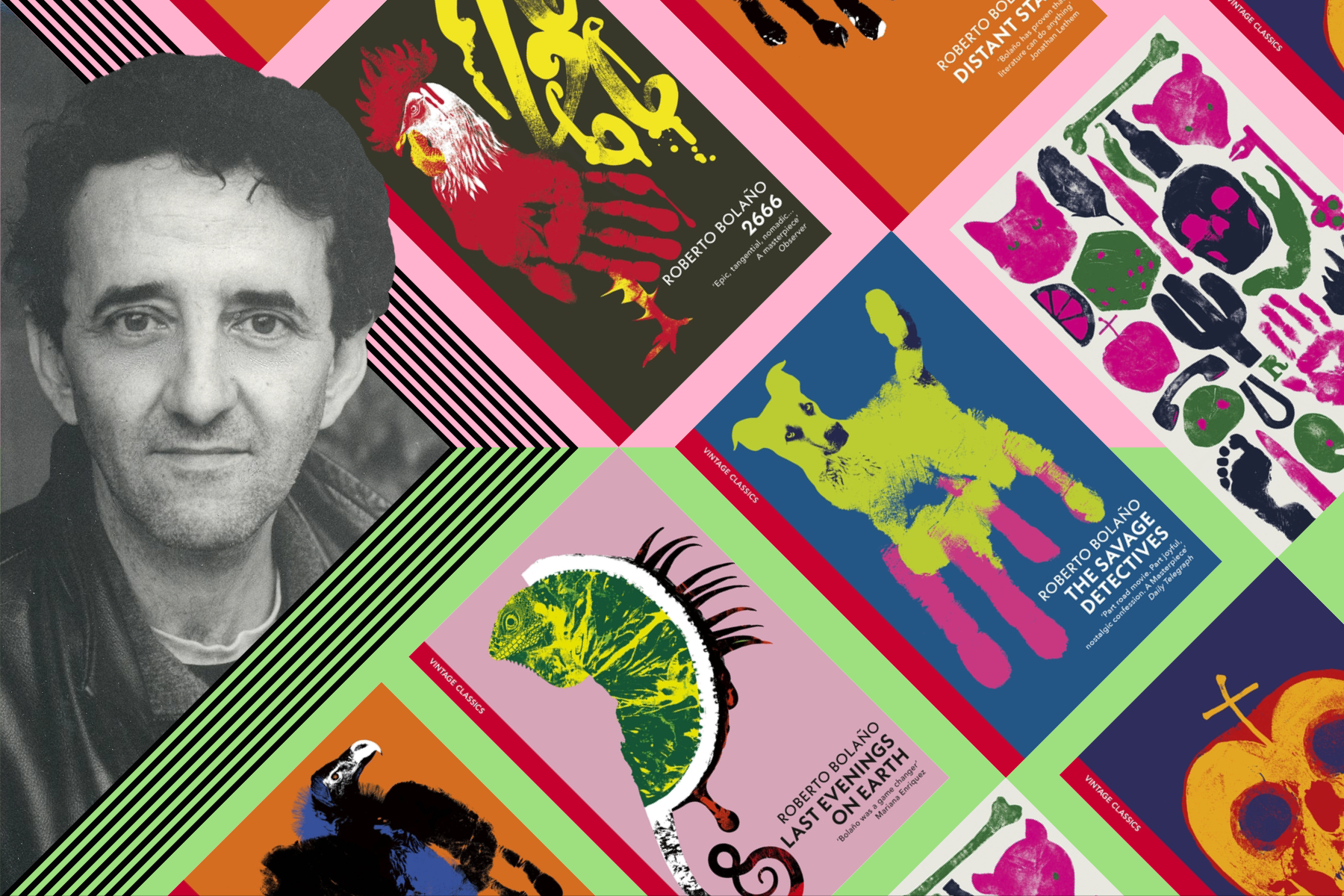
This autumn, Vintage Classics are publishing the work of Roberto Bolaño for the first time. With bold and striking jacket illustrations by the Chilean artist Diego Becas , these editions are the perfect opportunity to add Bolaño to your shelf.
For those who are new to his work, the sheer breadth and depth of Bolaño’s literary output can be daunting. Here are six of his most beloved books, each offering a unique entry point into the world of Bolaño.
Last Evenings on Earth introduces readers to Bolaño’s immeasurable gifts as a short-story writer, making it a great place to start. A collection of haunting stories set in the Chilean exile diaspora of Latin America and Europe, the collection offers a glimpse into the ‘failed generation’ and the melancholy folklore of exile. The New Yorker (Translated by Chris Andrews)
The Savage Detectives is one of Bolaño’s most famous novels, winning the Rómulo Gallegos Prize in 1999. Set on New Year’s Eve, 1975, the story follows two men on the run they embark on a quest to track down the mythical, vanished poet Cesárea Tinajero. Told, shared and mythologised by a generation of lovers, rebels and readers, their testimonies are woven together into one of the most dazzling Latin American novels of all time. At 672 pages, it is a bigger commitment than some of his other works – but a rewarding one. (Translated by Natasha Wimmer)
By Night in Chile was the first of Bolaños works to be translated into English. The novella’s narrator, Father Sebastián Urrutia Lacroix, is dying. In his feverish delirium, the crucial events of his past swell around him, offering glimpses of literary luminaries such as Pablo Neruda and the German writer Ernst Jünger , as well as nightmarish flashes of falcons and falconers. This is a great read in which to discover the ‘wit’ and ‘brutal honesty’ for which Marlon James praised Bolaño. (Translated by Chris Andrews)
Distant Star is another wonderful novella that will give you a concise understanding of Bolaño’s narrative style. Once the quiet, unknowable, unpromising member of Chile’s young poetry scene, Alberto is reborn as the country’s leading celebrity poet, Carlos Wieder, after the military coup of 1973. Told across his years in exile in Europe, the narrator’s attempts to trace the fate of his old circle will lead him to one last confrontation with the brutality of their generation. (Translated by Chris Andrews)
Exemplifying his command of short-form fiction, this collection of stories is a beautiful gift edition featuring an introduction by writer and literary critic Chris Power. From melancholic portraits of exile and its associated folklore, to a rogue’s gallery of desperate characters futilely attempting to unearth the animating secrets of the world, each of Bolaño’s short fictions adds yet another door, window or secret passage into the sinister, eerie universe that he brought to life throughout his body of work.
If you enjoy epic novels then 2666 is a must-read. At over 900 pages, it demonstrates the full scope of Bolaño’s writing prowess, with multiple storylines and stories within stories. Set in Santa Teresa, on the Mexico-US border, the story revolves around the unsolved and ongoing murders of women while an ominous shadow of corruption and violence looms large. 2666 was Bolaño’s final novel and in 2008 won the National Book Critics Circle Award for Fiction. The New York Times ‘a landmark in what’s possible for the novel’. (Translated by Natasha Wimmer)