Which books help us reconnect with nature? with Robert Macfarlane and Jackie Morris

Why do baby puffins prefer to be alone? Why don’t Cuckoo birds raise their own children? Has the decline of birds taken away the music of our landscapes? And what is the simplest way back if we feel disconnected from nature?
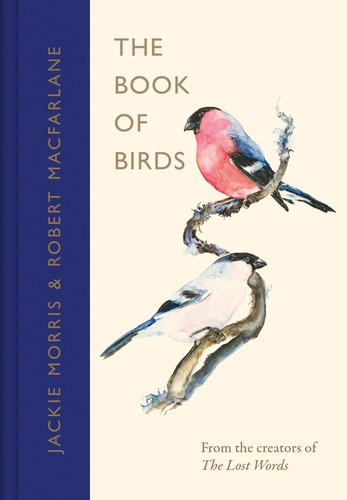
In this episode of Ask Penguin, Rhianna is joined by visionary creative duo, Robert Macfarlane and Jackie Morris to discuss their latest collaboration, The Books of Birds, a beautifully illustrated and poetic look at some of natures most unique and fascinating birds. Plus plenty of book recommendations from books that explore the British landscapes and our favourite anthropomorphised animals as main characters.
Listen to the episode and subscribe to Ask Penguin wherever you get your podcasts.


Non-Penguin titles
Episode Transcript
Rhianna Dhillon: Hello and welcome to Ask Penguin, the podcast all about books and the people who write and publish them. I'm Arlene, and this week I'll be sitting down with Robert Macfarlane and Jackie Morris to talk all about their new book, The Book of Birds. Robert Macfarlane is a Sunday Times and New York Times bestselling author, paint is a wordsmith, and, underhand, Rob is also a close collaborator of artist Jackie Morris, who has written or illustrated over 70 books, including much-cherished classics The Memory Journey and East of the Sun, West of the Moon. Together, Robert and Jackie are the pair behind the internationally bestselling and award-winning books The Lost Words and The Lost Spells.
Their new book, The Book of Birds, is a love letter to the splendors and mysteries of bird life, and a clarion call to halt the loss of birds from land, sea, and sky. Filled with Rob's evocative descriptions of their habits and habitats and Jackie's exhilarating artwork, this is a book for bird lovers and beyond. A compendium of 49 bird species, all of which are presently declining or endangered in Britain, The Book of Birds asks not "what is a bird?" but "who is that bird?" and shows readers not just how to identify birds, but also how to identify with them.
Now, just before we meet our authors, I'm thrilled to be able to say that we've got a small extract from the audiobook of The Book of Birds.
Rhianna Dhillon: Rob, Jackie, congratulations on the book. Welcome to Ask Penguin. How are you both doing?
Robert Macfarlane: Very well. Yeah.
Jackie Morris: Yeah, yeah, good. Nice to see him. (Laughter)
Robert Macfarlane: I live in the Far East.
Jackie Morris: Yeah, we're not often allowed to be this close together, really.
Rhianna Dhillon: Is the world going to implode?
Jackie Morris: No, no, but yeah, we do live on opposite sides of the country. You couldn't really get much further away, could you? No, if you tried. And believe me, he tried. (Laughter)
Rhianna Dhillon: Um, just for listeners who can't see the podcast, Jackie is currently illustrating the pages of The Book of Birds, which is gorgeous to watch and a treat. So, make sure you check it out on YouTube if you get the chance.
So, we just heard an extract from the audiobook featuring the black-throated diver. Tell us about this bird.
Robert Macfarlane: Oh. Well, it's the sound of the north to me. I'm a very north-minded person. I head up to to the mountains and the lochs of Scotland often, uh climbed in Greenland, and kayaked in Canada. And the loon, as it's called in Canada—the diver, of which this is one species—has this haunting, haunting cry. So, there's a folkloric tradition of it of that cry being and marking a passage between the worlds. So, it has like so many birds, you know, we make story of birds. We've been telling stories of and with birds for thousands of years. So, yeah, the diver is a beautiful one and a haunting one to me.
Rhianna Dhillon: I don't mean to bring the tone down, but the loon is featured is featured, I think, in Heated Rivalry. (Laughter) There's a whole little mini-subplot to do with the loon, the call of a loon.
Robert Macfarlane: You hear the call of the loon?
Rhianna Dhillon: Yes.
Robert Macfarlane: So, what happens?
Rhianna Dhillon: Well, it just really freaks out the big, macho, tough guy, Ilya Rozanov, and it's become like a whole thing. So actually, the loon is now very very a very popular bird.
Jackie Morris: Well, I have no idea what you guys are talking about. (Laughter)
Robert Macfarlane: I think I'm going to have to rewrite rewrite that section. (Laughter)
Jackie Morris: Oh, we'll talk about that later.
Rhianna Dhillon: There are there are so many incredible birds, and obviously the black-throated diver just happens to be one of our favorites. But a listener wants to know, was there any sort of particular bird that you wanted to give more attention to than others? More than others? Which, as I said, I think they're just asking what's your favorite bird? (Laughter)
Robert Macfarlane: Well, I sometimes ask that by saying, what bird would you wish to be for a day or a week or a month or a year? What's, I think I know yours, Jackie.
Jackie Morris: My real answer is I would be all birds and every bird, and because I'm greedy and I want to be everything. (Laughter) And shape-shift between, and sometimes fly on the wings of a swan, um, which whistle in the air, and sometimes a raven, and sometimes imagine a hummingbird. Um, so it's kind of all birds and every bird. But if I had to pick just one, I am rather enamored by the female cuckoo, um, and her cunning knack of laying her egg in somebody else's nest and letting someone else bring up her children so that she can get on with life. (Laughter)
Everything about the female cuckoo just fascinates me, and I've been learning so much about it. She's also a birdwatcher, because she has to watch the the host birds that she's dropping her egg into, and she has to put it in in just the right time to kind of make sure that her egg gets the maximum chance of success. Because she's also battling these poor little host birds. We must remember them.
Robert Macfarlane: Yeah.
Jackie Morris: Because I love them too.
Rhianna Dhillon: Does she have a preference?
Jackie Morris: Yeah, they do. They specialize in different ones, and the egg that grows inside them mimics the egg of the bird that is their host bird.
Robert Macfarlane: Unbelievable. Like a kind of counterfeiter, sort of printing fake banknotes. They they can print—
Rhianna Dhillon: It can change it can change each time?
Robert Macfarlane: They can print—
Jackie Morris: Yeah.
Rhianna Dhillon: I didn't know that.
Robert Macfarlane: Mimic eggs. Yeah.
Jackie Morris: But also, the host bird changes their egg to it's like a kind of arms race between the two birds. So, they change their egg, but it happens so slowly over generations. And apparently, the dunnock is the only one that they don't mimic.
Robert Macfarlane: But the dunnock still bring them up. Yeah.
Jackie Morris: And they and they and the dunnock still bring them up, but the egg doesn't look like the dunnock's egg. And they think this is because of the changing landscape in Britain. Because, um, there's more hedgerows than woods now, and so it's only over the last few thousand years that they've been predating on dunnocks. And they haven't learned yet to recognize and chuck it out.
Rhianna Dhillon: Wow.
Jackie Morris: So, cuckoo.
Rhianna Dhillon: That's—
Jackie Morris: She's also like, he's the one that gets all the attention because he's always, uh, he's the gobby one who sits on the branch going "cuckoo, cuckoo." And she has this beautiful song, which I think people hear but don't recognize. It's a bit like a a laughing blackbird. And she does it mostly when she's just popped her egg in someone else's nest. (Laughter) Comedienne. She's done a high. Yeah, yeah, chortling away. There's another one, there's another one gone, don't have to raise that one.
But then what amazes me is that egg is raised by the host parents, but all the adult cuckoos have gone. And yet, the children still know where to fly to in their migration. And it's magic. That was a long answer.
Rhianna Dhillon: That's a great answer. Rob, what about you?
Robert Macfarlane: (Laughter) All right. I think probably the curlew, a kind of long-legged bird of the uplands, and they have, again, this beautiful bubbling call that sometimes sounds like like what I imagine a spring would sound like if it sang. It bubbles up. Yeah, haunting and joyous, but it depends how you're feeling on the day you hear it, I think.
Rhianna Dhillon: Um, I'm sorry, I'm getting very distracted by what you're going to paint next in the pages of The Book of Birds, Jackie.
Jackie Morris: I'm just going to put a feather in this one, and then we can sign it. So, it'll be signed with the painting and and words. Both things. And then Rob will do a quick painting. (Laughter)
Robert Macfarlane: All my paintings look like dogs or deck chairs. (Laughter)
Rhianna Dhillon: Are they dogs or deck chairs?
Robert Macfarlane: No, whatever I intend, it still comes out comes out like that, yeah.
Rhianna Dhillon: So, this book was seven years in the making. And our our listener Jenny, I mean once you see kind of just how much you've packed in there, it makes sense. But um, a listener, Jenny, wants to know where did your passion for birds come from in the first place?
Robert Macfarlane: I distinguish between birders, of whom I am not one, who are amazing, and their knowledge is incredible. And birdie people, of whom I am one. I'm deeply birdie, (Laughter) but I'm not a birder.
But I, I mean, I grew up as a climber, a mountaineer, mountain person. And so, all my early birds were mountain birds. So, the curlew that I've mentioned, the dipper, which is a bird of clean running mountain streams, the ptarmigan, which is a white-plumaged bird that you find up on the Cairngorm plateau, snow buntings, golden eagles. So, that's where I fell in love with birds. They were indistinguishable from mountains and mountain days for me. And then slowly, I've learned to see them all around, because our cities are full of them, our skies run with them, our gardens sing with them. But learning the everyday birds took me longer.
Rhianna Dhillon: And you've worked together on a number of books over the years. Another of our listeners would like to know, what is it like to collaborate on such a special book together? And how do you collaborate? Such a special book. Is it? I think it's incredibly special. So does the listener.
Robert Macfarlane: I hope it is. I like working with Rob.
Jackie Morris: I like working with you.
Robert Macfarlane: Ten years.
Jackie Morris: It's okay, isn't it?
Robert Macfarlane: Yeah. Yeah. It is surprising to people how little we see each other, because so much of it happens by WhatsApp, by email. Right. You know, but when when my WhatsApp pings from Jackie, when we're working on something, which we're almost always doing, suddenly a a raven shimmering on a background of gold leaf appears in my WhatsApp. It's like the best WhatsApp ever. (Laughter) Um, and but I think that's partly why, with each book, we try to learn a different way of telling and and seeing. Is that right?
Jackie Morris: Yeah. Yeah, I mean each book is different. It's very different. It's strange, once it's finished, we kind of know how we did it. There one of the parts I like is the framing it right at the beginning, you know, because it's it's one thing to have an idea, but it's quite another to kind of wrestle it to the ground and then make it into a thing. So, I think each book has been very different, hasn't it?
And this one seems to have taken up a lot of life. So much has happened in seven years. It started out as something the size of The Observer's Book of Birds. Just a sort of very small. And then, it entered a period of lockdown. (Laughter) Because it started in, yeah, before—
Robert Macfarlane: Oh yeah, we were thinking about it in 2018, and thinking, how do we how do you reimagine the field guide? How do you reimagine—and there's these books, got one here, but they're in so many houses quietly, they sort of sit in shabby editions that are well-used, well-thumbed by the kitchen window, or in the glove box of a car, and near the binoculars. Um, and we both grew up loving field guides, reading them, bird guides. What was the one that you—I didn't read the words, I only read the pictures. Yeah, you read the pictures. (Laughter)
Jackie Morris: I had the AA, The Reader's Digest AA Book of British Birds, that has the tawny owl on the cover, and my copy is kind of loved to death. It's falling to pieces now. But I realized, I think last year, that I I've hardly read any words. I read the names of the birds, and I learned the shape of birds through the paintings, which are by Raymond Harris Ching. Gorgeous paintings. When I was a kid, I used to draw all the time, and I used to just with pencil crayons, because I couldn't paint, I just used to copy the paintings out of that book. And, uh, sometimes I even used to sell them, which is—
Rhianna Dhillon: Did you?
Jackie Morris: Yeah, you shouldn't do that. 16 quid, I was a lot cheaper then. (Laughter)
Rhianna Dhillon: That's quite entrepreneurial, though.
Robert Macfarlane: It was a good investment by whoever bought it. 16 quid early Morrises.
Jackie Morris: I don't think so. I've got one at home. (Laughter) They, I mean they, it's interesting now to look at it and think, um, I've got one of the long-tailed tit, and it's actually a pretty good drawing. And then, I'm looking at the bird book thinking, oh, have I actually come on in in that 45 years? (Laughter) Or more.
Rhianna Dhillon: I'm sure I'm sure.
Jackie Morris: I hope so. I think learning the shape of birds and and seeing them, my relationship with birds has changed during the making of this book. The Lost Spells butted in, do you remember? Elbowed its little way in.
Rhianna Dhillon: Which did?
Jackie Morris: The Lost Spells, the second book. Because we'd started The Book of Birds, and then I think you'd been writing, you'd done the goldfinch, and you'd done heartwood, and there seemed to be a space for another smaller book of, um, spells. So, that one kind of butted its way in. So, that this is why seven years, yes, but, you know, Rob's done a couple of books in that time. Were you doing Underland and River?
Robert Macfarlane: Uh, River, yeah, mostly River, so—
Jackie Morris: How long did River take?
Robert Macfarlane: Well, five years, but they live alongside one another and they flow in and out of one another. I think that's what I found.
Jackie Morris: For me, it's really different because, you know, I was working on other books, but I was writing them. For you, you're writing.
Robert Macfarlane: Yeah, I didn't paint any books, so that was nobody needs that. (Laughter)
Rhianna Dhillon: And it's not it's not an exhaustive list of birds. So, how did you land on what was to be included? What did did you have any arguments about kind of what you were desperate to include?
Jackie Morris: Yes, we did.
Rhianna Dhillon: Yes?
Jackie Morris: Yes, we did. (Laughter) Disagreements. Oh, apparently, we did have arguments. (Laughter) I clearly remember them differently.
Rhianna Dhillon: Caught Rob's eye. Jackie was fuming the whole time.
Jackie Morris: No, it changed, didn't it?
Robert Macfarlane: If this were to be a comprehensive field guide to the birds that breed, have passage through, and and live in in this island group, it would there are sort of 280 plus of them. So, it would be, yeah, it would be shaped like a refrigerator, (Laughter) and um there would probably be one copy of it. So, in the end, we settled on 49 49 birds, so seven sets of seven, and they're separated by these the seven wonders of bird. And that I think that was the breakthrough with the book is when we realized that a way to to celebrate this everyday miracle of bird is to recognize the wonders that make it up. And they are the seven 'R' in nest, egg, beak, song, feather, flight, and migration.
And these extraordinary things happen around us all of the time, and we we notice them and are amazed, or we forget them and they begin to disappear. So, I suppose that's the other thing to say is this book was made at a time of and in the shadow of loss. So, we have lost as an absolute number, we have lost around 70 million birds in the UK since 1980, and around 600 million across Europe. The skies are thinner, and the springs are quieter by that absolute number of birds.
And many of them have been our commonest. The starlings—I'm wearing a starling badge today. House sparrows, cheeky chappies of the of the street and the hedge. Huge losses in those numbers. Also skylarks, some of the most beautiful songsters ever in the world, huge declines. So, this is partly a celebration of wonder, but also a sort of warning, I suppose.
Host: Um, that is a shocking number. It is, isn't it? Really is. Yeah. It's really hard.
Jackie Morris: It's hard to see. It's really hard to see absence.
Rhianna Dhillon: Yes, you mentioned this in the foreword, and it's a really beautiful point about how you recognize presence, but you don't notice absence.
Robert Macfarlane: Yeah. Yeah.
Rhianna Dhillon: And also, death comes up quite a lot within the book as well. So, can you tell us about that correlation between grief and birds?
Robert Macfarlane: Well, I can start just by saying that it's woven deep into, you know, we tell joyful stories with birds and we tell grieving stories with birds. We tell every kind of story with birds. We make metaphors out of them—songs, poems, artwork, endlessly artwork. The earliest engraving of a ptarmigan is is a piece of Ice Age art. So, but grief, yes, I mean, birds are messengers. They cross thresholds and dimensions. They move from from earth to air. Seabirds swim, uh fly, as it were, under water. So, they're real they're real border crossers, and I think that's what draws us to them to help us think about the great crossing that is death, which goes into the great mystery. And so, birds are there as consolation and and to give form to us. But there were actual deaths as well.
Jackie Morris: Yeah.
Robert Macfarlane: Yeah, you lost your your father.
Jackie Morris: My dad, um, was one of the people, well, he was the main person I think I used to go walking with him and he would show me how to see where the skylarks came down to land, and then they never land right where their nest is. They kind of look around first to see who's watching. (Laughter) Um, so that was one of my ways into birds. Um, the way that I kind of remember it is that birds were the first thing that I noticed outside of myself as human. Because when you're a child, you are the center of your own world, and it's you don't realize there's a sudden moment where you think, oh, that's alive and that's alive, everything's alive. So, seeing birds thread through the hedges, um, I always lived in towns, but my dad would take me out to fields where there were massive flocks of lapwing. And he would talk about how when he was a kid, he grew up in the middle of Birmingham, but also they would go up onto the Clent Hills and there were lapwing up there in flocks three times the size, you know. So, I had this this kind of narrative.
I could never understand why many people that I grew up with didn't actually see birds. And I think this is one of the things we tried to weave into the book is that utter awe and wonder at these creatures. You know, we talk about people being bird-brained.
Robert Macfarlane: Hm.
Jackie Morris: And I've, you know, I I would take that, (Laughter) because the intelligence, avian intelligence, is just phenomenal. Um, so I I want to try and enchant a new generation into this love of birds so that we can turn a tide, really, and raise that song and listen more, um, and—
Robert Macfarlane: And there are incredible stories of, you know, birds pour back when the circumstances are there for them to do so. The red kite was down to just a handful of pairs in in a Welsh valley in the '70s, I think it was. And now, through a kind of passion and care and reintroduction, as you probably know, they're everywhere. You drive the M40—
Rhianna Dhillon: They are everywhere, yes! It's my favorite thing. It's very dangerous because I'm always like just trying to look upwards and look at the kites.
Robert Macfarlane: And they're so well that V-shaped tail that's like flared like a hand of cards, and they're just riding the wind. They got that grey head, that so medieval, and then they swoop down because they're essentially scavengers, so they're after the roadkill. They live in this strange reciprocal relationship with the thundering wheels of our cars, and they come down to pluck the innards from the badgers. And so—
Jackie Morris: They used to be in cities, didn't they? Because they were like the butcher's bird.
Robert Macfarlane: The butcher's bird, exactly. And they're finding their they're back in city. Yeah, they and the pork pie factories of Melton Mowbray attract some of the some of the biggest vortexes of red kite. So, yeah. (Laughter)
Rhianna Dhillon: That's extraordinary.
Jackie Morris: What I what I forgot to say in all that stuff about birds was like, when I was a kid, I saw my dad drawing a lapwing, and that's what made me want to I didn't want to be an artist, I just wanted to be able to do that, because I didn't know there was a word for artist. I just wanted to be able to make a bird land on a piece of paper. And he died almost at the start of this book, really. Um, and—
Robert Macfarlane: And the lap the lapwing sort of is there's the lapwing on the inside cover, and it's the bird on the front of the first bird guide I ever bought 40 years ago. Wow. And your dad's, that was the—
Jackie Morris: It was a lapwing that he was drawing, and I've still got that drawing from when I was six. I've got very few things from when I was a kid, but I still have that drawing, which is much foxed now. Much foxed. But um, I must get it framed sometime. Yeah. And then the last bird in the book of the wonders is a a lapwing painted in shell gold, which was a first for me. I it's one of the materials that I've used in the book. It's a paint called shell gold. It's made of gold. (Laughter)
Rhianna Dhillon: Clue's in the name, yeah. (Laughter)
Jackie Morris: So, you what you do to paint is you you mix it with water and wipe a brush across a piece of paper, and then you get a picture. And that's how you do it.
Robert Macfarlane: I tried that, didn't come out very well. Came out as a deck chair? Came out as a deck chair. (Laughter)
Jackie Morris: This is why I never teach painting. (Laughter) That's kind of all I've got, yeah. Just move a brush around. Get the paint.
Rhianna Dhillon: I think it was Michelle Magorian who introduced me to lapwings in her novels when I was I think she has a Lapwing Cottage.
Robert Macfarlane: Oh, wow.
Rhianna Dhillon: And yeah, I just love how birds come to us in so many different ways. I don't think I ever knew what a lapwing was until I read this, actually, what they actually look like.
Jackie Morris: Their cry is uh supposed to be the cry of the souls of lost children as well, is one of them.
Rhianna Dhillon: Oh my goodness, that's heartbreaking.
Robert Macfarlane: That's what one of one of the, yeah. I always think it sounds a bit like um a pinball machine. (Laughter) That helps. That less heartbreaking.
Rhianna Dhillon: One of our listeners has asked, if someone feels disconnected from nature, where do you suggest they begin? Like the simplest way back.
Robert Macfarlane: I think look up. I mean, that's the probably the the simplest. I mean, almost any sky will have a bird in it somewhere. And the sense that we have crossed that bird's path as well as that bird crossing our path, suddenly, as Jackie said, you begin to feel yourself, I think, webbed into a bigger complex of life than just us hurrying, skurrying humans. And watching how that bird moves, where it lands, where it's come from—particularly migrating birds. Swifts are we're speaking in April, and and in early May when this book is published, the swifts will be arriving above our cities, having—
Rhianna Dhillon: That's my favorite thing to watch. I love it when the swifts come.
Robert Macfarlane: Really? And you suddenly you hear that kind of "pew pew." (Laughter) And then you look up and there's just this wild velodrome happening at about 500 600, and they've come from sub-Saharan Africa. Um. In in a one-er. They don't they haven't landed.
Rhianna Dhillon: Wow.
Robert Macfarlane: They've done it in a one-er.
Jackie Morris: Yeah.
Robert Macfarlane: And yet, the current government in the planning and infrastructure bill refused to make swift bricks mandatory for new-build housing. The simplest, cheapest way to to make a home for a long-distance traveler that lights up our skies, and it didn't go into the bill. Uh was taken out of the bill. So, you know, that's a small example of something a cost that is absorbable, that actually makes a home for these creatures we share our skies and our our land with.
Jackie Morris: And I would say look in, because you're not separate from it, you're part of it. So, if you can kind of see yourself as kind of central to the natural world, very much a part of it. So, first of all look in, and then maybe just get a little notebook um and look out during your day for three things that are not human. Mm. And just keep a note at the end of each day of what you might have seen. And it might be a dandelion growing up through a pavement. I've been fascinated by the bark of the plane trees in London, um, because I really love the patterns. I'm looking at the bark on trees at the moment and seeing the bark skin of different creatures. It's very beautiful, and wanting to paint it. Um. But it's that to reconnect from the center outwards, I think.
Rhianna Dhillon: Look up and look in. Yeah. Because we just other ourselves, I think. And you know, let's go for a walk in nature.
Jackie Morris: Yeah. It's like doesn't work in that way because you're part of it, everybody is.
Rhianna Dhillon: Look around.
Jackie Morris: And you're also full of life that isn't human. Um, but maybe we shouldn't talk about parasites and bacteria and things like that. (Laughter)
Rhianna Dhillon: Is that the next book? (Laughter) I mean, that would be fascinating.
Jackie Morris: Yeah, yeah, yeah.
Rhianna Dhillon: I do also love bark. Like I will always stop and stroke a tree, and it looks, you know, tactile and the I was just sorry, I was just in LA and I took a photo of this incredible it's just, you know, one of the trees on the pavement, but it had been boxed into a square, but the roots had sort of grown right so it was like a square roots, but they were some of the most beautiful roots I've ever seen of a tree. And again, it's just like these are kind of and hummingbirds everywhere, hummingbirds.
Robert Macfarlane: Oh.
Rhianna Dhillon: And it's just so exciting when you come across something that you don't normally see in your everyday life.
Robert Macfarlane: Incredible. Yeah. And some of those hummers, which they sort of weigh as much as a kind of thimbleful of water, migrate thousands of miles up the American continents along the mountain chains, just wild. And then suddenly there they are with that kind of (makes noise) as they go past you. It's like you a ghost has moved. (Laughter)
Jackie Morris: I've not I've only seen them in like birdhouses. I've never not seen them in the wild.
Rhianna Dhillon: And they they teleport, don't they? They're here and then suddenly they're at the next flower, and you haven't seen them move.
Rhianna Dhillon: No, I know. She's trying to capture it on camera is impossible, nearly impossible. (Laughter) Vain. Vain.
Jackie Morris: I do get to see seabirds, though, which is great because I live near the sea, and their numbers have dropped so dramatically. But I think because we're um we're an island nation, but most people are inland. And having a relationship with these far travelers that come ashore just to lay their eggs, um, I rather like a fulmar, actually. I'm wondering with fulmars—
Rhianna Dhillon: You fulminate. (Laughter)
Jackie Morris: Yeah, yeah. Um, because they pair for life, but they only seem to meet up when they're nesting.
Robert Macfarlane: Well, also they spray noxious liquid from their nostrils on attackers. (Laughter)
Rhianna Dhillon: Do they? I didn't know birds could do that.
Jackie Morris: Can you not do that?
Robert Macfarlane: Yeah. It yeah, really like properly it's a proper weapon. The puffin, sorry, tiny thing about seabirds and the wild lives they lead. The puff- what a baby puffin, a puffling. Let's not forget that word, because it is probably the best word in English. So bloody adorable. When it's about six weeks old, it will take itself off from the burrow in which it's been looked after by its parents, it will waddle to the edge of the cliff, it will jump off the cliff, and drop into the sea under cover of darkness.
Jackie Morris: Bounce down the cliff.
Robert Macfarlane: Or bounce down the cliff, thump, splash.
Jackie Morris: Yeah.
Robert Macfarlane: And then it will paddle out to sea into the North Atlantic, and it will be there alone for years before it returns to land. Six weeks old, alone, learning the map of that cold northern ocean, learning to hunt, learning to survive.
Rhianna Dhillon: By itself?
Robert Macfarlane: By itself. Strangely solitary creatures at sea, convivial, neighborly creatures on land. But that's just, you know, when you pry into the lives of birds, then they become more and more remarkable. So—
Jackie Morris: And the razor-bill, um—
Robert Macfarlane: Can dive to 600 feet.
Jackie Morris: Yeah, and the but the female goes goes off, and the male's left behind calling to the chick, and the chick drops into the water and dad takes him down to Spain, doesn't he? (Laughter)
Rhianna Dhillon: Lads' holiday. Lads' holiday. (Laughter)
Jackie Morris: So, uh, but it's the male who stays with the young. The female's gone.
Robert Macfarlane: Yeah, yeah, yeah. And female eider ducks raft up and create a kind of collaborative, cooperative feminist creche for their young. It's a may- anyway, sorry, back to back to the questions. (Laughter)
Rhianna Dhillon: Um, we've had a couple of great questions come in from the RSPB, the Royal Society for the Protection of Birds. And they've asked, so Book of Birds shows readers how to identify with birds, not just identify them. So, how can that improve our lives and how we move through the world?
Robert Macfarlane: Wow, that's a big question. Thanks RSPB. (Laughter) Um, it's a great one. Well, this question Jackie asked me, I think, Jackie's so good at asking hard questions, and she said, the question we should be asking is not what is that bird, but who is that bird? And and this is I think is a version of that, that field guides and bird books have historically been very focused on, should we say objectification. So, you you identify the bird that you see, maybe you tick it off on on your list, you do that identification through data, um and through photographs often.
And of course, there's been many kinds of feel good. But actually really leaning across the space that separates us from other species and remembering that we are not this sole species at the top of the pyramid, but we are tangled in that web, I think comes from asking who is that bird, and from identifying with. And we identify with birds all of the time. This is what I keep going back to this idea that we use them to make meaning of our own lives, of ourselves, of our position in the world. The Venerable Bede, writing in the, as it were, the Anglo-Saxon period, he has this beautiful passage where he likens the human life to a a sparrow in winter flying in through the great doors of a of a well-lit, well-stoked, fire-heated mead-hall, and then flying out of the doors at the other end. And he says that that brief passage through the warmth and firelight of that mead-hall, that is life.
And the winter and the darkness either side of it is the unknown. And I love that coming to us across more than a thousand years is the tiny humble sparrow is being used to try and make sense of the great mystery of existence, life and death. And we're still doing it, and we will always be doing it.
Rhianna Dhillon: Jackie?
Jackie Morris: Gosh, I can't imagine actually how poor my life would have been if birds weren't in the world. Because they've been a kind of everything to me and they've they've kept me sane. And we can go back to death here. How many people play The Lark Ascending at a funeral? Um, and—
Robert Macfarlane: And quite a few at weddings, as well. You know, they're there at the at joy and they're there at loss, and—
Jackie Morris: So, um, it's a difficult question to answer when you've lived your life enriched by birds. They've run through all my work, you know, I've been illustrating for 45 years now, I think. Getting a bit tired now. (Laughter) But um—
Robert Macfarlane: You're still doing it, literally this minute. (Laughter)
Jackie Morris: Yeah, yeah, yeah. But that's cuz I I can't stop. You know, because I'm I'm running out of time now, so I've got less years ahead of me, if I'm lucky, this is, than I have behind me. But um, birds have always been there. They've if they haven't been center stage like this, they've been in the background. And and I've put them in there in the hope that they will kind of appear to a new generation. They're in the background of all my children's books. They're in The Lost Words in the background many times.
Robert Macfarlane: Oh, in the background, yeah. Foreground, yeah.
Jackie Morris: Yeah. Yeah.
Rhianna Dhillon: Disagreements. Oh, apparently, we did have arguments. (Laughter) I clearly remember them differently.
Rhianna Dhillon: Caught Rob's eye. Jackie was fuming the whole time.
Jackie Morris: No, it changed, didn't it?
Robert Macfarlane: If this were to be a comprehensive field guide to the birds that breed, have passage through, and and live in in this island group, it would there are sort of 280 plus of them. So, it would be, yeah, it would be shaped like a refrigerator, (Laughter) and um there would probably be one copy of it. So, in the end, we settled on 49 49 birds, so seven sets of seven, and they're separated by these the seven wonders of bird. And that I think that was the breakthrough with the book is when we realized that a way to to celebrate this everyday miracle of bird is to recognize the wonders that make it up. And they are the seven 'R' in nest, egg, beak, song, feather, flight, and migration.
And these extraordinary things happen around us all of the time, and we we notice them and are amazed, or we forget them and they begin to disappear. So, I suppose that's the other thing to say is this book was made at a time of and in the shadow of loss. So, we have lost as an absolute number, we have lost around 70 million birds in the UK since 1980, and around 600 million across Europe. The skies are thinner, and the springs are quieter by that absolute number of birds.
And many of them have been our commonest. The starlings—I'm wearing a starling badge today. House sparrows, cheeky chappies of the of the street and the hedge. Huge losses in those numbers. Also skylarks, some of the most beautiful songsters ever in the world, huge declines. So, this is partly a celebration of wonder, but also a sort of warning, I suppose.
Rhianna Dhillon: Were there any, maybe because of like their, I don't know, their personalities or just, were there any birds that were harder to capture, both in the writing and in the illustrating?
Jackie Morris: The one that you were working on at the time. (Laughter) Once it's done, it's easy.
Robert Macfarlane: The one I found most that I couldn't get right and fiddled with right to the end was was the bar-tailed godwit, and the bar-tailed godwit is, we think, is probably the longest passage migrant. So, it can fly about 8,000 miles in a single go, so Alaska to New Zealand, for example, almost exclusively across ocean. It holds that kind of navigator record, and it does this in a load of ways. It in preparation for that feat, it gorges itself, so it becomes absolutely sort of a butterball. It then shuts down a whole bunch of its organs that it's not going to need on this flight, just sort of puts them into storage for the time it will take them to do it. And in that sense, dehydrates them, de-nourishes them, so they weigh less, because the margins are so tight. And then, the incredible thing it does is because this is happening over many days, it sleeps with half of its brain at a time. So, it shuts down the right side of the brain and puts the left in charge of the vehicle, as it were, and sleeps the right side of the brain. Then it wakes up the right side of the brain and sleeps the left.
Rhianna Dhillon: That's extraordinary.
Robert Macfarlane: So, just imagine. It's like, (Laughter) yeah, I quite like sleeping with the whole of my brain. It's true. Yeah, preferably. There was something about the bird I couldn't get right, and we wanted it to be originally the last bird in the book, um, but—
Jackie Morris: That's true, yeah.
Robert Macfarlane: Um, but that changed, so that was something about it. Partly because it's so awesome. I wanted to do it justice, of course. Jackie, what about you?
Jackie Morris: I love painting things when I've actually seen them, and the only capercaillie I've ever seen was stuffed in a museum in Tring. But then, it is always good because when you see a bird in the wild, like when you see a a barn owl, all of a sudden the size of it is massive because the all of your focus is on that bird. To be close up to birds like, um, I went to a falconry center to draw their white-tailed eagle. And, you know, to be this close to a white-tailed eagle, and—
Robert Macfarlane: Eight-foot wingspan.
Rhianna Dhillon: Eight-foot wingspan.
Jackie Morris: But it's the beak.
Robert Macfarlane: And the beak, it could rip your face off. It's just incredible.
Jackie Morris: It's the beak, you it could rip your face off. It's just incredible. Just beautiful, absolutely beautiful, and to smell them and see the way they move and so, I would say capercaillie was very difficult. I haven't ever seen a corn crake.
Robert Macfarlane: I've only ever heard a corn crake, and the capercaillie is the only bird in the book I've not seen.
Jackie Morris: And I had a lot of help because I wanted to paint flight, and flight is incredibly difficult to see because birds' wings move so fast. I had a lot of help from people who shot birds, (Laughter) but not in the way that they used to shoot birds for doing bird books. They shot with cameras. So, including Rob's parents who are incredible photographers. In fact, the white-tail, I think, was one of your mum's photos that was the strongest that I used. So, I had a lot of help from different photographers to actually see that flight thing. Um, I'm one of the things I would say is that in the time that I've been working on this book, I thought I knew about birds, but I have learned so much, including how little I know.
Robert Macfarlane: Yeah.
Jackie Morris: Yeah. But learned to actually look to them for the knowledge, and when we finished the book, I remember you saying you'd gone to a river, hadn't you?
Robert Macfarlane: Yeah. When you finished writing.
Robert Macfarlane: And a kingfisher just— Oh. It passed over my shoulder from behind me, heard the blur, the whir, saw the afterburner blue and orange, and it was it had passed under a fallen tree. I was walking the river using it as a path and it so, never been that close to a kingfisher, and it felt like a kind of just a yes.
Rhianna Dhillon: That's incredible.
Robert Macfarlane: It passed under a fallen tree.
Jackie Morris: Yeah.
Robert Macfarlane: And then it will paddle out to sea into the North Atlantic, and it will be there alone for years before it returns to land. Six weeks old, alone, learning the map of that cold northern ocean, learning to hunt, learning to survive.
Rhianna Dhillon: By itself?
Robert Macfarlane: By itself. Strangely solitary creatures at sea, convivial, neighborly creatures on land. But that's just, you know, when you pry into the lives of birds, then they become more and more remarkable. So—
Jackie Morris: And the razor-bill, um—
Robert Macfarlane: Can dive to 600 feet.
Jackie Morris: Yeah, and the but the female goes goes off, and the male's left behind calling to the chick, and the chick drops into the water and dad takes him down to Spain, doesn't he? (Laughter)
Rhianna Dhillon: Lads' holiday. Lads' holiday. (Laughter)
Jackie Morris: So, uh, but it's the male who stays with the young. The female's gone.
Robert Macfarlane: Yeah, yeah, yeah. And female eider ducks raft up and create a kind of collaborative, cooperative feminist creche for their young. It's a may- anyway, sorry, back to back to the questions. (Laughter)
Rhianna Dhillon: Um, I do also love bark. Like I will always stop and stroke a tree, and it looks, you know, tactile and the I was just sorry, I was just in LA and I took a photo of this incredible it's just, you know, one of the trees on the pavement, but it had been boxed into a square, but the roots had sort of grown right so it was like a square roots, but they were some of the most beautiful roots I've ever seen of a tree. And again, it's just like these are kind of and hummingbirds everywhere, hummingbirds.
Robert Macfarlane: Oh.
Rhianna Dhillon: And it's just so exciting when you come across something that you don't normally see in your everyday life.
Robert Macfarlane: Incredible. Yeah. And some of those hummers, which they sort of weigh as much as a kind of thimbleful of water, migrate thousands of miles up the American continents along the mountain chains, just wild. And then suddenly there they are with that kind of (makes noise) as they go past you. It's like you a ghost has moved. (Laughter)
Jackie Morris: I've not I've only seen them in like birdhouses. I've never not seen them in the wild.
Rhianna Dhillon: And they they teleport, don't they? They're here and then suddenly they're at the next flower, and you haven't seen them move.
Rhianna Dhillon: No, I know. She's trying to capture it on camera is impossible, nearly impossible. (Laughter) Vain. Vain.
Jackie Morris: I do get to see seabirds, though, which is great because I live near the sea, and their numbers have dropped so dramatically. But I think because we're um we're an island nation, but most people are inland. And having a relationship with these far travelers that come ashore just to lay their eggs, um, I rather like a fulmar, actually. I'm wondering with fulmars—
Rhianna Dhillon: You fulminate. (Laughter)
Jackie Morris: Yeah, yeah. Um, because they pair for life, but they only seem to meet up when they're nesting.
Robert Macfarlane: Well, also they spray noxious liquid from their nostrils on attackers. (Laughter)
Rhianna Dhillon: Do they? I didn't know birds could do that.
Jackie Morris: Can you not do that?
Robert Macfarlane: Yeah. It yeah, really like properly it's a proper weapon. The puffin, sorry, tiny thing about seabirds and the wild lives they lead. The puff- what a baby puffin, a puffling. Let's not forget that word, because it is probably the best word in English. So bloody adorable. When it's about six weeks old, it will take itself off from the burrow in which it's been looked after by its parents, it will waddle to the edge of the cliff, it will jump off the cliff, and drop into the sea under cover of darkness.
Jackie Morris: Bounce down the cliff.
Robert Macfarlane: Or bounce down the cliff, thump, splash.
Jackie Morris: Yeah.
Robert Macfarlane: And then it will paddle out to sea into the North Atlantic, and it will be there alone for years before it returns to land. Six weeks old, alone, learning the map of that cold northern ocean, learning to hunt, learning to survive.
Rhianna Dhillon: By itself?
Robert Macfarlane: By itself. Strangely solitary creatures at sea, convivial, neighborly creatures on land. But that's just, you know, when you pry into the lives of birds, then they become more and more remarkable. So—
Jackie Morris: And the razor-bill, um—
Robert Macfarlane: Can dive to 600 feet.
Jackie Morris: Yeah, and the but the female goes goes off, and the male's left behind calling to the chick, and the chick drops into the water and dad takes him down to Spain, doesn't he? (Laughter)
Rhianna Dhillon: Lads' holiday. Lads' holiday. (Laughter)
Jackie Morris: So, uh, but it's the male who stays with the young. The female's gone.
Robert Macfarlane: Yeah, yeah, yeah. And female eider ducks raft up and create a kind of collaborative, cooperative feminist creche for their young. It's a may- anyway, sorry, back to back to the questions. (Laughter)
Rhianna Dhillon: Um, I do also love bark. Like I will always stop and stroke a tree, and it looks, you know, tactile and the I was just sorry, I was just in LA and I took a photo of this incredible it's just, you know, one of the trees on the pavement, but it had been boxed into a square, but the roots had sort of grown right so it was like a square roots, but they were some of the most beautiful roots I've ever seen of a tree. And again, it's just like these are kind of and hummingbirds everywhere, hummingbirds.
Robert Macfarlane: Oh.
Rhianna Dhillon: And it's just so exciting when you come across something that you don't normally see in your everyday life.
Robert Macfarlane: Incredible. Yeah. And some of those hummers, which they sort of weigh as much as a kind of thimbleful of water, migrate thousands of miles up the American continents along the mountain chains, just wild. And then suddenly there they are with that kind of (makes noise) as they go past you. It's like you a ghost has moved. (Laughter)
Jackie Morris: I've not I've only seen them in like birdhouses. I've never not seen them in the wild.
Rhianna Dhillon: And they they teleport, don't they? They're here and then suddenly they're at the next flower, and you haven't seen them move.
Rhianna Dhillon: No, I know. She's trying to capture it on camera is impossible, nearly impossible. (Laughter) Vain. Vain.
Jackie Morris: I do get to see seabirds, though, which is great because I live near the sea, and their numbers have dropped so dramatically. But I think because we're um we're an island nation, but most people are inland. And having a relationship with these far travelers that come ashore just to lay their eggs, um, I rather like a fulmar, actually. I'm wondering with fulmars—
Rhianna Dhillon: You fulminate. (Laughter)
Jackie Morris: Yeah, yeah. Um, because they pair for life, but they only seem to meet up when they're nesting.
Robert Macfarlane: Well, also they spray noxious liquid from their nostrils on attackers. (Laughter)
Rhianna Dhillon: Do they? I didn't know birds could do that.
Jackie Morris: Can you not do that?
Robert Macfarlane: Yeah. It yeah, really like properly it's a proper weapon. The puffin, sorry, tiny thing about seabirds and the wild lives they lead. The puff- what a baby puffin, a puffling. Let's not forget that word, because it is probably the best word in English. So bloody adorable. When it's about six weeks old, it will take itself off from the burrow in which it's been looked after by its parents, it will waddle to the edge of the cliff, it will jump off the cliff, and drop into the sea under cover of darkness.
Jackie Morris: Bounce down the cliff.
Robert Macfarlane: Or bounce down the cliff, thump, splash.
Jackie Morris: Yeah.
Robert Macfarlane: And then it will paddle out to sea into the North Atlantic, and it will be there alone for years before it returns to land. Six weeks old, alone, learning the map of that cold northern ocean, learning to hunt, learning to survive.
Rhianna Dhillon: By itself?
Robert Macfarlane: By itself. Strangely solitary creatures at sea, convivial, neighborly creatures on land. But that's just, you know, when you pry into the lives of birds, then they become more and more remarkable. So—
Jackie Morris: And the razor-bill, um—
Robert Macfarlane: Can dive to 600 feet.
Jackie Morris: Yeah, and the but the female goes goes off, and the male's left behind calling to the chick, and the chick drops into the water and dad takes him down to Spain, doesn't he? (Laughter)
Rhianna Dhillon: Lads' holiday. Lads' holiday. (Laughter)
Jackie Morris: So, uh, but it's the male who stays with the young. The female's gone.
Robert Macfarlane: Yeah, yeah, yeah. And female eider ducks raft up and create a kind of collaborative, cooperative feminist creche for their young. It's a may- anyway, sorry, back to back to the questions. (Laughter)
Rhianna Dhillon: Um, I do also love bark. Like I will always stop and stroke a tree, and it looks, you know, tactile and the I was just sorry, I was just in LA and I took a photo of this incredible it's just, you know, one of the trees on the pavement, but it had been boxed into a square, but the roots had sort of grown right so it was like a square roots, but they were some of the most beautiful roots I've ever seen of a tree. And again, it's just like these are kind of and hummingbirds everywhere, hummingbirds.
Robert Macfarlane: Oh.
Rhianna Dhillon: And it's just so exciting when you come across something that you don't normally see in your everyday life.
Robert Macfarlane: Incredible. Yeah. And some of those hummers, which they sort of weigh as much as a kind of thimbleful of water, migrate thousands of miles up the American continents along the mountain chains, just wild. And then suddenly there they are with that kind of (makes noise) as they go past you. It's like you a ghost has moved. (Laughter)
Jackie Morris: I've not I've only seen them in like birdhouses. I've never not seen them in the wild.
Rhianna Dhillon: And they they teleport, don't they? They're here and then suddenly they're at the next flower, and you haven't seen them move.
Rhianna Dhillon: No, I know. She's trying to capture it on camera is impossible, nearly impossible. (Laughter) Vain. Vain.
Jackie Morris: I do get to see seabirds, though, which is great because I live near the sea, and their numbers have dropped so dramatically. But I think because we're um we're an island nation, but most people are inland. And having a relationship with these far travelers that come ashore just to lay their eggs, um, I rather like a fulmar, actually. I'm wondering with fulmars—
Rhianna Dhillon: You fulminate. (Laughter)
Jackie Morris: Yeah, yeah. Um, because they pair for life, but they only seem to meet up when they're nesting.
Robert Macfarlane: Well, also they spray noxious liquid from their nostrils on attackers. (Laughter)
Rhianna Dhillon: Do they? I didn't know birds could do that.
Jackie Morris: Can you not do that?
Robert Macfarlane: Yeah. It yeah, really like properly it's a proper weapon. The puffin, sorry, tiny thing about seabirds and the wild lives they lead. The puff- what a baby puffin, a puffling. Let's not forget that word, because it is probably the best word in English. So bloody adorable. When it's about six weeks old, it will take itself off from the burrow in which it's been looked after by its parents, it will waddle to the edge of the cliff, it will jump off the cliff, and drop into the sea under cover of darkness.
Jackie Morris: Bounce down the cliff.
Robert Macfarlane: Or bounce down the cliff, thump, splash.
Jackie Morris: Yeah.
Robert Macfarlane: And then it will paddle out to sea into the North Atlantic, and it will be there alone for years before it returns to land. Six weeks old, alone, learning the map of that cold northern ocean, learning to hunt, learning to survive.
Rhianna Dhillon: By itself?
Robert Macfarlane: By itself. Strangely solitary creatures at sea, convivial, neighborly creatures on land. But that's just, you know, when you pry into the lives of birds, then they become more and more remarkable. So—
Jackie Morris: And the razor-bill, um—
Robert Macfarlane: Can dive to 600 feet.
Jackie Morris: Yeah, and the but the female goes goes off, and the male's left behind calling to the chick, and the chick drops into the water and dad takes him down to Spain, doesn't he? (Laughter)
Rhianna Dhillon: Lads' holiday. Lads' holiday. (Laughter)
Jackie Morris: So, uh, but it's the male who stays with the young. The female's gone.
Robert Macfarlane: Yeah, yeah, yeah. And female eider ducks raft up and create a kind of collaborative, cooperative feminist creche for their young. It's a may- anyway, sorry, back to back to the questions. (Laughter)
Rhianna Dhillon: Um, I do also love bark. Like I will always stop and stroke a tree, and it looks, you know, tactile and the I was just sorry, I was just in LA and I took a photo of this incredible it's just, you know, one of the trees on the pavement, but it had been boxed into a square, but the roots had sort of grown right so it was like a square roots, but they were some of the most beautiful roots I've ever seen of a tree. And again, it's just like these are kind of and hummingbirds everywhere, hummingbirds.
Robert Macfarlane: Oh.
Rhianna Dhillon: And it's just so exciting when you come across something that you don't normally see in your everyday life.
Robert Macfarlane: Incredible. Yeah. And some of those hummers, which they sort of weigh as much as a kind of thimbleful of water, migrate thousands of miles up the American continents along the mountain chains, just wild. And then suddenly there they are with that kind of (makes noise) as they go past you. It's like you a ghost has moved. (Laughter)
Jackie Morris: I've not I've only seen them in like birdhouses. I've never not seen them in the wild.
Rhianna Dhillon: And they they teleport, don't they? They're here and then suddenly they're at the next flower, and you haven't seen them move.
Rhianna Dhillon: No, I know. She's trying to capture it on camera is impossible, nearly impossible. (Laughter) Vain. Vain.
Jackie Morris: I do get to see seabirds, though, which is great because I live near the sea, and their numbers have dropped so dramatically. But I think because we're um we're an island nation, but most people are inland. And having a relationship with these far travelers that come ashore just to lay their eggs, um, I rather like a fulmar, actually. I'm wondering with fulmars—
Rhianna Dhillon: You fulminate. (Laughter)
Jackie Morris: Yeah, yeah. Um, because they pair for life, but they only seem to meet up when they're nesting.
Robert Macfarlane: Well, also they spray noxious liquid from their nostrils on attackers. (Laughter)
Rhianna Dhillon: Do they? I didn't know birds could do that.
Jackie Morris: Can you not do that?
Robert Macfarlane: Yeah. It yeah, really like properly it's a proper weapon. The puffin, sorry, tiny thing about seabirds and the wild lives they lead. The puff- what a baby puffin, a puffling. Let's not forget that word, because it is probably the best word in English. So bloody adorable. When it's about six weeks old, it will take itself off from the burrow in which it's been looked after by its parents, it will waddle to the edge of the cliff, it will jump off the cliff, and drop into the sea under cover of darkness.
Jackie Morris: Bounce down the cliff.
Robert Macfarlane: Or bounce down the cliff, thump, splash.
Jackie Morris: Yeah.
Robert Macfarlane: And then it will paddle out to sea into the North Atlantic, and it will be there alone for years before it returns to land. Six weeks old, alone, learning the map of that cold northern ocean, learning to hunt, learning to survive.
Rhianna Dhillon: By itself?
Robert Macfarlane: By itself. Strangely solitary creatures at sea, convivial, neighborly creatures on land. But that's just, you know, when you pry into the lives of birds, then they become more and more remarkable. So—
Jackie Morris: And the razor-bill, um—
Robert Macfarlane: Can dive to 600 feet.
Jackie Morris: Yeah, and the but the female goes goes off, and the male's left behind calling to the chick, and the chick drops into the water and dad takes him down to Spain, doesn't he? (Laughter)
Rhianna Dhillon: Lads' holiday. Lads' holiday. (Laughter)
Jackie Morris: So, uh, but it's the male who stays with the young. The female's gone.
Robert Macfarlane: Yeah, yeah, yeah. And female eider ducks raft up and create a kind of collaborative, cooperative feminist creche for their young. It's a may- anyway, sorry, back to back to the questions. (Laughter)
Rhianna Dhillon: Before we answer some listener questions, uh it's a big year for books. We're celebrating the National Year of Reading, which is a huge campaign designed to ignite people's passion for reading and books. So, we wanted to ask you, which books sparked your love of reading?
Robert Macfarlane: The Dark Is Rising by Susan Cooper sunk deep into my bones, changed my sense of landscape forever.
Jackie Morris: I was very slow to learn to read, but I do remember being absolutely caught by Call of the Wild, um, which is a very different landscape to the one I grew up with in suburbia, in Evesham. So, I wanted to be out in Canada with wolves, and um, but I actually wanted to be the wolf. Wolf-dog. Yeah.
Rhianna Dhillon: Yeah, that's much more fun. Much more fun existence.
Jackie Morris: Yeah. Shape-shift.
Rhianna Dhillon: What is your favorite um habit to make sure that you fit reading into your life?
Jackie Morris: I start the day by getting a cup of coffee, setting my phone for a half an hour's timing, and reading, if I can, for half an hour every morning. My day always goes better if I can do that. If the book is really good, I turn the alarm off and carry on. But I'm self-employed, so, you know. (Laughter)
Robert Macfarlane: I read at the other end of the day, just always make space for 10, 15, 20 minutes, yeah, at the end of the day.
Rhianna Dhillon: Do you set an alarm?
Robert Macfarlane: Only in the sense that sleep comes for me. (Laughter)
Jackie Morris: Yeah.
Rhianna Dhillon: A natural alarm. Robert Macfarlane and Jackie Morris's The Book of Birds is out now, and luckily for us, they're both going to be sticking around to provide some great book recommendations. But before then, we've got one final extract from The Book of Birds audiobook, and this is the one that was the hardest for you, Jackie. It's the capercaillie.
Jackie Morris: Fire.
Rhianna Dhillon: So, we've got some requests for book recommendations. And our first one is: can you recommend a book in which the central theme is the relationship between us and birds?
Robert Macfarlane: J.A. Baker's The Peregrine, 1967. Magnesium flare intensity of prose, and obsession, and the return of raptors.
Jackie Morris: No, I can't. (Laughter) Um, because I'm not really that well-read, and I try really hard to think of an answer for this. But all of the books that I know with people and birds, the relationship is quite strange. I've tried and tried to read The Peregrine, and I never get past the third page. But I think the fault lies with me. I think this is what happens sometimes with books—you need to have the book at exactly the right time. And I will keep trying, because it's been recommended to me by so many people that I have such respect for. Um, it just needs to catch me at the right time, I think.
I mean, even books like Kes, which is one that I grew up with, the relationship between the people and the birds is not a good one. Yeah, it's fraught. Yeah.
Rhianna Dhillon: To say the least. I, I mean, to be honest, I love all of the Philip Pullman books which have the dæmons in, and I feel like I learned so much from birds within those walls. They're not central characters, but I've learned a lot about a different range of birds because obviously they come from all over the world.
Robert Macfarlane: Yeah. Yeah.
Rhianna Dhillon: Including their behaviors. So, what would you have as a dæmon? (Laughter) As a bird? Um, I do like the falcons. Yeah. I do think they are Stunning.
Robert Macfarlane: The gyrfalcon or peregrine. Yeah.
Rhianna Dhillon: What would you have?
Robert Macfarlane: Curlew. Okay. Or goldfinch.
Rhianna Dhillon: What would you have?
Jackie Morris: All of them. I I would just shape-shift. (Laughter) Yeah, yeah, yeah.
Rhianna Dhillon: The next question is, what is your favorite book that has anthropomorphized animals as the main characters? Please don't say Watership Down. That would break my heart.
Jackie Morris: I'm not going to say Watership Down.
Rhianna Dhillon: That would break my heart.
Robert Macfarlane: I was going to say Watership Down. (Laughter) Um, but but I was going to say it because it's so savage.
Rhianna Dhillon: It is savage.
Robert Macfarlane: I mean, is that why it would break your heart, because it's so sad and brutal?
Rhianna Dhillon: And because I, yeah, because I love rabbits, so seeing them like, kind of rip each other to shreds is just hard, so hard.
Robert Macfarlane: But I think that is, yeah, it's such a fascinating book because the violence of the animal and the violence of the human get all tangled up in there. People who think it's a nice, sweet pastoral book about rabbits have got a a shock coming. (Laughter) Yeah.
Jackie Morris: I love the cover of that, the original cover. It was by Pauline Baynes, who did all the artwork for the C.S. Lewis books, and it's one of my favorite ever book covers.
Rhianna Dhillon: I love C.S. Lewis's covers.
Jackie Morris: Yeah. But mine, I think, um, mostly I hate books with anthropomorphized animals. One of my least favorite is Wind in the Willows. But I do love The Song that Sings Us by Nicola Davies, which has quite beautiful talking animals in, and but they're also they still keep their animal-ness, what Rob calls the isness of them. So, that would be mine, The Song that Sings Us.
Rhianna Dhillon: Great recommendations. The final question is, can you recommend a book that perfectly evokes one of your favorite landscapes or regions of the UK?
Robert Macfarlane: I'm reaching for all my old favorites here, but, you know, Nan Shepherd's The Living Mountain, uh written in the '40s, published in the '70s, is about the Cairngorm mountains of Northeast Scotland, which I know very well and yeah, she says, "the thing to be known grows with the knowing," and that's true of that book as well.
Jackie Morris: I think mine would be Cuddy by Benjamin Myers, and it's not a countryside landscape, it's Durham Cathedral. It's the book that has most made me want to go to a place when I was reading it. And, you know, the cathedral, it's back to this thing about us being nature, part of our nature is to build these huge temples from stone. But St. Cuthbert was so wrapped in the wild that there's that legend where otters washed his feet when he came out of the sea, and the eider ducks are named after him. So, it would be that one. It starts very rural because it starts before the cathedral was built, and then the book goes through to modern times, really. And that kind of human landscape, it surprised me that I would feel like that. I have since been to St. Cuthbert's shrine, um, I didn't realize it was there, and sat and wept (Laughter) without even trying, in the cathedral. Beautiful place.
Rhianna Dhillon: That's gorgeous. What a what great recommendations. Thank you both so much for coming in. That was such a special, extraordinary conversation. I loved every minute of it.
Robert Macfarlane: Me too. Thank you so much.
Jackie Morris: It's very nice to be made to think quite so hard at this time in the morning. Thank you. (Laughter)
Rhianna Dhillon: You are welcome. And if you want more information on any of the books we've mentioned today, you can find links to all of them in the show notes.
And, if you have a question for the Ask Penguin team, we have a new Insta handle for the podcast, so do follow us @AskPenguinPodcast and message us there. I hope you've enjoyed this episode, and you can find lots of other author conversations and, of course, book chat, on the Penguin Podcast feed. Thank you so much for listening, and we will be back very soon. And in the meantime, happy reading. Bye!