Try The Pursuit of Love by Nancy Mitford. It’s witty, sharp, and the writing style is accessible, making it easy to devour in a weekend. Set against the elegance of an English country house, the story sees Linda and her sisters on a quest to find the perfect partner – and the mishaps and stuffy suitors they meet along the way.
Penguin Modern Classics
1291 books in this series
New to Penguin Modern Classics?
Looking for a hidden gem?
Try Nothing Grows by Moonlight by Torborg Nedreaas. It's a Norwegian classic about a woman's life-destroying love, confessed to a stranger over a long night of wine and cigarettes. It’s tender and rage-inducing in equal measure, and will stay with you long after you’ve turned the last page.
Buying a gift?
Choose The Apple in the Dark by Clarice Lispector. The surreal artwork makes it the kind of book people pick up before they've even read the blurb, but the story of a man attempting to reinvent himself after committing murder means it more than lives up to first impressions.
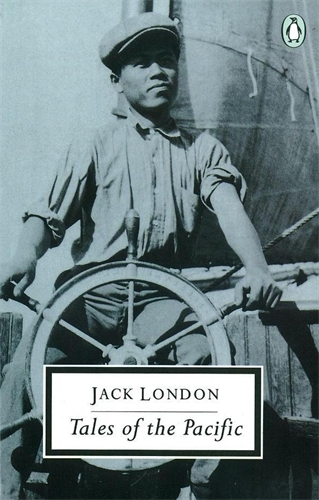
Tales of the Pacific
If you know London primarily through novels like WHITE FANG, these stories will provide a new perspective. Full of intriguing characters and snippets of pidgin, they also highlight London's concern with social issues.
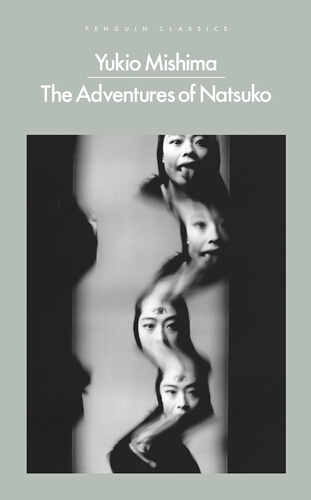
The Adventures of Natsuko
Natsuko Matsuura is headstrong, beautiful and determined to live a life beyond the ordinary. Disappointed again and again by the drearily conventional men on the Tokyo dating scene, she decides to renounce marriage altogether and join a convent in faraway Hokkaido. Setting off with her grandmother, mother and aunt, she readies herself for a nun’s life. But her journey is derailed when she meets Tsuyoshi Ida, a fiery young man with sparkling eyes and a score to settle; with a hunting rifle slung over his shoulder, he’s tracking a bear through the forests of Hokkaido, seeking vengeance for the death of his former girlfriend. Thinking she may at last have met a man who shares her sense of adventure, Natsuko flees her anxious guardians and joins the hunt, with more than a bear in her sights . . .
Written in 1951 and translated into English for the very first time, The Adventures of Natsuko shows Mishima at his comic best, in an anti-fairy tale for the modern era.
Written in 1951 and translated into English for the very first time, The Adventures of Natsuko shows Mishima at his comic best, in an anti-fairy tale for the modern era.
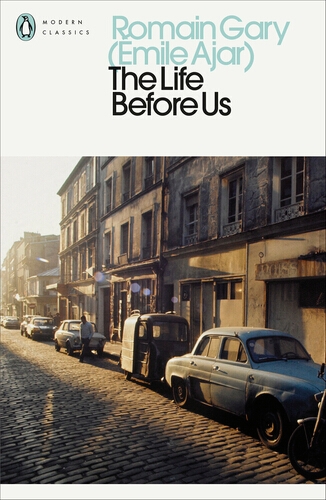
The Life Before Us
Momo has lived at Madame Rosa’s Paris boarding house ever since he can remember, one of an ever-changing band of prostitutes’ children. But when money becomes tight, and Madame Rosa gets too ill to climb the six flights of stairs to their apartment, he determines to support her any way he can. Along the way, he finds community in a host of eccentric characters in the slums of Belleville – from Madame Lola, a Senegalese trans woman who watches out for Momo and the other children, to Monsieur Hamil, an Algerian carpet seller with a passion for Victor Hugo.
A work of streetwise humour and tender devotion, The Life Before Us was published under the pseudonym Emile Ajar and went on to win the Prix Goncourt.
A work of streetwise humour and tender devotion, The Life Before Us was published under the pseudonym Emile Ajar and went on to win the Prix Goncourt.

The Dead Mountaineer’s Inn
Inspector Peter Glebsky, on holiday at a remote ski chalet, is peeved to find himself called upon to solve a murder. As an avalanche cuts off the eccentric cast of guests from civilization, Glebsky begins to question everything – including whether the dead body on his hands is even human…
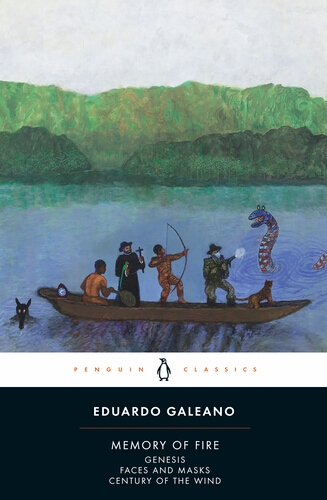
Memory of Fire
Latin America, Eduardo Galeano believed, had been robbed twice over: of its gold and its silver, and of its memory. Memory of Fire is his answer – a blazing mosaic of five hundred years weaving together myth, memory, poetry, and storytelling – written to ‘rescue the kidnapped memory of all America’.
Vol. 1: Genesis takes us back to the start: to how time, fire, and language began, and what the hummingbird, jaguar, and tortoise meant, until Columbus steps ashore; then follows the wreckage of that mistake: Cortés burns his way into Tenochtitlán, Pizarro garrotes an Inca, and the silver mountain of Potosí devours its miners.
Vol. 2: Faces and Masks carries the story through revolutions made and revolutions betrayed – Túpac Amaru and Toussaint L'Ouverture, the slave ships, gold rushes, Bolívar, San Martín, Artigas, and the birth of multiple nations.
Vol. 3: Century of the Wind brings the twentieth century with electric light and moving pictures: Zapata and Sandino, Frida Kahlo and Che Guevara, the generals, death squads, and banana barons, completing one of the most original histories ever written.
Vol. 1: Genesis takes us back to the start: to how time, fire, and language began, and what the hummingbird, jaguar, and tortoise meant, until Columbus steps ashore; then follows the wreckage of that mistake: Cortés burns his way into Tenochtitlán, Pizarro garrotes an Inca, and the silver mountain of Potosí devours its miners.
Vol. 2: Faces and Masks carries the story through revolutions made and revolutions betrayed – Túpac Amaru and Toussaint L'Ouverture, the slave ships, gold rushes, Bolívar, San Martín, Artigas, and the birth of multiple nations.
Vol. 3: Century of the Wind brings the twentieth century with electric light and moving pictures: Zapata and Sandino, Frida Kahlo and Che Guevara, the generals, death squads, and banana barons, completing one of the most original histories ever written.
One Billion Years to the End of the World
Astrophysicist Dmitri Malianov is on the precipice of a major discovery - a Nobel Prize-worthy breakthrough. Yet, home alone in his Leningrad apartment, his work is beginning to be stymied. Strange and improbable distractions are mounting around him - and he is not alone. Across the city, his scientific colleagues, all close to their own Eureka moments, keep finding themselves subject to countless mysterious interruptions. Are they paranoid, or is a malign authority conspiring against them...?
A science fiction classic from two Russian masters, One Billion Years to the End of the World is at turns both hilarious and suspenseful, while at its heart hiding a quiet yet biting critique of Soviet totalitarianism.
A science fiction classic from two Russian masters, One Billion Years to the End of the World is at turns both hilarious and suspenseful, while at its heart hiding a quiet yet biting critique of Soviet totalitarianism.
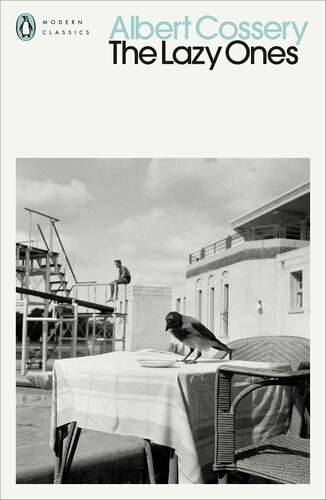
The Lazy Ones
‘Serag had heard that men worked, but these were only stories that one told. He never believed them completely.’
Three brothers live with their father, uncle and maid in a dilapidated Cairo suburb, spending as much time as they possibly can doing nothing whatsoever. Galal has been asleep for seven years, occasionally waking to eat; Rafik moves between his bed and attempts to sabotage his father’s planned remarriage. But Serag, the youngest of the three, has started having crazy ideas that threaten to shatter the household’s torpid equilibrium. He wants to find a job. If only he wasn’t so sleepy.
Written in 1953, in the louche Parisian hotel room Albert Cossery lived in for sixty-three years, The Lazy Ones is a playful celebration of Cossery’s belief in the ultimate dignity of indolence in an alienated, materialistic society. As he remarked, ‘the more you are idle, the more you have time to reflect. Laziness is a critical position by which to judge the world.’
Three brothers live with their father, uncle and maid in a dilapidated Cairo suburb, spending as much time as they possibly can doing nothing whatsoever. Galal has been asleep for seven years, occasionally waking to eat; Rafik moves between his bed and attempts to sabotage his father’s planned remarriage. But Serag, the youngest of the three, has started having crazy ideas that threaten to shatter the household’s torpid equilibrium. He wants to find a job. If only he wasn’t so sleepy.
Written in 1953, in the louche Parisian hotel room Albert Cossery lived in for sixty-three years, The Lazy Ones is a playful celebration of Cossery’s belief in the ultimate dignity of indolence in an alienated, materialistic society. As he remarked, ‘the more you are idle, the more you have time to reflect. Laziness is a critical position by which to judge the world.’

Collect the Penguin Modern Classics
Choose three Penguin Modern Classics for only £21 over on the Penguin Shop.