Try The Pursuit of Love by Nancy Mitford. It’s witty, sharp, and the writing style is accessible, making it easy to devour in a weekend. Set against the elegance of an English country house, the story sees Linda and her sisters on a quest to find the perfect partner – and the mishaps and stuffy suitors they meet along the way.
Penguin Modern Classics
1294 books in this series
New to Penguin Modern Classics?
Looking for a hidden gem?
Try Nothing Grows by Moonlight by Torborg Nedreaas. It's a Norwegian classic about a woman's life-destroying love, confessed to a stranger over a long night of wine and cigarettes. It’s tender and rage-inducing in equal measure, and will stay with you long after you’ve turned the last page.
Buying a gift?
Choose The Apple in the Dark by Clarice Lispector. The surreal artwork makes it the kind of book people pick up before they've even read the blurb, but the story of a man attempting to reinvent himself after committing murder means it more than lives up to first impressions.
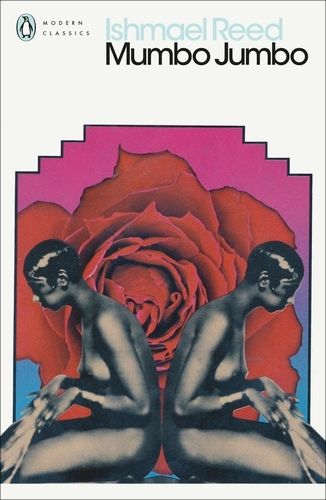
Mumbo Jumbo
Ishmael Reed's inspired comic fable of the ragtime era - hailed by Harold Bloom as one of the five hundred greatest books of the Western canon
America, 1920s. A plague is spreading, and it's spreading fast, from New Orleans to Chicago to New York.
It's an epidemic of freedom, joy and self-expression, being spread by Black artists, that makes anyone who catches it desperate to dance, sing, laugh and jive. It's the outbreak of Jazz, Ragtime and Blues onto the world scene; the spirit of Blackness overtaking America and the world. And it's threatening to dismantle the whole social order.
Working to root out the plague by any means possible - even murder - are the members of The Wallflower Order, an international conspiracy dedicated to puritanism and control. But, deep in the heart of Harlem, private eye and Vodun priest Papa LaBas is determined to defend his flourishing ancient culture against their insidious plans. And so, he finds himself locked in a race against the Order to find an ancient Egyptian text which might just be the key to keeping the virus of freedom alive.
Caustic, badass, comic, Mumbo Jumbo is an exuberant explosion of magic, conspiracies, music and myth. It's a novel of outrage, intrigue, and wonder - an anarchic spiritual classic, and a satire for our times.
America, 1920s. A plague is spreading, and it's spreading fast, from New Orleans to Chicago to New York.
It's an epidemic of freedom, joy and self-expression, being spread by Black artists, that makes anyone who catches it desperate to dance, sing, laugh and jive. It's the outbreak of Jazz, Ragtime and Blues onto the world scene; the spirit of Blackness overtaking America and the world. And it's threatening to dismantle the whole social order.
Working to root out the plague by any means possible - even murder - are the members of The Wallflower Order, an international conspiracy dedicated to puritanism and control. But, deep in the heart of Harlem, private eye and Vodun priest Papa LaBas is determined to defend his flourishing ancient culture against their insidious plans. And so, he finds himself locked in a race against the Order to find an ancient Egyptian text which might just be the key to keeping the virus of freedom alive.
Caustic, badass, comic, Mumbo Jumbo is an exuberant explosion of magic, conspiracies, music and myth. It's a novel of outrage, intrigue, and wonder - an anarchic spiritual classic, and a satire for our times.
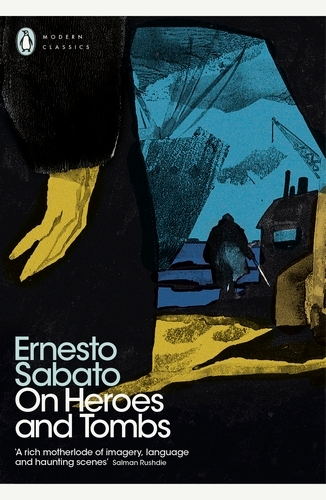
On Heroes and Tombs
Sabato's dark, philosophical novel is woven around a violent crime committed by Alejandra, the daughter of a prominent Argentinian family. Alejandra's act entwines the lives of three men: her father, Fernanda Vidal, a man who believes himself hunted by a secret organization of the blind, her troubled lover, Martin and Bruno, a writer who loved her mother. Exploring the tumult of Buenos Aires in the 1950s, On Heroes and Tombs leads its reader into a world of passion, philosophy and paranoia.
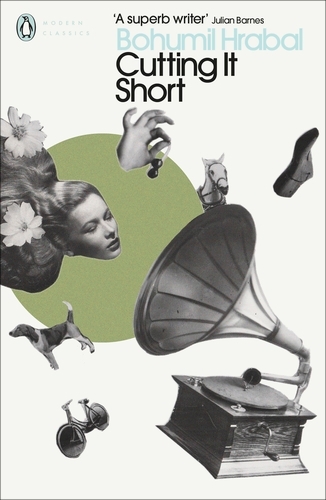
Cutting It Short
Set in small-town Bohemia between the wars, Cutting It Short centres on the flamboyant and unpredictable Maryska, who loves food and prepares endless feasts. Until one day she scandalises the town when she cuts short her golden tresses, leading to a small revolution in gender roles.
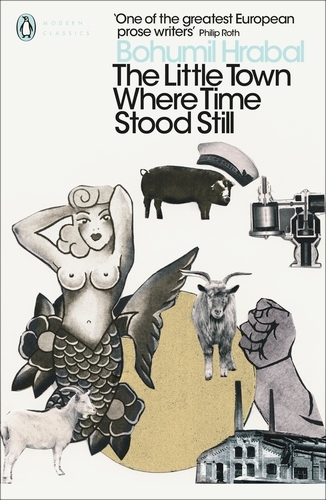
The Little Town Where Time Stood Still
'Folks, life is beautiful! Bring on the drinks, I'm sticking around till I'm ninety! Do you hear?'
A young boy grows up in a sleepy Czech community where little changes. His raucous, mischievous Uncle Pepin came to stay with the family years ago, and never left. But the outside world is encroaching on their close-knit town - first in the shape of German occupiers, and then with the new Communist order. Elegiac and moving, Bohumil Hrabal's gem-like portrayal of the passing of an age is filled with wit, life and tenderness.
'What is unique about Hrabal is his capacity for joy' Milan Kundera
'Even in a town where nothing happens, Hrabal's meticulous and exuberant fascination with the human voice insists that, as long as there's still breath in a body, life is endlessly eventful' Independent
A young boy grows up in a sleepy Czech community where little changes. His raucous, mischievous Uncle Pepin came to stay with the family years ago, and never left. But the outside world is encroaching on their close-knit town - first in the shape of German occupiers, and then with the new Communist order. Elegiac and moving, Bohumil Hrabal's gem-like portrayal of the passing of an age is filled with wit, life and tenderness.
'What is unique about Hrabal is his capacity for joy' Milan Kundera
'Even in a town where nothing happens, Hrabal's meticulous and exuberant fascination with the human voice insists that, as long as there's still breath in a body, life is endlessly eventful' Independent
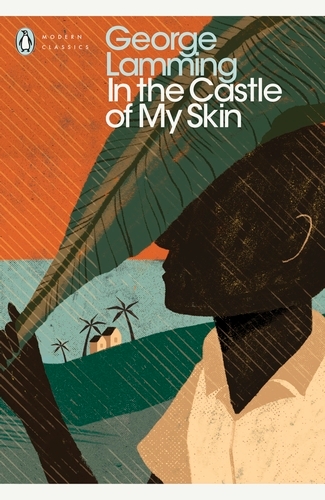
In the Castle of My Skin
In a sleepy fishing village in 1930s Barbados, nine-year-old G. leads a life of quiet mischief. While the village lies tranquil in the shadow of its English landlord, Mr Creighton, and his towering house on the hill, G. makes his own fun, crab catching, teasing preachers, and playing among the pumpkin vines. Yet from this world of boyish pursuits, the precocious G. finds himself slowly awakening to strange goings-on in adult society. All around him, sudden bursts of violence - a devastating flood on the morning of his birthday; the headmaster unduly flogging his schoolmates on Empire day - hint at a brutality and destruction lurking beneath the apparently peaceful order of things.
As the mounting wrongs of the present drive the villagers to rise up against Mr Creighton, the fissures in the façade of his Barbadian 'little England' begin to crack open, laying bare the central, bruising secret at the heart of their shared past. And as the world he knows crumbles before his eyes, G. is spurred ever closer to a life-changing decision. Poetic, unsettling, this classic coming-of-age novel is a story of tragic innocence, as a poor village boy comes to consciousness amid the collapse of colonial rule in mid-century Barbados.
As the mounting wrongs of the present drive the villagers to rise up against Mr Creighton, the fissures in the façade of his Barbadian 'little England' begin to crack open, laying bare the central, bruising secret at the heart of their shared past. And as the world he knows crumbles before his eyes, G. is spurred ever closer to a life-changing decision. Poetic, unsettling, this classic coming-of-age novel is a story of tragic innocence, as a poor village boy comes to consciousness amid the collapse of colonial rule in mid-century Barbados.
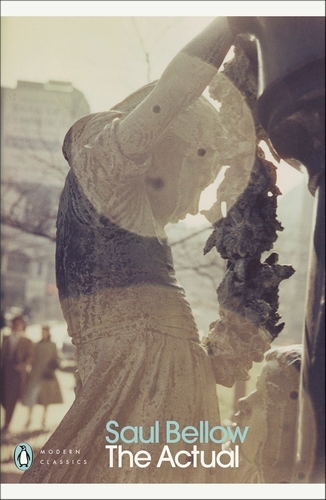
The Actual
The story behind The Actual belongs to Harry Trellman, an aging, astute businessman who has never belonged anywhere.
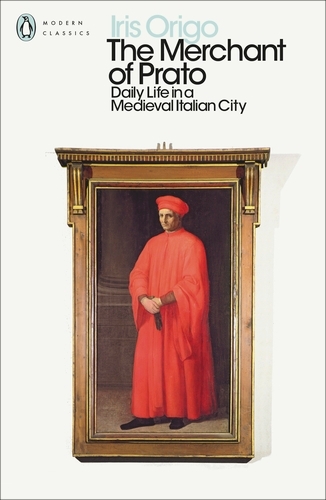
The Merchant of Prato
In 1870 an astonishing cache, containing some 150,000 letters and great numbers of business documents, came to light. Iris Origo drew on this material to paint, in detail, a picture of Italian domestic life on the eve of the Renaissance. Francesco di Marco Datini, the 14th-century Tuscan merchant who forms the central subject of Iris Origo's study, has now probably become the most intimately accessible figure of the later Middle Ages. The book is rightly celebrated as one of the most engrossing of all modern books on Italian life and history.

Narcissus and Goldmund
One of Hermann Hesse's greatest novels, Narcissus and Goldmund is an extraordinary recreation of the Middle Ages, contrasting the careers of two friends, one of whom shuns life in a monastery and goes on the road, tangled in the extremes of life in a world dominated by sin, plague and war, the other staying in the monastery and struggling, with equal difficulty, to lead a life of spiritual denial.
An superb feat of imagination, Narcissus and Goldmund can only be compared to such films set in medieval Europe as Bergman's The Seventh Seal and Tarkovsky's Andrei Rublev. It is a gripping, profound reading experience - as startling, in its different way, as Hesse's Siddhartha and Steppenwolf.
An superb feat of imagination, Narcissus and Goldmund can only be compared to such films set in medieval Europe as Bergman's The Seventh Seal and Tarkovsky's Andrei Rublev. It is a gripping, profound reading experience - as startling, in its different way, as Hesse's Siddhartha and Steppenwolf.
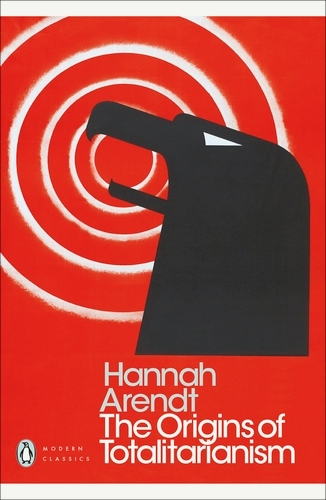
The Origins of Totalitarianism
'How could such a book speak so powerfully to our present moment? The short answer is that we, too, live in dark times' Washington Post
Hannah Arendt's chilling analysis of the conditions that led to the Nazi and Soviet totalitarian regimes is a warning from history about the fragility of freedom, exploring how propaganda, scapegoats, terror and political isolation all aided the slide towards total domination.
'A non-fiction bookend to Nineteen Eighty-Four' The New York Times
'The political theorist who wrote about the Nazis and the 'banality of evil' has become a surprise bestseller' Guardian
Hannah Arendt's chilling analysis of the conditions that led to the Nazi and Soviet totalitarian regimes is a warning from history about the fragility of freedom, exploring how propaganda, scapegoats, terror and political isolation all aided the slide towards total domination.
'A non-fiction bookend to Nineteen Eighty-Four' The New York Times
'The political theorist who wrote about the Nazis and the 'banality of evil' has become a surprise bestseller' Guardian
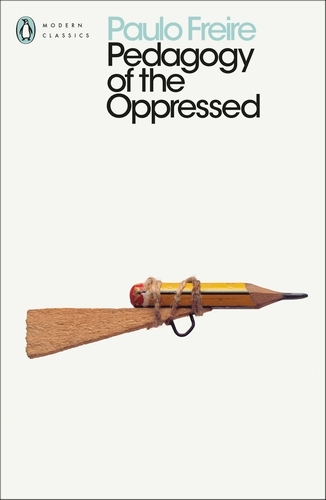
Pedagogy of the Oppressed
This seminal text argues that the perceived passivity of the poor is the direct result of economic, social and political domination. The book suggests that in some countries the oppressors use the 'piggy bank' system - treating students as passive, empty vessels - to preserve their authority and maintain a culture of silence. Through cooperation and dialogue, Freire suggests, the authoritarian teacher-pupil model can be replaced with critical thinking so that the student becomes co-creator of knowledge. Crucial to Freire's argument is the belief that every human being, no matter how impoverished or illiterate, can develop an awareness of self, and the right to be heard.
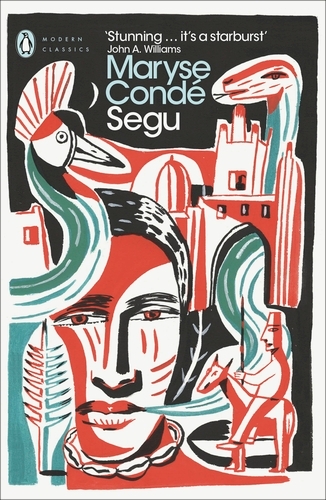
Segu
The year is 1797, and the kingdom of Segu is flourishing. The people of Segu, the Bambara, are guided by their griots and priests while their lives are ruled by nature. But change is about to come: from the east comes a new religion, Islam, and from the West, the slave trade. Segu follows the life of Dousika Traore, the king's most trusted advisor, and his four sons: Tiekoro, who embraces Islam; Siga, a merchant; Naba, who is kidnapped by slave traders; and Malobali, a mercenary and half-hearted Christian. Based on historical events, Segu captures the struggle of a growing nation trying to cope with jihads, national rivalries and racism.

The Best Minds of My Generation
In 1977, twenty years after the publication of his landmark poem 'Howl' and Jack Kerouac's On the Road, Allen Ginsberg decided it was time to teach a course on the literary history of the Beat Generation. In The Best Minds of My Generation - a compilation of lectures from the course, expertly edited by renowned Beats scholar, Bill Morgan - Ginsberg gives us the convoluted origin story of the 'Beat' idea. Amongst anecdotes of meeting Kerouac, Burroughs and other figures for the first time, Ginsberg elucidates the importance of music, and particularly jazz rhythms, to Beat writing, discusses their many influences - literary, pharmaceutical and spiritual - and paints a portrait of a group who were leading a literary revolution. A unique document that works both as historical record and unconventional memoir, The Best Minds of My Generation is a vivid, personal and eye-opening look at one of the most important literary movements of the twentieth century.
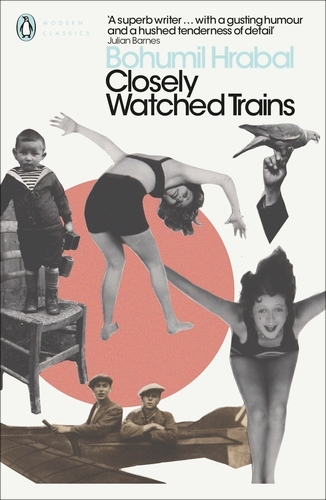
Closely Watched Trains
For gauche young apprentice Milos Hrma, life at the small but strategic railway station in Bohemia in 1945 is full of complex preoccupations. There is the exacting business of dispatching German troop trains to and from the toppling Eastern front; the problem of ridding himself of his burdensome innocence; and the awesome scandal of Dispatcher Hubicka's gross misuse of the station's official stamps upon the telegraphist's anatomy. Beside these, Milos's part in the plan for the ammunition train seems a simple affair.
Closely Watched Trains, which became the award-winning Jiri Menzel film of the 'Prague Spring', is a masterpiece that fully justifies Hrabal's reputation as one of the best Czech writers of the twentieth century.
Closely Watched Trains, which became the award-winning Jiri Menzel film of the 'Prague Spring', is a masterpiece that fully justifies Hrabal's reputation as one of the best Czech writers of the twentieth century.

England Your England
'England is a family in which the young are generally thwarted and most of the power is in the hands of irresponsible uncles and bedridden aunts. Still, it is a family.'
'England Your England' is one of the most compelling and insightful portraits of the nation ever written. Shot through with Orwell's deeply felt sense of patriotism and love for his homeland, the essay is at the same time unfailingly clear-eyed about the nation's failings: entrenched social inequality, a dishonest press and a class system that only works for those at the top. Written during the Second World War, as the bombs were falling on England, the essay today speaks to the nation's current moment of crisis just as urgently as it did in Orwell's own time. It is a crucial read for anyone who wants to understand who we are, and where we've come from.
'England Your England' is one of the most compelling and insightful portraits of the nation ever written. Shot through with Orwell's deeply felt sense of patriotism and love for his homeland, the essay is at the same time unfailingly clear-eyed about the nation's failings: entrenched social inequality, a dishonest press and a class system that only works for those at the top. Written during the Second World War, as the bombs were falling on England, the essay today speaks to the nation's current moment of crisis just as urgently as it did in Orwell's own time. It is a crucial read for anyone who wants to understand who we are, and where we've come from.

I Am Not Your Negro
The New York Times bestseller based on the Oscar nominated documentary film
In June 1979, the writer and civil rights activist James Baldwin embarked on a project to tell the story of America through the lives of three of his murdered friends: Medgar Evers, Malcolm X and Martin Luther King, Jr. He died before it could be completed. In his documentary film, I Am Not Your Negro, Raoul Peck imagines the book Baldwin never wrote, using his original words to create a radical, powerful and poetic work on race in the United States - then, and today.
'Thrilling . . . A portrait of one man's confrontation with a country that, murder by murder, as he once put it, "devastated my universe"' The New York Times
'Baldwin's voice speaks even more powerfully today . . . the prose-poet of our injustice and inhumanity . . . The times have caught up with his scalding eloquence' Variety
'A cinematic séance . . . One of the best movies about the civil rights era ever made' Guardian
'I Am Not Your Negro turns James Baldwin into a prophet' Rolling Stone
In June 1979, the writer and civil rights activist James Baldwin embarked on a project to tell the story of America through the lives of three of his murdered friends: Medgar Evers, Malcolm X and Martin Luther King, Jr. He died before it could be completed. In his documentary film, I Am Not Your Negro, Raoul Peck imagines the book Baldwin never wrote, using his original words to create a radical, powerful and poetic work on race in the United States - then, and today.
'Thrilling . . . A portrait of one man's confrontation with a country that, murder by murder, as he once put it, "devastated my universe"' The New York Times
'Baldwin's voice speaks even more powerfully today . . . the prose-poet of our injustice and inhumanity . . . The times have caught up with his scalding eloquence' Variety
'A cinematic séance . . . One of the best movies about the civil rights era ever made' Guardian
'I Am Not Your Negro turns James Baldwin into a prophet' Rolling Stone

Nobody Leaves
When the great Ryszard Kapuscinski was a young journalist in the early 1960s, he was sent to the farthest reaches of his native Poland between foreign assignments. The resulting pieces brought together in this new collection, nearly all of which are translated into English for the first time, reveal a place just as strange as the distant lands he went on to visit.
From forgotten villages to collective farms, Kapuscinski explores a Poland that is post-Stalinist but still Communist; a country on the edge of modernity. He encounters those for whom the promises of rising living standards never worked out as planned, those who would have been misfits under any political system, those tied to the land and those dreaming of escape.
From forgotten villages to collective farms, Kapuscinski explores a Poland that is post-Stalinist but still Communist; a country on the edge of modernity. He encounters those for whom the promises of rising living standards never worked out as planned, those who would have been misfits under any political system, those tied to the land and those dreaming of escape.
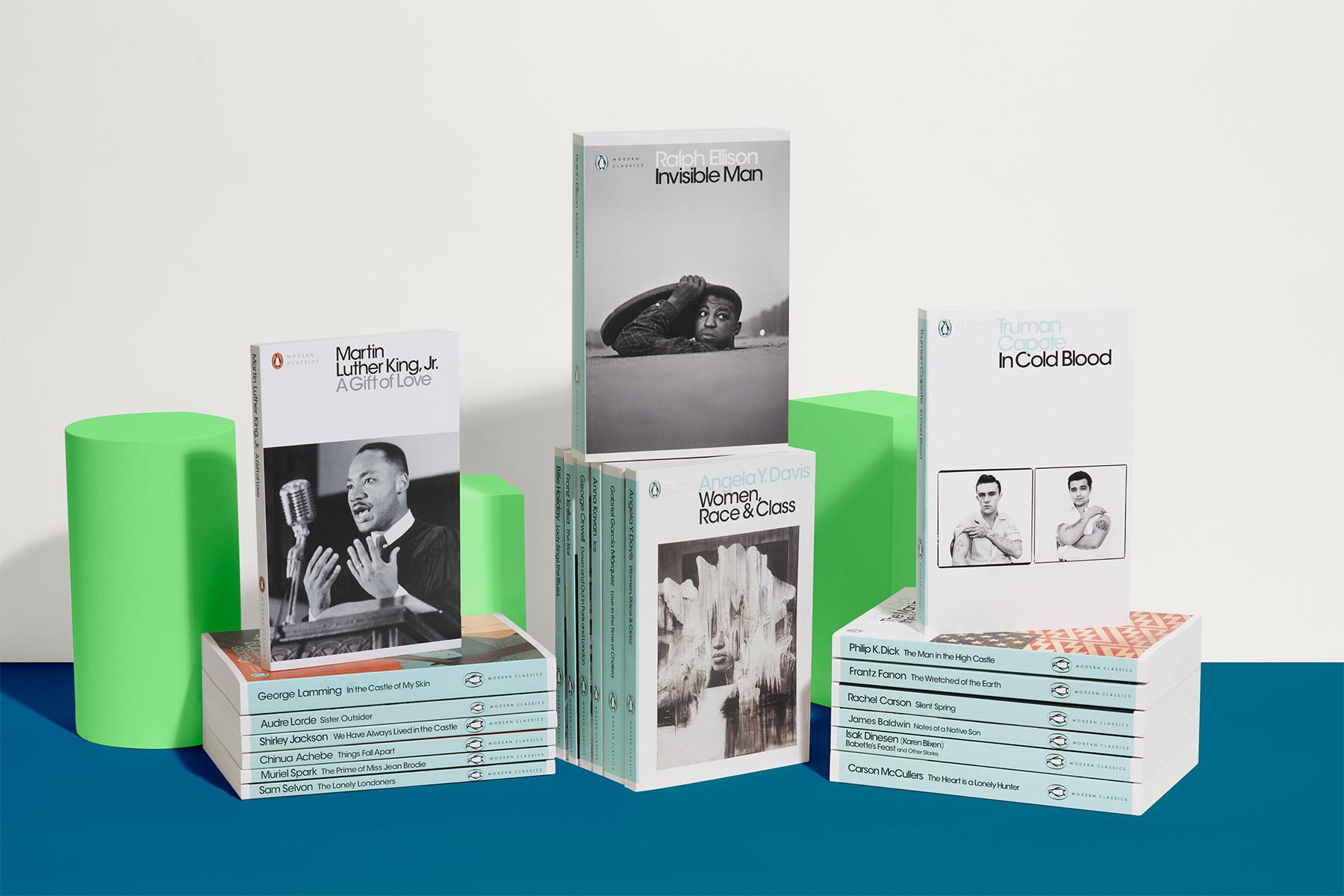
Collect the Penguin Modern Classics
Choose three Penguin Modern Classics for only £21 over on the Penguin Shop.