Try The Pursuit of Love by Nancy Mitford. It’s witty, sharp, and the writing style is accessible, making it easy to devour in a weekend. Set against the elegance of an English country house, the story sees Linda and her sisters on a quest to find the perfect partner – and the mishaps and stuffy suitors they meet along the way.
Penguin Modern Classics
1291 books in this series
New to Penguin Modern Classics?
Looking for a hidden gem?
Try Nothing Grows by Moonlight by Torborg Nedreaas. It's a Norwegian classic about a woman's life-destroying love, confessed to a stranger over a long night of wine and cigarettes. It’s tender and rage-inducing in equal measure, and will stay with you long after you’ve turned the last page.
Buying a gift?
Choose The Apple in the Dark by Clarice Lispector. The surreal artwork makes it the kind of book people pick up before they've even read the blurb, but the story of a man attempting to reinvent himself after committing murder means it more than lives up to first impressions.

Nothing Grows by Moonlight
In the blue dusk of a spring evening, a man is drawn to a lonely, beautiful stranger across a station platform. She follows him home, and over one heady night of wine and cigarettes, recounts to him the devastating story of her life . . .
First published in 1947, Nothing Grows by Moonlight tells the haunting tale of one woman’s soul-shattering love affair. When an obsessive passion for her high school teacher consumes a small-town seventeen-year-old, her life spirals out of control, giving way to pregnancy, poverty and alienation. Here, darkness and light converge, and unrequited love blooms against the shadows of societal injustices, as she fights for autonomy: over her life, her mind and her body.
Captivating, visceral and brimming with emotion, Nothing Grows by Moonlight is a feminist classic of Scandinavian literature, and an uncompromising ode to female desire.
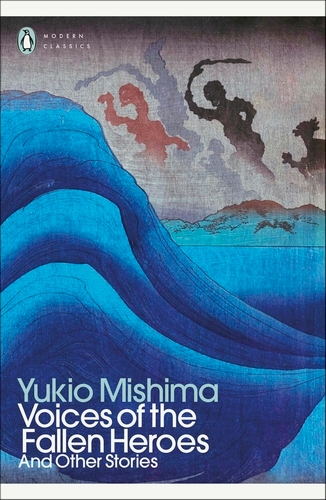
Voices of the Fallen Heroes
A writer is seized by apocalyptic visions, a trio of beatniks dance to modern jazz in the ruins of an abandoned church, and a séance brings forth the reproachful spirits of the military dead.
In Voices of the Fallen Heroes, stark autobiography contrasts with pure horror, and the tenderness of first love cedes to obsession, heartbreak and deathly beauty. In one tale, Mishima recounts the true story of the time a deranged fan broke into his home at dawn. Elsewhere, a beautiful youth achieves eternal life through violent murder, and an ill-matched couple seal their fate with a pack of cards, tangled in the web of time and unfulfilled desire.
Available in English for the first time, and carefully selected by expert translators, these captivating stories are the perfect introduction to Mishima's work, on the 100th anniversary of his birth.
In Voices of the Fallen Heroes, stark autobiography contrasts with pure horror, and the tenderness of first love cedes to obsession, heartbreak and deathly beauty. In one tale, Mishima recounts the true story of the time a deranged fan broke into his home at dawn. Elsewhere, a beautiful youth achieves eternal life through violent murder, and an ill-matched couple seal their fate with a pack of cards, tangled in the web of time and unfulfilled desire.
Available in English for the first time, and carefully selected by expert translators, these captivating stories are the perfect introduction to Mishima's work, on the 100th anniversary of his birth.
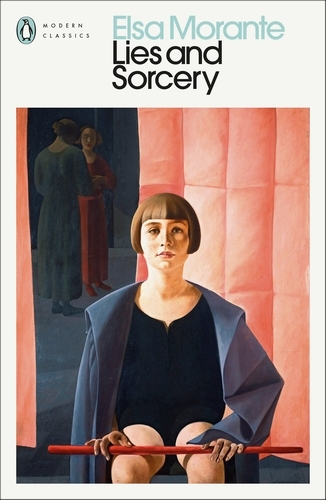
Lies and Sorcery
Elisa – orphaned as a child, raised by a ‘fallen woman’, fed by fairy tales – has lived in an outlandish imaginary world for years. When her guardian dies, she feels compelled to confront her family’s tortured and dramatic past, weaving the tale of her mother and grandmother through a history of intrigue, treachery, deception and desire. But as her saga of three generations of Sicilian women proceeds, it becomes something else entirely, taking in a whole legacy of oppression and injustice. By turns flamboyant and intense, raging and funny, Lies and Sorcery is a celebration of the female imagination, and the power of storytelling itself.
First published in 1948, Elsa Morante’s debut novel won the Viareggio Prize and earned her the lasting admiration of generations of writers from Italo Calvino and Natalia Ginzburg to Elena Ferrante.
Translated by Jenny McPhee
First published in 1948, Elsa Morante’s debut novel won the Viareggio Prize and earned her the lasting admiration of generations of writers from Italo Calvino and Natalia Ginzburg to Elena Ferrante.
Translated by Jenny McPhee
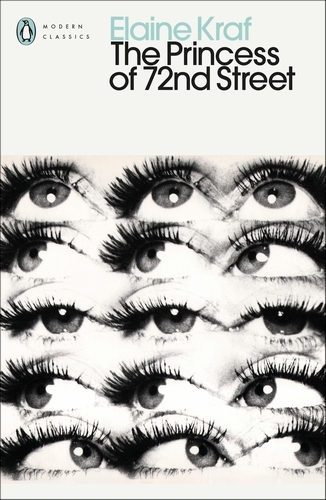
The Princess of 72nd Street
Ellen is a single artist living alone on New York’s Upper West Side in the 1970s. She is beset by old boyfriends, paint pigment choices, and, occasionally, by 'radiances' - episodes of joyous, reckless unreality. Under the influence of 'radiances' she becomes Princess Esmeralda, and West 72nd Street becomes the kingdom over which she rules. Life as Esmeralda is a liberating experience for Ellen, who, despite the chaos and stigma these episodes can bring, relishes the respite from the confines of the everyday. And yet those around her, particularly the men in her life, are threatened by her incarnation as Esmeralda, and by the freedom that it gives her.
The Princess of 72nd Street is Elaine Kraf's witty, dizzyingly inventive take on female liberation and mental health, a work of immense literary power and unbridled energy. Provocative at the time of its publication in 1979 and thoroughly iconoclastic, it is a remarkable portrait of an unforgettable woman.

There Lives a Young Girl in Me Who Will Not Die
While Tove Ditlevsen is now famous around the world as an extraordinary prose writer, in Denmark she has also long been celebrated as a poet. She published her first collection in her early twenties, and continued writing and publishing poetry until the end of her life. This new selection offers English readers a chance to explore her brilliant, surprising verse across nearly four decades of writing.
In this playful, mournful, witty collection, little girls stand tip-toe inside adult bodies, achievements in literature and lethargy are unflinchingly listed, and lovers come and go like the seasons. Gorgeously translated by Jennifer Russell and Sophia Hersi Smith, with an introduction by Olga Ravn, There Lives a Young Girl in Me Who Will Not Die cements Ditlevsen as one of the twentieth century's most creative writers.
In this playful, mournful, witty collection, little girls stand tip-toe inside adult bodies, achievements in literature and lethargy are unflinchingly listed, and lovers come and go like the seasons. Gorgeously translated by Jennifer Russell and Sophia Hersi Smith, with an introduction by Olga Ravn, There Lives a Young Girl in Me Who Will Not Die cements Ditlevsen as one of the twentieth century's most creative writers.
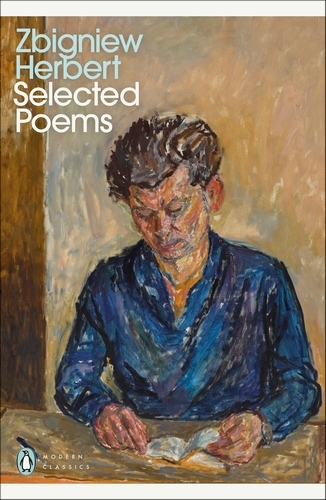
Selected Poems
be courageous when reason fails you be courageous
in the final reckoning it is the only thing that counts
Zbigniew Herbert was one of the best-known and most-translated poets of post-war Poland, opposed alike to Communism, Fascism, nationalism and the Church, yet moved, throughout his work, by ‘a powerful sense of right and wrong without a corresponding belief in a system’ (New York Times).
His is a poetry of compression, lucidity and profound humanity. The universe he conjures is deeply informed not only by his own time, but by history – by that of the Medieval Mediterranean and Central Europe, as much as of the Classical world – and by a taste for historical and philosophical paradox. In the early and middle works, the figure of the trickster never seems far from view. Throughout, Herbert asks questions about the nature and needs of sentient beings. His desire, always, is to ‘touch the essence’: to get to the heart of life.
Selected and introduced by J. M. Coetzee and Alissa Valles, this outstanding gathering from the full range of Herbert’s poetic output invites readers to experience the beauty and profundity of a remarkable body of work.
in the final reckoning it is the only thing that counts
Zbigniew Herbert was one of the best-known and most-translated poets of post-war Poland, opposed alike to Communism, Fascism, nationalism and the Church, yet moved, throughout his work, by ‘a powerful sense of right and wrong without a corresponding belief in a system’ (New York Times).
His is a poetry of compression, lucidity and profound humanity. The universe he conjures is deeply informed not only by his own time, but by history – by that of the Medieval Mediterranean and Central Europe, as much as of the Classical world – and by a taste for historical and philosophical paradox. In the early and middle works, the figure of the trickster never seems far from view. Throughout, Herbert asks questions about the nature and needs of sentient beings. His desire, always, is to ‘touch the essence’: to get to the heart of life.
Selected and introduced by J. M. Coetzee and Alissa Valles, this outstanding gathering from the full range of Herbert’s poetic output invites readers to experience the beauty and profundity of a remarkable body of work.

The Experience of Pain
'The seething cauldron of life, the infinite stratification of reality, the inextricable tangle of knowledge are what Gadda wants to depict.' Italo Calvino
At the height of Fascist rule in Italy and following the death of his mother, Carlo Emilio Gadda began work on his first novel, The Experience of Pain. This portrait of a highly educated young man whose anger and frustration frequently erupt in ferocious outbursts directed towards his ageing mother is a powerful critique of the society of his time and the deep wounds inflicted on his generation. Set in a fictional South American country, The Experience of Pain is at once richly imaginative and intensely personal: the perfect introduction to Gadda's innovative style and literary virtuosity.
Translated by Richard Dixon
At the height of Fascist rule in Italy and following the death of his mother, Carlo Emilio Gadda began work on his first novel, The Experience of Pain. This portrait of a highly educated young man whose anger and frustration frequently erupt in ferocious outbursts directed towards his ageing mother is a powerful critique of the society of his time and the deep wounds inflicted on his generation. Set in a fictional South American country, The Experience of Pain is at once richly imaginative and intensely personal: the perfect introduction to Gadda's innovative style and literary virtuosity.
Translated by Richard Dixon

The Blood of Others
‘These carefree faces, on which we allowed our smiles to spread, were for others the mask of tragedy.’
Jean Blomart, patriot leader against the German forces of occupation, waits throughout an endless night for his wounded lover, Hélène, to die. Told through memories of his and her life, The Blood of Others paints an intense and moving picture of their love story and life in German occupied Paris during the Second World War. In the face of a seemingly unstoppable force, Hélène and Jean are confronted by the illusion of freedom and made to question their individual roles in the collective struggle against fascism, with devastating consequences.
First published in 1945, this powerful novel resonates profoundly today and brings the ideas of one of the most important existentialist thinkers to life in spellbinding prose.
With an Introduction by Ali Smith.

The Prime of Life
First published in 1960, The Prime of Life offers an intimate, captivating picture of Simone de Beauvoir in her twenties, thirties and forties. Beginning as a recent graduate from the Sorbonne teaching high-school girls, we see de Beauvoir revel in the freedom her new financial independence brings. We see her and Jean-Paul Sartre recognise the powerful romantic and intellectual partnership they have found in one another, as they fall in love and define their own unconventional parameters. The Second World War comes, bringing austerity, violence and questions of the reality of freedom and individual responsibility into de Beauvoir’s life. As relevant and penetrating as when first published, The Prime of Life offers rare insight into a truly fascinating mind.

The Outsider
'My mother died today. Or maybe yesterday, I don't know.'
A stranger to society, a stranger to his own life, Meursault seems indifferent to everything. In The Outsider, Camus explores the alienation of an individual who refuses to conform to social norms. When his mother dies, he refuses to show his emotions simply to satisfy the expectations of others. And when he commits a random act of violence on a sun-drenched beach near Algiers, his lack of remorse compounds his guilt in the eyes of society and the law. Yet he is as much a victim as a criminal.
A first in Penguin Modern Classics, Camus’ classic existentialist novel is told through Ryota Kurumado’s powerful artwork. Unlike previous editions of Camus’ novel, Meursault and other characters’ emotions are drawn out through stunning illustrations and seen for the first time. A rare and challenging feat, Kurumado’s manga adaptation makes a novel first published in 1942 feel contemporary.
A stranger to society, a stranger to his own life, Meursault seems indifferent to everything. In The Outsider, Camus explores the alienation of an individual who refuses to conform to social norms. When his mother dies, he refuses to show his emotions simply to satisfy the expectations of others. And when he commits a random act of violence on a sun-drenched beach near Algiers, his lack of remorse compounds his guilt in the eyes of society and the law. Yet he is as much a victim as a criminal.
A first in Penguin Modern Classics, Camus’ classic existentialist novel is told through Ryota Kurumado’s powerful artwork. Unlike previous editions of Camus’ novel, Meursault and other characters’ emotions are drawn out through stunning illustrations and seen for the first time. A rare and challenging feat, Kurumado’s manga adaptation makes a novel first published in 1942 feel contemporary.
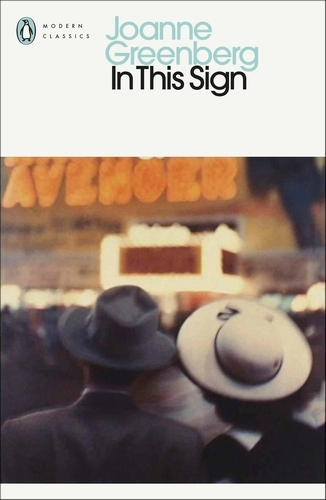
In This Sign
Two young deaf people, Abel and Janice, leave their punitive school and begin their life as a married couple ‘Outside’ – in the unwelcoming world of the hearing. A misunderstanding about the payment plan on a car kickstarts years of debt, hard labour and ostracization; but they find solace and expression in the richness of Sign, in their hard-won independence and in the birth of their daughter Margaret.
First published in 1970, only a decade after ASL’s formal recognition as a language, In This Sign is a rare, compassionate portrait of the deaf community and a moving family saga that spans the twentieth century.
With an introduction by Sara Novic and a new afterword by the author.
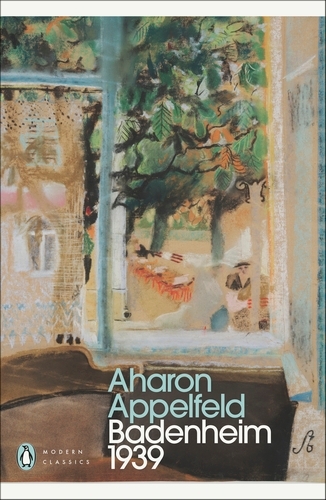
Badenheim 1939
'A masterpiece ... the greatest novel of the Holocaust' The Guardian
Badenheim, a resort town near the forests of Vienna, is preparing for the arts festival of the summer season. The hotel workers and local tradespeople rush to prepare the small town for the influx of vacationers. But just as the season is getting into full swing, a small note appears on a municipal notice board: the Sanitation Department is announcing an increase in its jurisdiction. No one knows what the Sanitation Department is, but no matter – the festival carries on.
Soon inspectors are spread all over town, bringing estrangement, suspicion and mistrust wherever they go. Meanwhile, the guests carry on pursuing their pleasures and the townspeople attend to their troubles. Then another announcement appears: all Jews must register with the Sanitation Department.
An allegory, satire and fable all in one, Badenheim 1939 is a story of denial and normalisation, masterfully creating an atmosphere of impending dread and horror. Gripping and unforgettable, this is one of most intriguing and eerie books ever written about the Holocaust.
Badenheim, a resort town near the forests of Vienna, is preparing for the arts festival of the summer season. The hotel workers and local tradespeople rush to prepare the small town for the influx of vacationers. But just as the season is getting into full swing, a small note appears on a municipal notice board: the Sanitation Department is announcing an increase in its jurisdiction. No one knows what the Sanitation Department is, but no matter – the festival carries on.
Soon inspectors are spread all over town, bringing estrangement, suspicion and mistrust wherever they go. Meanwhile, the guests carry on pursuing their pleasures and the townspeople attend to their troubles. Then another announcement appears: all Jews must register with the Sanitation Department.
An allegory, satire and fable all in one, Badenheim 1939 is a story of denial and normalisation, masterfully creating an atmosphere of impending dread and horror. Gripping and unforgettable, this is one of most intriguing and eerie books ever written about the Holocaust.
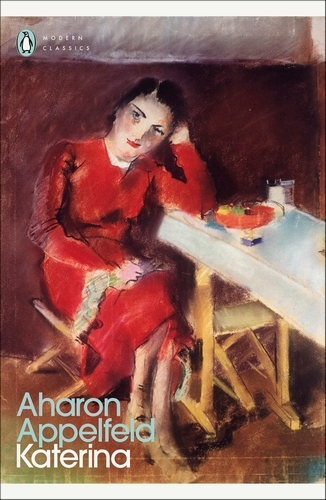
Katerina
The teenage Katerina flees her abusive home in a poor, Christian village in the 1880s, finding work and shelter in the home of a Jewish family, and in the warmth of their family life and beauty of their Jewish rituals she begins to know safety for the first time. Their life is brutally disrupted when a pogrom is wrought upon the family, and Katerina finds herself alone again. Decades later, having suffered and retaliated for that suffering, she looks out of the window of her prison cell and sees the trains carrying Jews across Europe.
Released from prison into the chaos following the end of World War II, a now elderly Katerina is devastated to find a world that has been emptied of its Jews and that is not at all sorry to see them gone. Ever the outsider, Katerina realizes that she has survived only to bear witness to the fact that they had ever existed at all.
A rare glimpse into Jewish and gentile life in Eastern Europe in the nineteenth century, Katerina explores the long origins of the Holocaust, alongside darkness and light, cruelty and mercy.
Released from prison into the chaos following the end of World War II, a now elderly Katerina is devastated to find a world that has been emptied of its Jews and that is not at all sorry to see them gone. Ever the outsider, Katerina realizes that she has survived only to bear witness to the fact that they had ever existed at all.
A rare glimpse into Jewish and gentile life in Eastern Europe in the nineteenth century, Katerina explores the long origins of the Holocaust, alongside darkness and light, cruelty and mercy.

The Story of a Life
Aharon Appelfeld was the beloved only child of middle-class Jewish parents living in what is now Ukraine at the outbreak of World War Two. Their peaceful life is upended when soldiers invade their town. His mother is shot dead in her own garden. The then-seven-year-old Aharon does not witness her murder, but he does hear her scream.
Aharon and his father are sent to a concentration camp and separated. Memory and trauma combine to create a patchwork of reminiscences. Aharon is ten years old when he escapes from the camp into the forests of Ukraine, and is overwhelmed by the sight of an apple tree laden with fruit.
Living off the land for two years before making the long journey south to Italy and eventually Israel and freedom, Appelfeld finally found a home in which he could make a life for himself, eventually becoming one of Israel’s most acclaimed writers. This is the extraordinary and painful memoir of his childhood and youth and a compelling account of a boy coming of age in a hostile world.
Aharon and his father are sent to a concentration camp and separated. Memory and trauma combine to create a patchwork of reminiscences. Aharon is ten years old when he escapes from the camp into the forests of Ukraine, and is overwhelmed by the sight of an apple tree laden with fruit.
Living off the land for two years before making the long journey south to Italy and eventually Israel and freedom, Appelfeld finally found a home in which he could make a life for himself, eventually becoming one of Israel’s most acclaimed writers. This is the extraordinary and painful memoir of his childhood and youth and a compelling account of a boy coming of age in a hostile world.
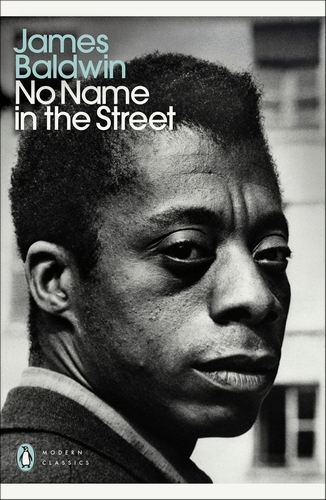
No Name in the Street
'Candid, insightful, moving . . . a memoir, a chronicle of and commentary on America's abortive civil-rights movement' -The New York Times
In this deeply personal book, Baldwin reflects on the experiences that shaped him as a writer and activist: from his childhood in Harlem to the deaths Martin Luther King and Malcolm X. Exploring the visceral reality of life in the American South as well as Baldwin’s impressions of London, Paris and Hamburg, No Name in the Street grapples with the failed promises of global liberation movements in fearless, candid prose.
Timeless, tender and profound, Baldwin’s searing narrative contains the multiplicities of what it means to be Black in America and, indeed, around the world.
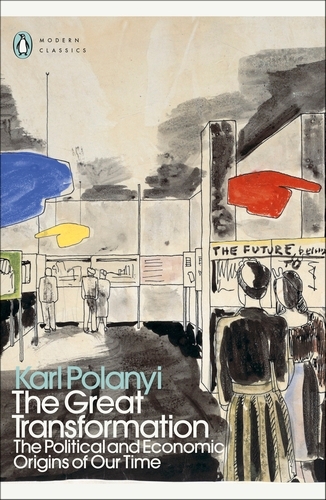
The Great Transformation
‘One of the most powerful books in social sciences ever written. ... A must-read’ Thomas Piketty
‘The twentieth century's most prophetic critic of capitalism’ Prospect
Tracing the history of capitalism in England and beyond, Karl Polanyi's landmark 1944 classic brilliantly exposed the myth of laissez-faire economics. From the great transformation that occurred during the industrial revolution onwards, he showed, there has been nothing 'natural' about the market state. Instead, the economy must always be embedded in society, and human needs and relations. Witnessing the 'avalanche of social dislocation' of his time - from the Great Depression, to the rise of fascism and communism and the First and Second World Wars - Polanyi ends with a rallying cry for freedom, and a passionate vision to protect our common humanity.
‘Polanyi’s revolutionary work is a must-read for anyone interested in understanding the complexities of our economic systems and debunking the myths around the free market’ Mariana Mazzucato
‘The twentieth century's most prophetic critic of capitalism’ Prospect
Tracing the history of capitalism in England and beyond, Karl Polanyi's landmark 1944 classic brilliantly exposed the myth of laissez-faire economics. From the great transformation that occurred during the industrial revolution onwards, he showed, there has been nothing 'natural' about the market state. Instead, the economy must always be embedded in society, and human needs and relations. Witnessing the 'avalanche of social dislocation' of his time - from the Great Depression, to the rise of fascism and communism and the First and Second World Wars - Polanyi ends with a rallying cry for freedom, and a passionate vision to protect our common humanity.
‘Polanyi’s revolutionary work is a must-read for anyone interested in understanding the complexities of our economic systems and debunking the myths around the free market’ Mariana Mazzucato

Collect the Penguin Modern Classics
Choose three Penguin Modern Classics for only £21 over on the Penguin Shop.