Try The Pursuit of Love by Nancy Mitford. It’s witty, sharp, and the writing style is accessible, making it easy to devour in a weekend. Set against the elegance of an English country house, the story sees Linda and her sisters on a quest to find the perfect partner – and the mishaps and stuffy suitors they meet along the way.
Penguin Modern Classics
1294 books in this series
New to Penguin Modern Classics?
Looking for a hidden gem?
Try Nothing Grows by Moonlight by Torborg Nedreaas. It's a Norwegian classic about a woman's life-destroying love, confessed to a stranger over a long night of wine and cigarettes. It’s tender and rage-inducing in equal measure, and will stay with you long after you’ve turned the last page.
Buying a gift?
Choose The Apple in the Dark by Clarice Lispector. The surreal artwork makes it the kind of book people pick up before they've even read the blurb, but the story of a man attempting to reinvent himself after committing murder means it more than lives up to first impressions.

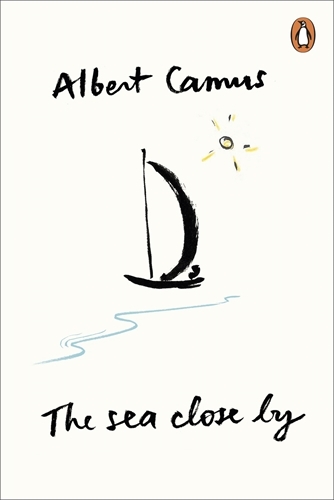
The Sea Close By
Part of the Penguin Classics campaign celebrating 100 years of Albert Camus, 'A Sea Close By' reveals the writer as a sensual witness of landscapes, the sea and sailing. It is a light, summery day-dream.
Accompanying 'The Sea Close By' is the essay 'Summer in Algiers', a lovesong to his Mediterranean childhood.
Accompanying 'The Sea Close By' is the essay 'Summer in Algiers', a lovesong to his Mediterranean childhood.
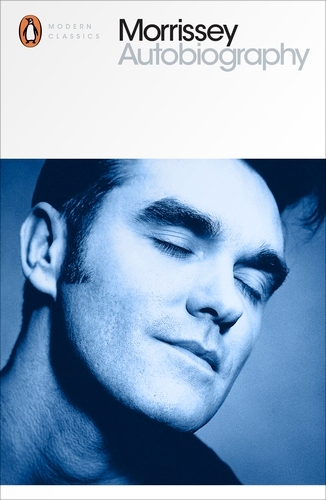
Autobiography
Steven Patrick Morrissey was born in Manchester on May 22nd 1959. Singer-songwriter and co-founder of the Smiths (1982-1987), Morrissey has been a solo artist for twenty-six years, during which time he has had three number 1 albums in England in three different decades.
Achieving twelve Top 10 albums (plus nine with the Smiths), his songs have been recorded by David Bowie, Nancy Sinatra, Marianne Faithfull, Chrissie Hynde, Thelma Houston, My Chemical Romance and Christy Moore, amongst others.
An animal protectionist, in 2006 Morrissey was voted the second greatest living British icon by viewers of the BBC, losing out to Sir David Attenborough. In 2007 Morrissey was voted the greatest northern male, past or present, in a nationwide newspaper poll. In 2012, Morrissey was awarded the Keys to the City of Tel-Aviv.
It has been said 'Most pop stars have to be dead before they reach the iconic status that Morrissey has reached in his lifetime.'
Autobiography covers Morrissey's life from his birth until the present day.
Achieving twelve Top 10 albums (plus nine with the Smiths), his songs have been recorded by David Bowie, Nancy Sinatra, Marianne Faithfull, Chrissie Hynde, Thelma Houston, My Chemical Romance and Christy Moore, amongst others.
An animal protectionist, in 2006 Morrissey was voted the second greatest living British icon by viewers of the BBC, losing out to Sir David Attenborough. In 2007 Morrissey was voted the greatest northern male, past or present, in a nationwide newspaper poll. In 2012, Morrissey was awarded the Keys to the City of Tel-Aviv.
It has been said 'Most pop stars have to be dead before they reach the iconic status that Morrissey has reached in his lifetime.'
Autobiography covers Morrissey's life from his birth until the present day.
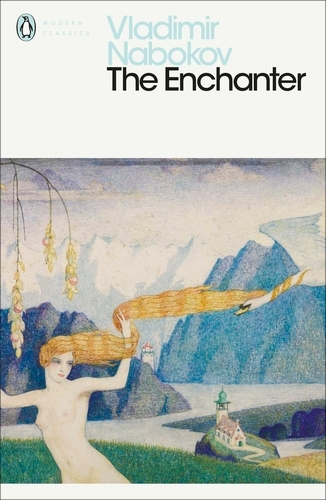
The Enchanter
Nabokov described this novella, written in Paris in 1939 but only published twenty years later, as 'the first little throb of Lolita'. The plot is similar: a middle-aged man wedding an unattractive widow in order to indulge his paedophilic obsession with her daughter.
However, The Enchanter has an utterly different atmosphere, as time, place and even names remain a mystery. Nabokov transforms his protagonist's attempts to lull his twelve-year-old step-daughter into a state of 'enchantment' into a graceful, chilling fairytale.
However, The Enchanter has an utterly different atmosphere, as time, place and even names remain a mystery. Nabokov transforms his protagonist's attempts to lull his twelve-year-old step-daughter into a state of 'enchantment' into a graceful, chilling fairytale.
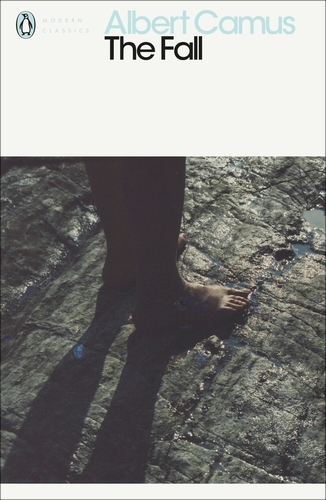
The Fall
A philosophical novel described by fellow existentialist Sartre as 'perhaps the most beautiful and the least understood' of his novels, Albert Camus' The Fall is translated by Robin Buss in Penguin Modern Classics.
Jean-Baptiste Clamence is a soul in turmoil. Over several drunken nights in an Amsterdam bar, he regales a chance acquaintance with his story. From this successful former lawyer and seemingly model citizen a compelling, self-loathing catalogue of guilt, hypocrisy and alienation pours forth. The Fall (1956) is a brilliant portrayal of a man who has glimpsed the hollowness of his existence. But beyond depicting one man's disillusionment, Camus's novel exposes the universal human condition and its absurdities - for our innocence that, once lost, can never be recaptured ...
Albert Camus (1913-60) is the author of a number of best-selling and highly influential works, all of which are published by Penguin. They include The Fall, The Outsider and The First Man. Awarded the Nobel Prize for Literature in 1957, Camus is remembered as one of the few writers to have shaped the intellectual climate of post-war France, but beyond that, his fame has been international.
If you enjoyed The Fall, you might like Jean-Paul Sartre's Nausea, also available in Penguin Modern Classics.
'An irresistibly brilliant examination of modern conscience'
The New York Times
'Camus is the accused, his own prosecutor and advocate. The Fall might have been called "The Last Judgement" '
Olivier Todd
Jean-Baptiste Clamence is a soul in turmoil. Over several drunken nights in an Amsterdam bar, he regales a chance acquaintance with his story. From this successful former lawyer and seemingly model citizen a compelling, self-loathing catalogue of guilt, hypocrisy and alienation pours forth. The Fall (1956) is a brilliant portrayal of a man who has glimpsed the hollowness of his existence. But beyond depicting one man's disillusionment, Camus's novel exposes the universal human condition and its absurdities - for our innocence that, once lost, can never be recaptured ...
Albert Camus (1913-60) is the author of a number of best-selling and highly influential works, all of which are published by Penguin. They include The Fall, The Outsider and The First Man. Awarded the Nobel Prize for Literature in 1957, Camus is remembered as one of the few writers to have shaped the intellectual climate of post-war France, but beyond that, his fame has been international.
If you enjoyed The Fall, you might like Jean-Paul Sartre's Nausea, also available in Penguin Modern Classics.
'An irresistibly brilliant examination of modern conscience'
The New York Times
'Camus is the accused, his own prosecutor and advocate. The Fall might have been called "The Last Judgement" '
Olivier Todd
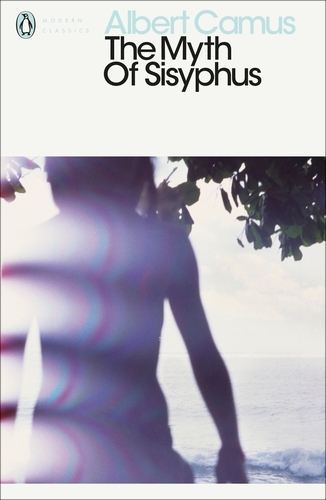
The Myth of Sisyphus
In this profound and moving philosophical statement, Camus poses the fundamental question: If human existence has no meaning, is life worth living?
'What I touch, what resists me - that is what I understand'
As Camus argues, if there is no God to give meaning to our lives, humans must take on that purpose themselves. This is our 'absurd' task, like Sisyphus condemned forever to roll a rock up a hill. Written during the bleakest days of the Second World War, The Myth of Sisyphus argues for an acceptance of reality that encompasses revolt, passion and, above all, liberty, gained through an awareness of pure existence.
This volume contains several other essays, including lyrical evocations of the sunlit cities of Algiers and Oran, the settings of his great novels The Outsider and The Plague. The writings in this volume are all, in their own way, hymns to the physical world and the elemental pleasures of living.
Translated by Justin O'Brien
With an afterword by James Wood
'What I touch, what resists me - that is what I understand'
As Camus argues, if there is no God to give meaning to our lives, humans must take on that purpose themselves. This is our 'absurd' task, like Sisyphus condemned forever to roll a rock up a hill. Written during the bleakest days of the Second World War, The Myth of Sisyphus argues for an acceptance of reality that encompasses revolt, passion and, above all, liberty, gained through an awareness of pure existence.
This volume contains several other essays, including lyrical evocations of the sunlit cities of Algiers and Oran, the settings of his great novels The Outsider and The Plague. The writings in this volume are all, in their own way, hymns to the physical world and the elemental pleasures of living.
Translated by Justin O'Brien
With an afterword by James Wood
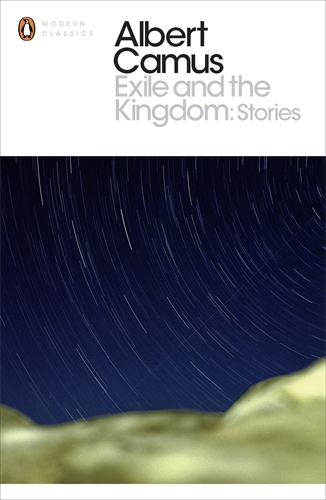
Exile and the Kingdom
The stories of Exile and the Kingdom explore the dilemma of being an outsider - even in one's own country - and of allegiance. With intense power and lyricism, Camus evokes beautiful but harsh landscapes, whether the shimmering deserts of his native Algeria or the wild, mysterious jungles of Brazil.
Here a Frenchwoman is gradually seduced by the sheer difference of North Africa, a mutilated renegade is driven mad by the cruelty of his own people, and a barrel-maker watches the slow decline of his craft. A kindly teacher must choose between the law and a life, while a modest painter is out of his depth in the hypocrisy of the art world, and a French engineer discovers a new sense of belonging in a distant land.
French novelist, essayist, and playwright. Albert Camus (1913-1960) was a representative of non-metropolitan French literature. His origin in Algeria and his experiences there in the thirties were dominating influences in his thought and work.
Carol Cosman is the translator of many works from French, both literary and scholarly. Among the books she has translated are Jean-Paul Sartre's "The Family Idiot: Gustave Flaubert, 1821-1857," Honoré de Balzac's "Colonel Chabert," Simone de Beauvoir's "America Day by Day," and most recently René Daumal's "Mount Analogue".
Here a Frenchwoman is gradually seduced by the sheer difference of North Africa, a mutilated renegade is driven mad by the cruelty of his own people, and a barrel-maker watches the slow decline of his craft. A kindly teacher must choose between the law and a life, while a modest painter is out of his depth in the hypocrisy of the art world, and a French engineer discovers a new sense of belonging in a distant land.
French novelist, essayist, and playwright. Albert Camus (1913-1960) was a representative of non-metropolitan French literature. His origin in Algeria and his experiences there in the thirties were dominating influences in his thought and work.
Carol Cosman is the translator of many works from French, both literary and scholarly. Among the books she has translated are Jean-Paul Sartre's "The Family Idiot: Gustave Flaubert, 1821-1857," Honoré de Balzac's "Colonel Chabert," Simone de Beauvoir's "America Day by Day," and most recently René Daumal's "Mount Analogue".

Crossing to Safety
A novel of the friendships and woes of two couples, which tells the story of their lives in lyrical, evocative prose by one of the finest American writers of the late 20th century.
When two young couples meet for the first time during the Great Depression, they quickly find they have much in common: Charity Lang and Sally Morgan are both pregnant, while their husbands Sid and Larry both have jobs in the English department at the University of Wisconsin. Immediately a lifelong friendship is born, which becomes increasingly complex as they share decades of love, loyalty, vulnerability and conflict. Written from the perspective of the aging Larry Morgan,Crossing to Safety is a beautiful and deeply moving exploration of the struggle of four people to come to terms with the trials and tragedies of everyday life.
With an introduction by Jane Smiley.
When two young couples meet for the first time during the Great Depression, they quickly find they have much in common: Charity Lang and Sally Morgan are both pregnant, while their husbands Sid and Larry both have jobs in the English department at the University of Wisconsin. Immediately a lifelong friendship is born, which becomes increasingly complex as they share decades of love, loyalty, vulnerability and conflict. Written from the perspective of the aging Larry Morgan,Crossing to Safety is a beautiful and deeply moving exploration of the struggle of four people to come to terms with the trials and tragedies of everyday life.
With an introduction by Jane Smiley.
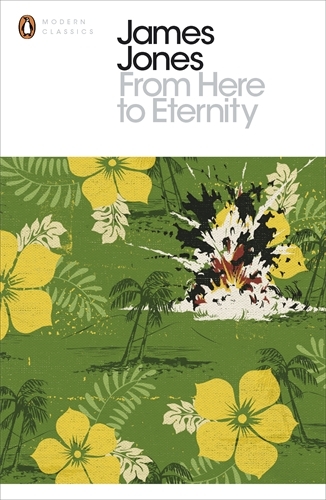
From Here to Eternity
'I'll never understand the fucking Army.'
Prew won't conform. He could have been the best boxer and the best bugler in his division, but he chooses the life of a straight soldier in Hawaii under the fierce tutelage of Sergeant Milt Warden. When he refuses to box for his company for mysterious reasons, he is given 'The Treatment', a relentless campaign of physical and mental abuse. Meanwhile, Warden wages his own campaign against authority by seducing the Captain's wife Karen - just because he can. Both men are bound to the Army, even though it may destroy them.
Published here in its uncensored, original version, From Here to Eternity is a raw, electrifying account of the soldier's life in the months leading up to Pearl Harbor-of men who are trained to fight the enemy, but cannot resist fighting each other.
Prew won't conform. He could have been the best boxer and the best bugler in his division, but he chooses the life of a straight soldier in Hawaii under the fierce tutelage of Sergeant Milt Warden. When he refuses to box for his company for mysterious reasons, he is given 'The Treatment', a relentless campaign of physical and mental abuse. Meanwhile, Warden wages his own campaign against authority by seducing the Captain's wife Karen - just because he can. Both men are bound to the Army, even though it may destroy them.
Published here in its uncensored, original version, From Here to Eternity is a raw, electrifying account of the soldier's life in the months leading up to Pearl Harbor-of men who are trained to fight the enemy, but cannot resist fighting each other.

The Road Through the Wall
Reminiscent of her classic story 'The Lottery', Jackson's disturbing and darkly funny first novel exposes the underside of American suburban life.
'Her books penetrate keenly to the terrible truths which sometimes hide behind comfortable fictions, to the treachery beneath cheery neighborhood faces and the plain manners of country folk; to the threat that sparkles at the rainbow's edge of the sprinkler spray on even the greenest lawns, on the sunniest of midsummer mornings' Donna Tartt
In Pepper Street, an attractive suburban neighbourhood filled with bullies and egotistical bigots, the feelings of the inhabitants are shallow and selfish: what can a neighbour gain from another neighbour, what may be won from a friend? One child stands alone in her goodness: little Caroline Desmond, kind, sweet and gentle, and the pride of her family. But the malice and self-absorption of the people of Pepper Street lead to a terrible event that will destroy the community of which they are so proud. Exposing the murderous cruelty of children, and the blindness and selfishness of adults, Shirley Jackson reveals the ugly truth behind a 'perfect' world.
Shirley Jackson's chilling tales have the power to unsettle and terrify unlike any other. She was born in California in 1916. When her short story The Lottery was first published in The New Yorker in 1948, readers were so horrified they sent her hate mail; it has since become one of the greatest American stories of all time. Her first novel, The Road Through the Wall, was published in the same year and was followed by five more: Hangsaman, The Bird's Nest, The Sundial, The Haunting of Hill House and We Have Always Lived in the Castle, widely seen as her masterpiece. Shirley Jackson died in her sleep at the age of 48.
'An amazing writer' Neil Gaiman
'Shirley Jackson is one of those highly idiosyncratic, inimitable writers ... whose work exerts an enduring spell' Joyce Carol Oates
'An unburnished exercise in the sinister' The New York Times
'Her books penetrate keenly to the terrible truths which sometimes hide behind comfortable fictions, to the treachery beneath cheery neighborhood faces and the plain manners of country folk; to the threat that sparkles at the rainbow's edge of the sprinkler spray on even the greenest lawns, on the sunniest of midsummer mornings' Donna Tartt
In Pepper Street, an attractive suburban neighbourhood filled with bullies and egotistical bigots, the feelings of the inhabitants are shallow and selfish: what can a neighbour gain from another neighbour, what may be won from a friend? One child stands alone in her goodness: little Caroline Desmond, kind, sweet and gentle, and the pride of her family. But the malice and self-absorption of the people of Pepper Street lead to a terrible event that will destroy the community of which they are so proud. Exposing the murderous cruelty of children, and the blindness and selfishness of adults, Shirley Jackson reveals the ugly truth behind a 'perfect' world.
Shirley Jackson's chilling tales have the power to unsettle and terrify unlike any other. She was born in California in 1916. When her short story The Lottery was first published in The New Yorker in 1948, readers were so horrified they sent her hate mail; it has since become one of the greatest American stories of all time. Her first novel, The Road Through the Wall, was published in the same year and was followed by five more: Hangsaman, The Bird's Nest, The Sundial, The Haunting of Hill House and We Have Always Lived in the Castle, widely seen as her masterpiece. Shirley Jackson died in her sleep at the age of 48.
'An amazing writer' Neil Gaiman
'Shirley Jackson is one of those highly idiosyncratic, inimitable writers ... whose work exerts an enduring spell' Joyce Carol Oates
'An unburnished exercise in the sinister' The New York Times
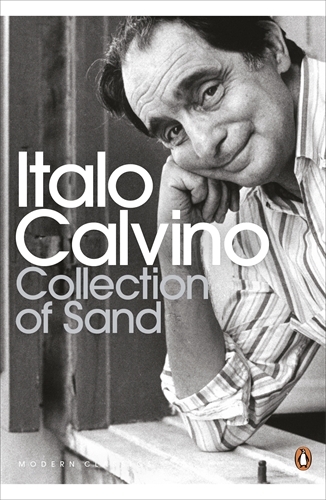
Collection of Sand
Italo Calvino in Collection of Sand claimed that 'the brain begins in the eye'. The essays collected here display his fascination with the visual universe, in which the things we see tell a truth about the world. With encyclopedic knowledge and engaging curiosity, Calvino writes about such diverse subjects as the imaginative pleasures of maps, bizarre exhibitions and the earliest forms of written language. Books and paintings provoke discussions of artistic motivation, while descriptions of a meticulous Japanese garden, Trajan's column crumbling to dust or a Mexican temple smothered by the jungle lead to contemplations on space, time and civilization.
Surprising and profound, Collection of Sand provides a glimpse into the mind of a master of the magination.
Italo Calvino, one of Italy's finest postwar writers, has delighted readers around the world with his deceptively simple, fable-like stories. Calvino was born in Cuba in 1923 and raised in San Remo, Italy; he fought for the Italian Resistance from 1943-45. He died in Siena in 1985, of a brain hemorrhage.
Martin L. McLaughlin is Professor of Italian and Fiat-Serena Professor of Italian Studies at the University of Oxford where he is a Fellow of Magdalen College. He is the English translator of Umberto Eco and Italo Calvino among many others.
Surprising and profound, Collection of Sand provides a glimpse into the mind of a master of the magination.
Italo Calvino, one of Italy's finest postwar writers, has delighted readers around the world with his deceptively simple, fable-like stories. Calvino was born in Cuba in 1923 and raised in San Remo, Italy; he fought for the Italian Resistance from 1943-45. He died in Siena in 1985, of a brain hemorrhage.
Martin L. McLaughlin is Professor of Italian and Fiat-Serena Professor of Italian Studies at the University of Oxford where he is a Fellow of Magdalen College. He is the English translator of Umberto Eco and Italo Calvino among many others.
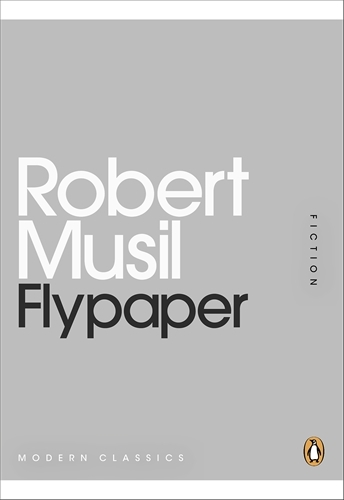
Flypaper
'They no longer hold themselves up with all their might, but sink a little and at that moment appear totally human'
Of the very first rank of prose stylists, Robert Musil captures a scene's every telling detail and symbolic aspect with a precise and remarkable beauty. In these nine stories and essays, he considers holidaymakers and stone monuments, tales of war and blackbirds, and the great pathos of a tiny death: a fly's impossible fight against the grip of flypaper.
This book includes Flypaper, Monkey Island, Fisherman on the Baltic, Sheep, As Seen in Another Light, Sarcophagus Cover, Monuments, The Paint Spreader, It's Lovely Here and The Blackbird.
Of the very first rank of prose stylists, Robert Musil captures a scene's every telling detail and symbolic aspect with a precise and remarkable beauty. In these nine stories and essays, he considers holidaymakers and stone monuments, tales of war and blackbirds, and the great pathos of a tiny death: a fly's impossible fight against the grip of flypaper.
This book includes Flypaper, Monkey Island, Fisherman on the Baltic, Sheep, As Seen in Another Light, Sarcophagus Cover, Monuments, The Paint Spreader, It's Lovely Here and The Blackbird.
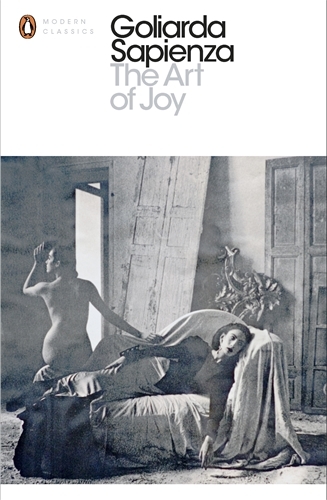
The Art of Joy
Goliarda Sapienza's The Art of Joy was written over a nine year span, from 1967 to 1976. At the time of her death in 1996, Sapienza had published nothing in a decade, having been unable to find a publisher for what was to become her most celebrated work, due to its perceived immorality. One publisher's rejection letter exclaimed: 'It's a pile of iniquity.' The manuscript lay for decades in a chest finally being proclaimed a "forgotten masterpiece" when it was eventually published in 2005.
This epic Sicilian novel, which begins in the year 1900 and follows its main character, Modesta, through nearly the entire span of the 20th century, is at once a coming-of-age novel, a tale of sexual adventure and discovery, a fictional autobiography, and a sketch of Italy's moral, political and social past. Born in a small Sicilian village and orphaned at age nine, Modesta spends her childhood in a convent raised by nuns.Through sheer cunning, she manages to escape, and eventually becomes a princess. Sensual, proud, and determined, Modesta wants to discover the infinite richness of life and sets about destroying all social barriers that impede her quest for the fulfilment of her desires. She seduces both men and women, and even murder becomes acceptable as a means of removing an obstacle to happiness and self-discovery.
Goliarda Sapienza (1924-1996) was born in Catania, Sicily in 1924, in an anarchist socialist family. At sixteen, she entered the Academy of Dramatic Arts in Rome and worked under the direction of Luchino Visconti, Alessandro Blasetti and Francesco Maselli. She is the author of several novels published during her lifetime: Lettera Aperta (1967), Il Filo Di Mezzogiorno (1969), Università di Rebibbia (1983), Le Certezze Del Dubbio (1987). L'Arte Della Gioia is considered her masterpiece.
Anne Milano Appel, Ph.D., a former library director and language teacher, has been translating professionally for nearly twenty years, and is a member of ALTA, ATA, NCTA and PEN. Her translation of Giovanni Arpino's Scent of a Woman (Penguin, 2011) was named the winner of The John Florio Prize for Italian Translation (2013).
This epic Sicilian novel, which begins in the year 1900 and follows its main character, Modesta, through nearly the entire span of the 20th century, is at once a coming-of-age novel, a tale of sexual adventure and discovery, a fictional autobiography, and a sketch of Italy's moral, political and social past. Born in a small Sicilian village and orphaned at age nine, Modesta spends her childhood in a convent raised by nuns.Through sheer cunning, she manages to escape, and eventually becomes a princess. Sensual, proud, and determined, Modesta wants to discover the infinite richness of life and sets about destroying all social barriers that impede her quest for the fulfilment of her desires. She seduces both men and women, and even murder becomes acceptable as a means of removing an obstacle to happiness and self-discovery.
Goliarda Sapienza (1924-1996) was born in Catania, Sicily in 1924, in an anarchist socialist family. At sixteen, she entered the Academy of Dramatic Arts in Rome and worked under the direction of Luchino Visconti, Alessandro Blasetti and Francesco Maselli. She is the author of several novels published during her lifetime: Lettera Aperta (1967), Il Filo Di Mezzogiorno (1969), Università di Rebibbia (1983), Le Certezze Del Dubbio (1987). L'Arte Della Gioia is considered her masterpiece.
Anne Milano Appel, Ph.D., a former library director and language teacher, has been translating professionally for nearly twenty years, and is a member of ALTA, ATA, NCTA and PEN. Her translation of Giovanni Arpino's Scent of a Woman (Penguin, 2011) was named the winner of The John Florio Prize for Italian Translation (2013).
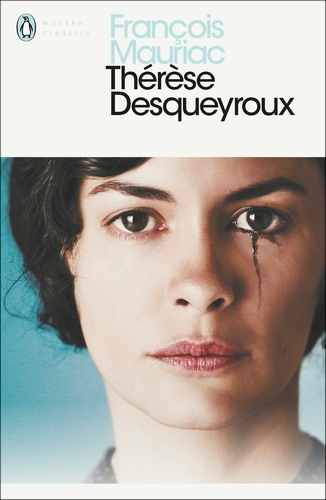
Thérèse Desqueyroux
Nobel-prize winner François Mauriac's masterpiece is Thérèse Desqueyroux, the story of a complex woman trapped by provincial life. First published in 1927, this astonishing and daring novel has echoes of Madame Bovary and has recently been made into a ravishing film starring Amélie actress Audrey Tautou.
Thérèse Desqueyroux walks free from court, acquitted of trying to poison her husband. Everyone knew she'd tried to do it, but family honour was more important than the truth. As she travels home to the gloomy forests of Argelouse, Thérèse looks back over the marriage that brought her nothing but stifling darkness, and wonders, has she really escaped punishment or is it only just about to begin?
François Mauriac was born in Bordeaux in 1885. He left his university studies to devote himself to writing, and published a collection of poems, Les Mains jointes (Clasped Hands), in 1909. He married in 1913 and the following year was mobilized to serve in the First World War with the Auxilliary Medical Squad in Thessalonica. Mauriac's major literary breakthrough came in 1922 with a novel called Le Baiser au lepreux (A Kiss for the Leper). His most famous work, Thérèse Desqueroux, appeared in 1927 and has been made into a film twice: first in 1962, with Emmanuelle Riva in the lead role, and more recently in 2012, in a version starring Audrey Tautou. In 1933 Mauriac was elected a Member of the French Academy and in 1952 he received the Nobel Prize for Literature. He died in Paris in 1970.
'A great novel ... the brilliance of its structure and the elegance of its prose never fail to take my breath away' - Beryl Bainbridge
Thérèse Desqueyroux walks free from court, acquitted of trying to poison her husband. Everyone knew she'd tried to do it, but family honour was more important than the truth. As she travels home to the gloomy forests of Argelouse, Thérèse looks back over the marriage that brought her nothing but stifling darkness, and wonders, has she really escaped punishment or is it only just about to begin?
François Mauriac was born in Bordeaux in 1885. He left his university studies to devote himself to writing, and published a collection of poems, Les Mains jointes (Clasped Hands), in 1909. He married in 1913 and the following year was mobilized to serve in the First World War with the Auxilliary Medical Squad in Thessalonica. Mauriac's major literary breakthrough came in 1922 with a novel called Le Baiser au lepreux (A Kiss for the Leper). His most famous work, Thérèse Desqueroux, appeared in 1927 and has been made into a film twice: first in 1962, with Emmanuelle Riva in the lead role, and more recently in 2012, in a version starring Audrey Tautou. In 1933 Mauriac was elected a Member of the French Academy and in 1952 he received the Nobel Prize for Literature. He died in Paris in 1970.
'A great novel ... the brilliance of its structure and the elegance of its prose never fail to take my breath away' - Beryl Bainbridge
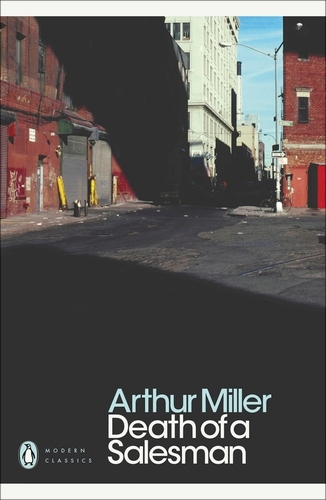
Death of a Salesman
In the spring of 1948 Arthur Miller retreated to a log cabin in Connecticut with the first two lines of a new play already fixed in his mind. He emerged six weeks later with the final script of Death of a Salesman - a painful examination of American life and consumerism. Opening on Broadway the following year, Miller's extraordinary masterpiece changed the course of modern theatre. In creating Willy Loman, his destructively insecure anti-hero, Miller himself defined his aim as being 'to set forth what happens when a man does not have a grip on the forces of life.'
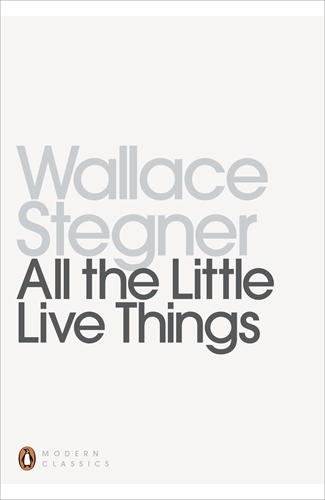
All the Little Live Things
'Timely and timeless ... Will hold any reader to its last haunting page' Chicago Tribune
The early life of Joe Allston, the retired literary agent of Stegner's National Book Award-winning novel, The Spectator Bird, features in this disquieting and keenly observed novel. Scarred by the senseless death of their son and baffled by the engulfing chaos of the 1960s, Allston and his wife, Ruth, have left the coast for a California retreat. And although their new home looks like Eden, it also has serpents: Jim Peck, a messianic exponent of drugs, yoga and sex; and Marian Catlin, an attractive young woman whose otherworldly innocence is far more appealing - and far more dangerous.
'The Great Gatsby captures the twenties and yet transcends them. All the Little Live Things is a comparable achievement for the sixties ... Stegner's craft is here at an apex' Virginia Quarterly Review
The early life of Joe Allston, the retired literary agent of Stegner's National Book Award-winning novel, The Spectator Bird, features in this disquieting and keenly observed novel. Scarred by the senseless death of their son and baffled by the engulfing chaos of the 1960s, Allston and his wife, Ruth, have left the coast for a California retreat. And although their new home looks like Eden, it also has serpents: Jim Peck, a messianic exponent of drugs, yoga and sex; and Marian Catlin, an attractive young woman whose otherworldly innocence is far more appealing - and far more dangerous.
'The Great Gatsby captures the twenties and yet transcends them. All the Little Live Things is a comparable achievement for the sixties ... Stegner's craft is here at an apex' Virginia Quarterly Review

Collect the Penguin Modern Classics
Choose three Penguin Modern Classics for only £21 over on the Penguin Shop.