Try The Pursuit of Love by Nancy Mitford. It’s witty, sharp, and the writing style is accessible, making it easy to devour in a weekend. Set against the elegance of an English country house, the story sees Linda and her sisters on a quest to find the perfect partner – and the mishaps and stuffy suitors they meet along the way.
Penguin Modern Classics
1294 books in this series
New to Penguin Modern Classics?
Looking for a hidden gem?
Try Nothing Grows by Moonlight by Torborg Nedreaas. It's a Norwegian classic about a woman's life-destroying love, confessed to a stranger over a long night of wine and cigarettes. It’s tender and rage-inducing in equal measure, and will stay with you long after you’ve turned the last page.
Buying a gift?
Choose The Apple in the Dark by Clarice Lispector. The surreal artwork makes it the kind of book people pick up before they've even read the blurb, but the story of a man attempting to reinvent himself after committing murder means it more than lives up to first impressions.
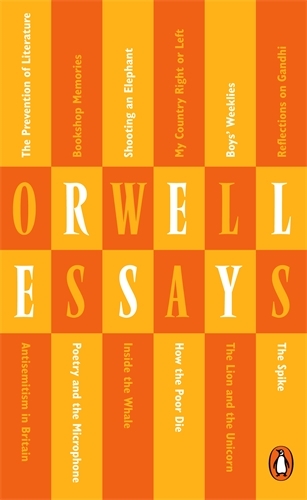
Essays
These essays, reviews and articles illuminate the life and work of one of the most individual writers of this century - a man who created a unique literary manner from the process of thinking aloud and who elevated political writing to an art

Keep the Aspidistra Flying
Gordon Comstock loathes dull, middle-class respectability and worship of money. He gives up a 'good job' in advertising to work part-time in a bookshop, giving him more time to write. But he slides instead into a self-induced poverty that destroys his creativity and his spirit. Only Rosemary, ever-faithful Rosemary, has the strength to challenge his commitment to his chosen way of life. Through the character of Gordon Comstock, Orwell reveals his own disaffection with the society he once himself renounced.
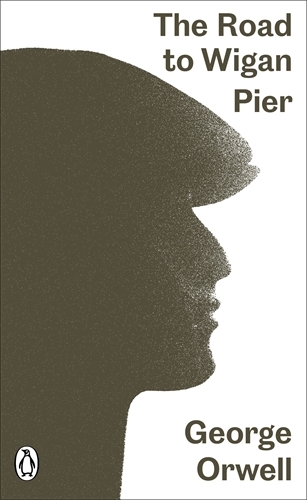
The Road to Wigan Pier
A searing account of George Orwell's observations of working-class life in the bleak industrial heartlands of Yorkshire and Lancashire in the 1930s, The Road to Wigan Pier is a brilliant and bitter polemic that has lost none of its political impact over time. His graphically unforgettable descriptions of social injustice, cramped slum housing, dangerous mining conditions, squalor, hunger and growing unemployment are written with unblinking honesty, fury and great humanity. It crystallized the ideas that would be found in Orwell's later works and novels, and remains a powerful portrait of poverty, injustice and class divisions in Britain.
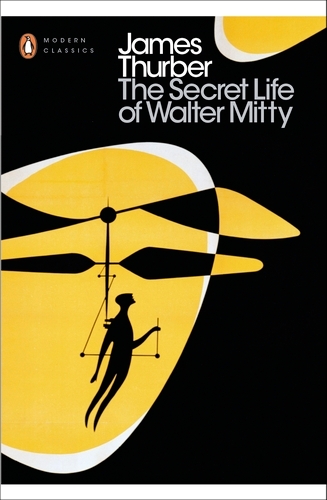
The Secret Life of Walter Mitty
Walter Mitty is an ordinary man living an ordinary life. But he has dreams - vivid, extraordinary day dreams - in which the life he leads is one of excitement and even adventure, in which he - a weary, put upon middle-aged man - is the hero of his own story.
A man can dream, can't he?
The Secret Life of Walter Mitty is just one of the brilliant humorous and witty stories written by James Thurber and collected here.
A man can dream, can't he?
The Secret Life of Walter Mitty is just one of the brilliant humorous and witty stories written by James Thurber and collected here.

A Clockwork Orange
Edited by Andrew Biswell With a Foreword by Martin Amis
Fifteen-year-old Alex likes lashings of ultraviolence. He and his gang of friends rob, kill and rape their way through a nightmarish future, until the State puts a stop to his riotous excesses. But what will his re-education mean?
A dystopian horror, a black comedy, an exploration of choice, A Clockwork Orange is also a work of exuberant invention which created a new language for its characters. This critical edition restores the text of the novel as Anthony Burgess originally wrote it, and includes a glossary of the teen slang 'Nadsat', explanatory notes, pages from the original typescript, interviews, articles and reviews, shedding light on the enduring fascination of the novel's 'sweet and juicy criminality'.
Fifteen-year-old Alex likes lashings of ultraviolence. He and his gang of friends rob, kill and rape their way through a nightmarish future, until the State puts a stop to his riotous excesses. But what will his re-education mean?
A dystopian horror, a black comedy, an exploration of choice, A Clockwork Orange is also a work of exuberant invention which created a new language for its characters. This critical edition restores the text of the novel as Anthony Burgess originally wrote it, and includes a glossary of the teen slang 'Nadsat', explanatory notes, pages from the original typescript, interviews, articles and reviews, shedding light on the enduring fascination of the novel's 'sweet and juicy criminality'.

Hangsaman
Shirley Jackson's Hangsaman is a story of lurking disquiet and haunting disorientation, inspired by the real-life, unsolved disappearance of a female college student.
'Shirley Jackson's stories are among the most terrifying ever written' Donna Tartt, author of The Goldfinch
Natalie Waite, daughter of a mediocre writer and a neurotic housewife, is increasingly unsure of her place in the world. In the midst of adolescence she senses a creeping darkness in her life, which will spread among nightmarish parties, poisonous college cliques and the manipulations of the intellectual men who surround her, as her identity gradually crumbles.
This Penguin edition includes a Foreword by Francine Prose.
Shirley Jackson's chilling tales have the power to unsettle and terrify unlike any other. She was born in California in 1916. When her short story The Lottery was first published in The New Yorker in 1948, readers were so horrified they sent her hate mail; it has since become one of the greatest American stories of all time. Her first novel, The Road Through the Wall, was published in the same year and was followed by five more: Hangsaman, The Bird's Nest, The Sundial, The Haunting of Hill House and We Have Always Lived in the Castle, widely seen as her masterpiece. Shirley Jackson died in her sleep at the age of 48.
'An amazing writer' Neil Gaiman
'The world of Shirley Jackson is eerie and unforgettable ... It is a place where things are not what they seem; even on a morning that is sunny and clear there is always the threat of darkness looming, of things taking a turn for the worse' A. M. Homes
'Shirley Jackson is unparalleled as a leader in the field of beautifully written, quiet, cumulative shudders' Dorothy Parker
'Shirley Jackson's stories are among the most terrifying ever written' Donna Tartt, author of The Goldfinch
Natalie Waite, daughter of a mediocre writer and a neurotic housewife, is increasingly unsure of her place in the world. In the midst of adolescence she senses a creeping darkness in her life, which will spread among nightmarish parties, poisonous college cliques and the manipulations of the intellectual men who surround her, as her identity gradually crumbles.
This Penguin edition includes a Foreword by Francine Prose.
Shirley Jackson's chilling tales have the power to unsettle and terrify unlike any other. She was born in California in 1916. When her short story The Lottery was first published in The New Yorker in 1948, readers were so horrified they sent her hate mail; it has since become one of the greatest American stories of all time. Her first novel, The Road Through the Wall, was published in the same year and was followed by five more: Hangsaman, The Bird's Nest, The Sundial, The Haunting of Hill House and We Have Always Lived in the Castle, widely seen as her masterpiece. Shirley Jackson died in her sleep at the age of 48.
'An amazing writer' Neil Gaiman
'The world of Shirley Jackson is eerie and unforgettable ... It is a place where things are not what they seem; even on a morning that is sunny and clear there is always the threat of darkness looming, of things taking a turn for the worse' A. M. Homes
'Shirley Jackson is unparalleled as a leader in the field of beautifully written, quiet, cumulative shudders' Dorothy Parker

Going To Meet The Man
‘There’s no way not to suffer. But you try all kinds of ways to keep from drowning in it.’
The eight stories in this collection showcase the breadth of Baldwin’s imagination, empathy and social critique as he explores the subtle and profound wounds that discrimination leaves in both its victims and its perpetrators: from the down-and-out jazz pianist recovering from addiction in ‘Sonny’s Blues’ to the adolescent who hides his burgeoning sexuality from the church community that defines his world in ‘The Outing’ to the horrifying story of the initiation of a racist, as a deputy sheriff remembers his parents taking him to see the mutilation and murder of a black man by a gleeful mob in 'Going to Meet the Man'.
First published in 1965, these tales of ingenuity, desperation, power and fear provide a snapshot of a writer at the height of his literary powers.
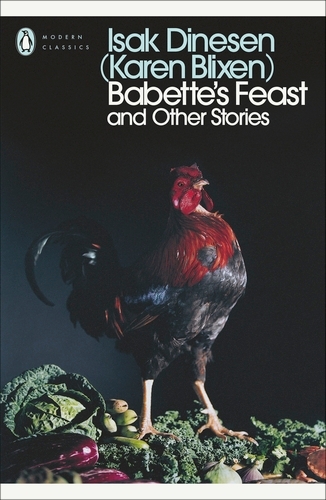
Babette's Feast and Other Stories
These five rich, witty and magical stories from the author of Out of Africa include one of her most well known tales, ‘Babette’s Feast’, which was made into the classic film. It tells the story of a French cook working in a puritanical Norwegian community, who treats her employers to the decadent feast of a lifetime. There is also a real-life Prospero and his Ariel in ‘Tempests’, a mysterious pearl-fisher in ‘The Diver’ and a brief, tragic encounter in ‘The Ring’. All the stories have a mystic, fairy-tale quality, linked by themes of angels, the sea, dreams and fate. They were among the last to be written by Isak Dinesen, and show her as a master of short fiction.

An Essay on Typography
Eric Gill's opinionated manifesto on typography argues that 'a good piece of lettering is as beautiful a thing to see as any sculpture or painted picture'. This essay explores the place of typography in culture and is also a moral treatise celebrating the role of craftsmanship in an industrial age. Gill, a sculptor, engraver, printmaker and creator of many classic typefaces that can be seen around us today, fused art, history and polemic in a visionary work which has been hugely influential on modern graphic design.
'Written with clarity, humility and a touch of humour . . . timeless and absorbing' Paul Rand, The New York Times
'His lettering was clear, confident and hugely influential on the development of modern type design. The world has now caught up with Gill' Guardian
How do we see the world around us? This is one of a number of pivotal works by creative thinkers like John Berger and Susan Sontag whose writings on art, design and the media have changed our vision for ever.
'Written with clarity, humility and a touch of humour . . . timeless and absorbing' Paul Rand, The New York Times
'His lettering was clear, confident and hugely influential on the development of modern type design. The world has now caught up with Gill' Guardian
How do we see the world around us? This is one of a number of pivotal works by creative thinkers like John Berger and Susan Sontag whose writings on art, design and the media have changed our vision for ever.
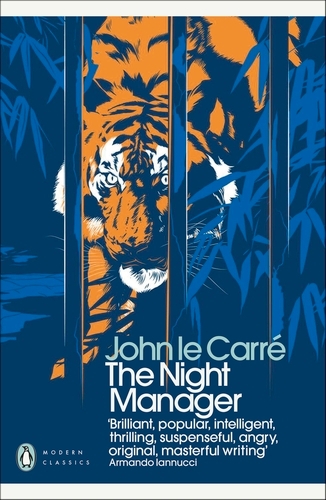
The Night Manager
At the start of it all, Jonathan Pine is merely the night manager at a luxury hotel. But when a single attempt to pass on information to the British authorities - about an international businessman at the hotel with suspicious dealings - backfires terribly, and people close to Pine begin to die, he commits himself to a battle against powerful forces he cannot begin to imagine.
In a chilling tale of corrupt intelligence agencies, billion-dollar price tags and the truth of the brutal arms trade, John le Carré creates a claustrophobic world in which no one can be trusted.
In a chilling tale of corrupt intelligence agencies, billion-dollar price tags and the truth of the brutal arms trade, John le Carré creates a claustrophobic world in which no one can be trusted.

Understanding a Photograph
John Berger's writings on photography are some of the most original of the twentieth century. This selection contains many groundbreaking essays and previously uncollected pieces written for exhibitions and catalogues in which Berger probes the work of photographers such as Henri Cartier-Bresson and W. Eugene Smith - and the lives of those photographed - with fierce engagement, intensity and tenderness.
The selection is made and introduced by Geoff Dyer, author of the award-winning The Ongoing Moment.
How do we see the world around us? This is one of a number of pivotal works by creative thinkers whose writings on art, design and the media have changed our vision for ever.
John Berger was born in London in 1926. His acclaimed works of both fiction and non-fiction include the seminal Ways of Seeing and the novel G., which won the Booker Prize in 1972. In 1962 he left Britain permanently, and he now lives in a small village in the French Alps.
Geoff Dyer is the author of four novels and several non-fiction books. Winner of the Lannan Literary Award, the International Centre of Photography's 2006 Infinity Award and the American Academy of Arts and Letters's E. M. Forster Award, Dyer is also a regular contributor to many publications in the UK and the US. He lives in London.
The selection is made and introduced by Geoff Dyer, author of the award-winning The Ongoing Moment.
How do we see the world around us? This is one of a number of pivotal works by creative thinkers whose writings on art, design and the media have changed our vision for ever.
John Berger was born in London in 1926. His acclaimed works of both fiction and non-fiction include the seminal Ways of Seeing and the novel G., which won the Booker Prize in 1972. In 1962 he left Britain permanently, and he now lives in a small village in the French Alps.
Geoff Dyer is the author of four novels and several non-fiction books. Winner of the Lannan Literary Award, the International Centre of Photography's 2006 Infinity Award and the American Academy of Arts and Letters's E. M. Forster Award, Dyer is also a regular contributor to many publications in the UK and the US. He lives in London.
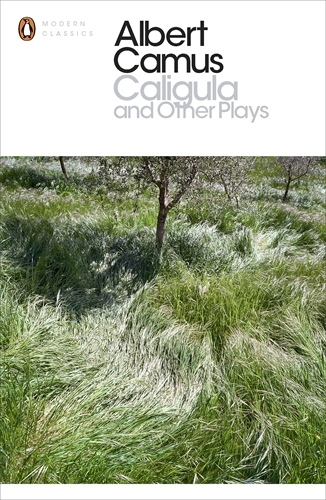
Caligula and Other Plays
Caligula reveals some aspects of the existential notion of 'the absurd' by portraying an emperor so mighty and so desperate in his search for freedom that he inevitably destroys gods, men and himself. The dramatic impetus of Cross Purpose, however, comes from the tension between consent to and refusal of man's absurdity; it is the tragedy of a man who returns home to his mother and sister without revealing his identity to them. By the time of The Just and The Possessed, refusal and rebellion have taken over, and in these overtly political plays (the latter based on Dostoyevsky's The Devils) Camus dramatizes action and revolt in the name of liberty.
Albert Camus was born in Algeria in 1913. His play, Caligula, appeared in 1939. His first two important books, L'Etranger (The Outsider) and the long essay Le Mythe de Sisyphe (The Myth of Sisyphus), were published when he returned to Paris. After the war he devoted himself to writing and established an international reputation with such books as La Peste (The Plague 1947), Les Justes (The Just 1949) and La Chute (The Fall; 1956). He was awarded the Nobel Prize for Literature in 1957. He was killed in a road accident in 1960.
Albert Camus was born in Algeria in 1913. His play, Caligula, appeared in 1939. His first two important books, L'Etranger (The Outsider) and the long essay Le Mythe de Sisyphe (The Myth of Sisyphus), were published when he returned to Paris. After the war he devoted himself to writing and established an international reputation with such books as La Peste (The Plague 1947), Les Justes (The Just 1949) and La Chute (The Fall; 1956). He was awarded the Nobel Prize for Literature in 1957. He was killed in a road accident in 1960.
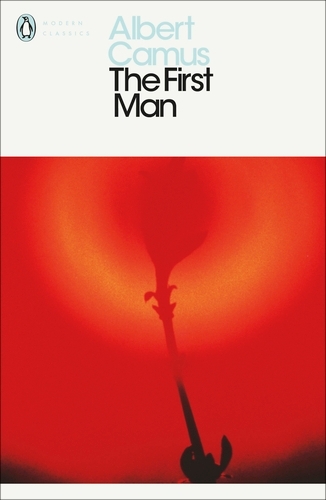
The First Man
The unfinished manuscript of The First Man was discovered in the wreckage of car accident in which Camus died in 1960. Although it was not published for over thirty years, it was an instant bestseller when it finally appeared in 1994. The 'first man' is Jacques Cormery, whose poverty-stricken childhood in Algiers is made bearable by his love for his silent and illiterate mother, and by the teacher who transforms his view of the world. The most autobiographical of Camus's novels, it gives profound insights into his life and the powerful themes underlying his work.
Albert Camus was born in Algeria in 1913. The works that established his international reputation include THE PLAGUE, THE FALL, THE REBEL and THE OUTSIDER. Camus died in a road accident in 1960 and is remembered as one of the greatest philsophical novelists of the twentieth century.
Albert Camus was born in Algeria in 1913. The works that established his international reputation include THE PLAGUE, THE FALL, THE REBEL and THE OUTSIDER. Camus died in a road accident in 1960 and is remembered as one of the greatest philsophical novelists of the twentieth century.

A Happy Death
Is it possible to die a happy death?This is the central question of Camus's astonishing early novel, published posthumously and greeted as a major literary event. It tells the story of a young Algerian, Mersault, who defies society's rules by committing a murder and escaping punishment, then experimenting with different ways of life and finally dying a happy man. In many ways A Happy Death is a fascinating first sketch for The Outsider, but it can also be seen as a candid self-portrait, drawing on Camus's memories of his youth, travels and early relationships. It is infused with lyrical descriptions of the sun-drenched Algiers of his childhood - the place where, eventually, Mersault is able to find peace and die 'without anger, without hatred, without regret'.

The Outsider
'My mother died today. Or maybe yesterday, I don't know.'
In The Outsider (1942), his classic existentialist novel, Camus explores the alienation of an individual who refuses to conform to social norms. Meursault, his anti-hero, will not lie. When his mother dies, he refuses to show his emotions simply to satisfy the expectations of others. And when he commits a random act of violence on a sun-drenched beach near Algiers, his lack of remorse compounds his guilt in the eyes of society and the law. Yet he is as much a victim as a criminal.
Albert Camus' portrayal of a man confronting the absurd, and revolting against the injustice of society, depicts the paradox of man's joy in life when faced with the 'tender indifference' of the world.
Sandra Smith's translation, based on close listening to a recording of Camus reading his work aloud on French radio in 1954, sensitively renders the subtleties and dream-like atmosphere of L'Étranger.
Albert Camus (1913-1960), French novelist, essayist and playwright, is one of the most influential thinkers of the 20th century. His most famous works include The Myth of Sisyphus (1942), The Plague (1947), The Just (1949), The Rebel (1951) and The Fall (1956). He was awarded the Nobel Prize for Literature in 1957, and his last novel, The First Man, unfinished at the time of his death, appeared in print for the first time in 1994, and was published in English soon after by Hamish Hamilton.
Sandra Smith was born and raised in New York City and is a Fellow of Robinson College, University of Cambridge, where she teaches French Literature and Language. She has won the French American Foundation Florence Gould Foundation Translation Prize, as well as the PEN Book-of-the-Month Club Translation Prize.
In The Outsider (1942), his classic existentialist novel, Camus explores the alienation of an individual who refuses to conform to social norms. Meursault, his anti-hero, will not lie. When his mother dies, he refuses to show his emotions simply to satisfy the expectations of others. And when he commits a random act of violence on a sun-drenched beach near Algiers, his lack of remorse compounds his guilt in the eyes of society and the law. Yet he is as much a victim as a criminal.
Albert Camus' portrayal of a man confronting the absurd, and revolting against the injustice of society, depicts the paradox of man's joy in life when faced with the 'tender indifference' of the world.
Sandra Smith's translation, based on close listening to a recording of Camus reading his work aloud on French radio in 1954, sensitively renders the subtleties and dream-like atmosphere of L'Étranger.
Albert Camus (1913-1960), French novelist, essayist and playwright, is one of the most influential thinkers of the 20th century. His most famous works include The Myth of Sisyphus (1942), The Plague (1947), The Just (1949), The Rebel (1951) and The Fall (1956). He was awarded the Nobel Prize for Literature in 1957, and his last novel, The First Man, unfinished at the time of his death, appeared in print for the first time in 1994, and was published in English soon after by Hamish Hamilton.
Sandra Smith was born and raised in New York City and is a Fellow of Robinson College, University of Cambridge, where she teaches French Literature and Language. She has won the French American Foundation Florence Gould Foundation Translation Prize, as well as the PEN Book-of-the-Month Club Translation Prize.
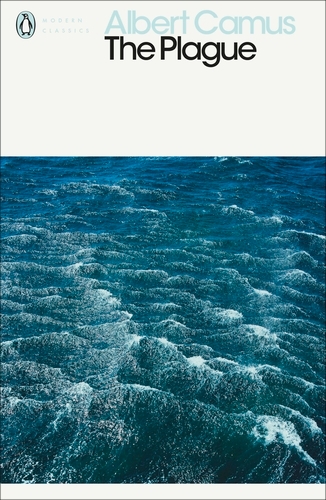
The Plague
The townspeople of Oran are in the grip of a deadly plague, which condemns its victims to a swift and horrifying death. Fear, isolation and claustrophobia follow as they are forced into quarantine. Each person responds in their own way to the lethal disease: some resign themselves to fate, some seek blame, and a few, like Dr Rieux, resist the terror.
An immediate triumph when it was published in 1947, The Plague is in part an allegory of France's suffering under the Nazi occupation, and a story of bravery and determination against the precariousness of human existence.
An immediate triumph when it was published in 1947, The Plague is in part an allegory of France's suffering under the Nazi occupation, and a story of bravery and determination against the precariousness of human existence.

Collect the Penguin Modern Classics
Choose three Penguin Modern Classics for only £21 over on the Penguin Shop.