Try The Pursuit of Love by Nancy Mitford. It’s witty, sharp, and the writing style is accessible, making it easy to devour in a weekend. Set against the elegance of an English country house, the story sees Linda and her sisters on a quest to find the perfect partner – and the mishaps and stuffy suitors they meet along the way.
Penguin Modern Classics
1294 books in this series
New to Penguin Modern Classics?
Looking for a hidden gem?
Try Nothing Grows by Moonlight by Torborg Nedreaas. It's a Norwegian classic about a woman's life-destroying love, confessed to a stranger over a long night of wine and cigarettes. It’s tender and rage-inducing in equal measure, and will stay with you long after you’ve turned the last page.
Buying a gift?
Choose The Apple in the Dark by Clarice Lispector. The surreal artwork makes it the kind of book people pick up before they've even read the blurb, but the story of a man attempting to reinvent himself after committing murder means it more than lives up to first impressions.
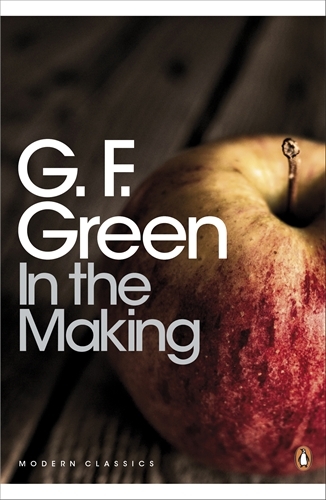
In the Making
Ten-year-old Randal Thane is distressed to be taken from his mother, his governess and his home and sent to prep school. But once there, he discovers an adult world he had never before imagined, and falls unwillingly but entirely under the spell of a charismatic older boy, Felton, who will introduce him to all the pleasures, pains and perplexities of first love.
A unique, enchanting and complicated coming-of-age story about the passion between two young boys, In the Making is widely hailed as G. F. Green's masterpiece, and is now in print for the first time since its original publication in 1952.
A unique, enchanting and complicated coming-of-age story about the passion between two young boys, In the Making is widely hailed as G. F. Green's masterpiece, and is now in print for the first time since its original publication in 1952.
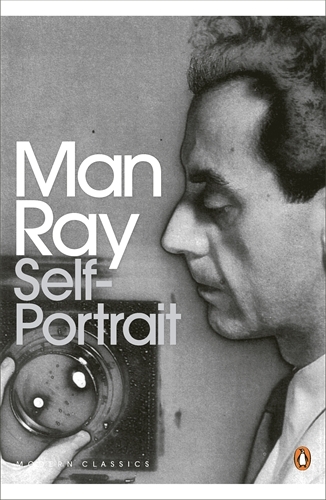
Self-Portrait
In this remarkable autobiography, Man Ray - painter, photographer, sculptor, film maker and writer - relates the story of his life, from his childhood determination to be an artist and his technical drawing classes in a Brooklyn high school, to the glamorous and heady days of Paris in the 1940s, when any trip to the city 'was not complete until they had been "done" by Man Ray's camera'.
Friend to everyone who was anyone, Ray tells everything he knows of artists, socialites and writers such as Matisse, Hemingway, Picasso and Joyce, not to mention Lee Miller, Nancy Cunard, Alberto Giacometti, Gertrude Stein, Dali, Max Ernst and many more, in this decadent, sensational account of the early twentieth-century cultural world.
Friend to everyone who was anyone, Ray tells everything he knows of artists, socialites and writers such as Matisse, Hemingway, Picasso and Joyce, not to mention Lee Miller, Nancy Cunard, Alberto Giacometti, Gertrude Stein, Dali, Max Ernst and many more, in this decadent, sensational account of the early twentieth-century cultural world.

Steppenwolf
A new translation by David Horrocks.
At first sight Harry Haller seems like a respectable, educated man. In reality he is the Steppenwolf: wild, strange, alienated from society and repulsed by the modern age. But as he is drawn into a series of dreamlike and sometimes savage encounters - accompanied by, among others, Mozart, Goethe and the bewitching Hermione - the misanthropic Haller discovers a higher truth, and the possibility of happiness. This haunting portrayal of a man who feels he is half-human and half-wolf became a counterculture classic for a disaffected generation. Yet it is also a story of redemption, and an intricately-structured modernist masterpiece. This is the first new translation of Steppenwolf for over eighty years, returning to the fresh, authentic language of Hesse's original.
At first sight Harry Haller seems like a respectable, educated man. In reality he is the Steppenwolf: wild, strange, alienated from society and repulsed by the modern age. But as he is drawn into a series of dreamlike and sometimes savage encounters - accompanied by, among others, Mozart, Goethe and the bewitching Hermione - the misanthropic Haller discovers a higher truth, and the possibility of happiness. This haunting portrayal of a man who feels he is half-human and half-wolf became a counterculture classic for a disaffected generation. Yet it is also a story of redemption, and an intricately-structured modernist masterpiece. This is the first new translation of Steppenwolf for over eighty years, returning to the fresh, authentic language of Hesse's original.

To Jerusalem and Back
In the mid-1970s, Saul Bellow visited Israel and To Jerusalem and Back is his account of his time there. Immersing himself in its landscape and culture, he records the opinions, passions and dreams of Israelis of varying viewpoints – from Prime Minister Rabin, novelist Amos Oz and the editor of an Arab-language newspaper to a kibbutznik escaped from the Warsaw ghetto and the barber at Bellow’s hotel. Through meditations steeped in history and literature he adds his own reflections on being Jewish in the twentieth century. Bellow’s exploration of a beautiful and troubled city is a powerful testament to the unique spirit and challenges of Israel, its history and its future.

Bend Sinister
The state has been recently taken over and is being run by the tyrannical and philistine 'Average Man' party. Under the slogans of equality and happiness for all, it has done away with individualism and freedom of thought. Only John Krug, a brilliant philosopher, stands up to the regime. His antagonist, the leader of the new party, is his old school enemy, Paduk - known as the 'Toad'. Grieving over his wife's recent death, Krug is at first dismissive of Paduk's activities and sees no threat in them. But the sinister machine which Paduk has set in motion may prove stronger than the individual, stronger even than the grotesque 'Toad' himself.
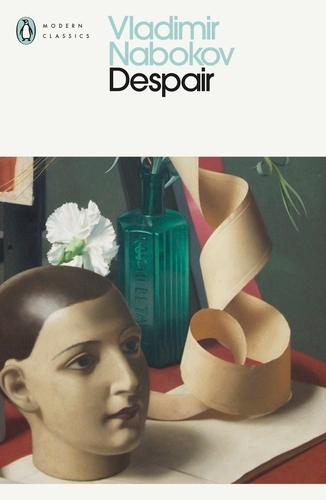
Despair
Self-satisfied, delighting in the many fascinating quirks of his own personality, Hermann is perhaps not to be taken too seriously. But then a chance meeting with a man he believes to be his double reveals a frightening 'split' in Hermann's nature. With shattering immediacy, Nabokov takes us into a deranged world, one full of an impudent, startling humour, dominated by the egotistical and scornful figure of a murderer who thinks himself an artist.
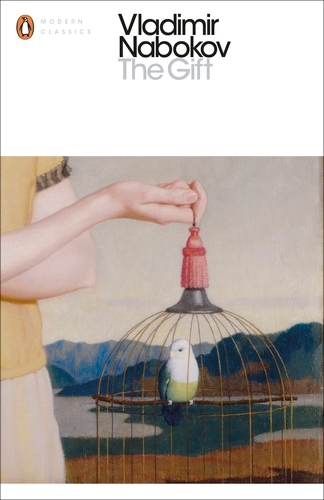
The Gift
The Gift is the phantasmal autobiography of Fyodor Godunov-Cherdynstev, a writer living in the closed world of Russian intellectuals in Berlin shortly after the First World War. This gorgeous tapestry of literature and butterflies tells the story of Fyodor's pursuits as a writer. Its heroine is not Fyodor's elusive and beloved Zina, however, but Russian prose and poetry themselves.
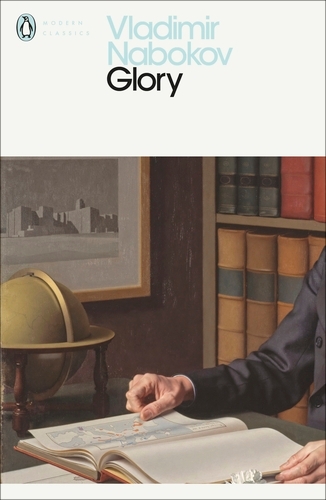
Glory
'In general Glory is my happiest thing.' 'The fun of Glory is . . . to be sought in the echoing and linking of minor events, in back-and-forth switches, which produce an illusion of impetus; in an old daydream directly becoming the blessing of the ball hugged to one's chest, or in the casual vision of Martin's mother grieving beyond the time-frame of the novel in an abstraction of the future that the reader can only guess at, even after he has raced through the last seven chapters where a regular madness of structural twists and a masquerade of all characters culminate in a furious finale, although nothing much happens at the very end - just a bird perching on a wicket in the greyness of a wet day' - Vladimir Nabokov
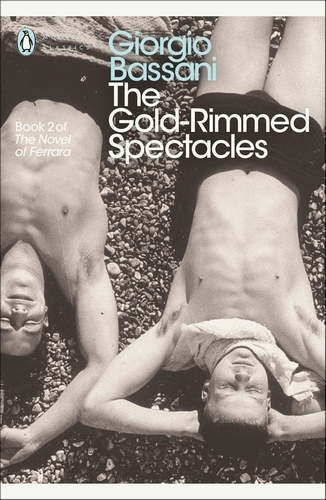
The Gold-Rimmed Spectacles
Into the insular town of 1930s Ferrara, a new doctor arrives. Fadigati is hopeful and modern, and more than anything wants to fit into his new home. But his fresh, appealing appearance soon crumbles when the townsfolk discover his homosexuality, and the young man he pays to be his lover humiliates him publicly.
As anti-Semitism spreads across Italy, the Jewish narrator of the tale begins to feel pity for the ostracized doctor, as the fickle nature of a community changing under political forces becomes clear. The Gold-Rimmed Spectacles is a gripping and tragic study of how lives can be destroyed by those we consider our neighbours.
As anti-Semitism spreads across Italy, the Jewish narrator of the tale begins to feel pity for the ostracized doctor, as the fickle nature of a community changing under political forces becomes clear. The Gold-Rimmed Spectacles is a gripping and tragic study of how lives can be destroyed by those we consider our neighbours.
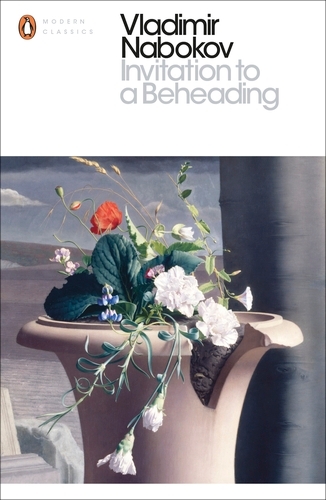
Invitation to a Beheading
Written in Berlin in 1934, Invitation to a Beheading contains all the surprise, excitement and magical intensity of a work created in two brief weeks of sustained inspiration. It takes us into the fantastic prison-world of Cincinnatus, a man condemned to death and spending his last days in prison not quite knowing when the end will come. Nabokov described the book as 'a violin in a void. The worldling will deem it a trick. Old men will hurriedly turn from it to regional romances and the lives of public figures ... The evil-minded will perceive in little Emmie a sister of little Lolita ... But I know a few readers who will jump up, ruffling their hair'.
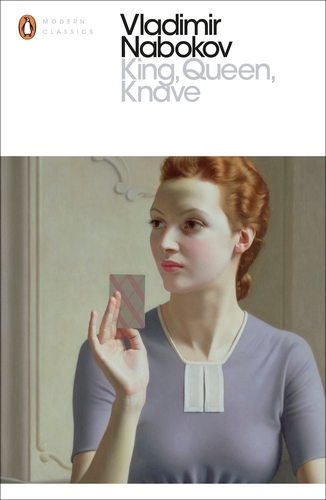
King, Queen, Knave
'Of all my novels this bright brute is the gayest', Nabokov wrote of King, Queen, Knave. Comic, sensual and cerebral, it dramatizes an Oedipal love triangle, a tragi-comedy of husband, wife and lover, through Dreyer the rich businessman, his ripe-lipped ad mercenary wife Martha, and their bespectacled nephew Franz. 'If a resolute Freudian manages to slip in' - Nabokov darts a glance to the reader - 'he or she should be warned that a number of cruel traps have been set here and there...
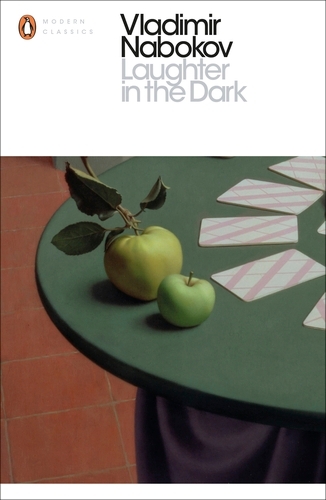
Laughter in the Dark
Albinus - rich, married middle-aged and respectable - is an art critic and aspiring filmmaker who lusts after the coquettish young cinema usherette Margot. Gradually he seduces her and convinces himself he is irresistible to her, but Margot has other plans. She wants to be a film star, and when Albinus introduces her to the American movie producer Axel Rex, she sees her chance - and plotting, duplicity and tragedy ensue.
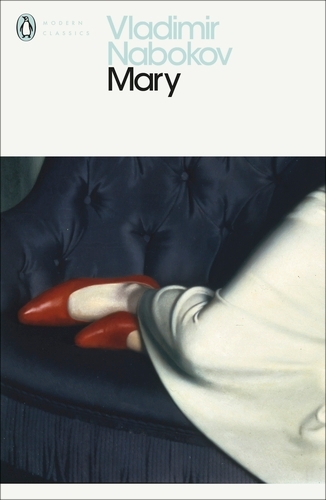
Mary
Lev Ganin is a young officer sharing a boarding house in Berlin with a host of Russian émigrés. Alone in his room, he dreams of his first love, Mary. Awash with memories of youth and idyllic scenes of pre-Revolution Russia, Ganin becomes convinced that Mary is in fact the wife of a fellow-boarder, due to arrive at this very house soon. He longs for her arrival, when he can whisk her away and leave everything behind ...
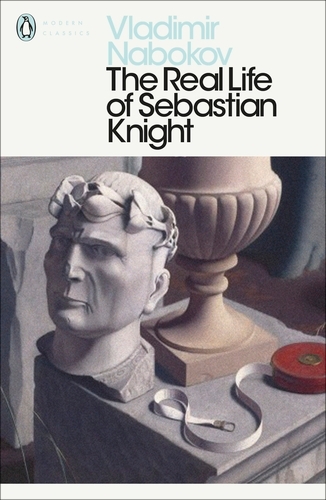
The Real Life of Sebastian Knight
Spurred on by admiration for his novelist half-brother and irritation at the biography written about him by Mr Goodman ('his slapdash and very misleading book'), the narrator, V, sets out to record Sebastian Knight's life as he understands it. But buried amid the extensive quoting, digressions, seeming explanations and digs, Sebastian's erratic and troubled persona remains as elusive as ever.
Nabokov's first novel written in English, The Real Life of Sebastian Knight is a nuanced, enigmatic potrayal of the conflict between the real and the unreal, and the futile quest for human truth.
Nabokov's first novel written in English, The Real Life of Sebastian Knight is a nuanced, enigmatic potrayal of the conflict between the real and the unreal, and the futile quest for human truth.
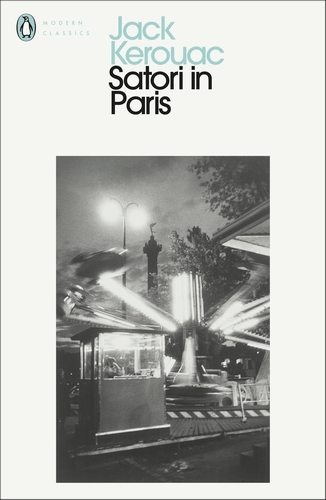
Satori in Paris
This semi-autobiographical tale of Kerouac's own trip to France, to trace his ancestors and explore his own understanding of the Buddhism that came to define his beliefs, contains some of Kerouac's most lyrical descriptions. From his reports of the strangers he meets and the all-night conversations he enjoys in seedy bars in Paris and Brittany, to the moment in a cab he experiences Buddhism's satori - a feeling of sudden awakening - Kerouac's affecting and revolutionary writing transports the reader.
Published at the height of his fame, Satori in Paris is a hectic tale of philosophy, identity and the powerful strangeness of travel.
Published at the height of his fame, Satori in Paris is a hectic tale of philosophy, identity and the powerful strangeness of travel.
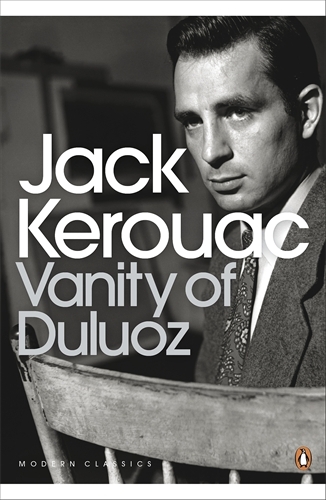
Vanity of Duluoz
The tale of Kerouac's alter-ego, Vanity of Duluoz presents Jack Duluoz's high school experiences as a sporting jock in Massachusetts and his time at Columbia University on a football scholarship. Just as Jack's glamorous new adult life begins, so does World War II, and he joins the US Navy to travel the world. As Jack experiences more, he realizes the limits of his former plans and returns to New York at the start of the Beat movement, to a riot of drugs, sex and writing. Vanity of Duluoz was Kerouac's final work published before his death in 1969.

Collect the Penguin Modern Classics
Choose three Penguin Modern Classics for only £21 over on the Penguin Shop.