Try The Pursuit of Love by Nancy Mitford. It’s witty, sharp, and the writing style is accessible, making it easy to devour in a weekend. Set against the elegance of an English country house, the story sees Linda and her sisters on a quest to find the perfect partner – and the mishaps and stuffy suitors they meet along the way.
Penguin Modern Classics
1295 books in this series
New to Penguin Modern Classics?
Looking for a hidden gem?
Try Nothing Grows by Moonlight by Torborg Nedreaas. It's a Norwegian classic about a woman's life-destroying love, confessed to a stranger over a long night of wine and cigarettes. It’s tender and rage-inducing in equal measure, and will stay with you long after you’ve turned the last page.
Buying a gift?
Choose The Apple in the Dark by Clarice Lispector. The surreal artwork makes it the kind of book people pick up before they've even read the blurb, but the story of a man attempting to reinvent himself after committing murder means it more than lives up to first impressions.

The Black Jacobins
In 1791, inspired by the ideals of the French Revolution, the slaves of San Domingo rose in revolt. Despite invasion by a series of British, Spanish and Napoleonic armies, their twelve-year struggle led to the creation of Haiti, the first independent black republic outside Africa. Only three years later, the British and Americans ended the Atlantic slave trade.
In this outstanding example of vivid, committed and empathetic historical analysis, C. L. R. James illuminates these epoch-making events. He explores the appalling economic realities of the Caribbean economy, the roots of the world's only successful slave revolt and the utterly extraordinary former slave - Toussaint L'Ouverture - who led them. Explicitly written as part of the fight to end colonialism in Africa, The Black Jacobins put the slaves themselves centre stage, boldly forging their own destiny against nearly impossible odds. It remains one of the essential texts for understanding the Caribbean - and the region's inextricable links with Europe, Africa and the Americas.
In this outstanding example of vivid, committed and empathetic historical analysis, C. L. R. James illuminates these epoch-making events. He explores the appalling economic realities of the Caribbean economy, the roots of the world's only successful slave revolt and the utterly extraordinary former slave - Toussaint L'Ouverture - who led them. Explicitly written as part of the fight to end colonialism in Africa, The Black Jacobins put the slaves themselves centre stage, boldly forging their own destiny against nearly impossible odds. It remains one of the essential texts for understanding the Caribbean - and the region's inextricable links with Europe, Africa and the Americas.
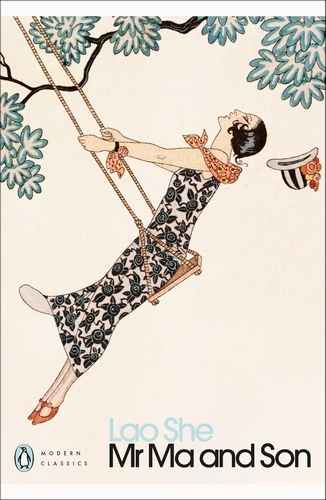
Mr Ma and Son
Mr Ma and his son Ma Wei run an antiques shop nestled in a quiet street by St Paul's Cathedral in London, where, far from their native Peking, they struggle to navigate the bustling pavements and myriad social conventions of 1920s English society. The Mas must negotiate love, money, misunderstandings and the London smog, aided and hindered by a cast of brilliantly drawn characters: their well-meaning landlady Mrs Weddeburn, her carefree daughter Mary, old China hand Reverend Ely and his formidable wife.
Both a bitingly funny satire of Sino-British relations, and an emotionally powerful story of the experience of Chinese immigrants to the United Kingdom at the turn of the twentieth century, Mr Ma and Son is a compelling, witty novel from one of China's most celebrated writers.
Both a bitingly funny satire of Sino-British relations, and an emotionally powerful story of the experience of Chinese immigrants to the United Kingdom at the turn of the twentieth century, Mr Ma and Son is a compelling, witty novel from one of China's most celebrated writers.

The Joys of Motherhood
'A scorching portrayal of a woman's life . . . the female, feminist counterpart to Things Fall Apart' Bernardine Evaristo
'God, when will you create a woman who will be fulfilled in herself, a full human being, not anybody's appendage? ... when will I be free?'
There is no greater honour for a woman in an Ibo village than to have children - especially sons. Unable to conceive in her first marriage, Nnu Ego is sent away to a new husband in the city of Lagos, where she finally succeeds in becoming a mother. But things are changing, and a war that unfolds thousands of miles away threatens her family's fortunes and her entire way of life. In a world where motherhood is everything, what will be left for her at the end of it all?
'Sparkling intelligence and a certain kind of honest, lived, intimate insight into working-class colonial Nigeria' Chimamanda Ngozi Adichie
'God, when will you create a woman who will be fulfilled in herself, a full human being, not anybody's appendage? ... when will I be free?'
There is no greater honour for a woman in an Ibo village than to have children - especially sons. Unable to conceive in her first marriage, Nnu Ego is sent away to a new husband in the city of Lagos, where she finally succeeds in becoming a mother. But things are changing, and a war that unfolds thousands of miles away threatens her family's fortunes and her entire way of life. In a world where motherhood is everything, what will be left for her at the end of it all?
'Sparkling intelligence and a certain kind of honest, lived, intimate insight into working-class colonial Nigeria' Chimamanda Ngozi Adichie

Too Much of Life
'How did I so unwittingly transform the joy of living into the great luxury of being alive?'
Between 1967 and 1977, Clarice Lispector wrote weekly dispatches from her desk in Rio for the Jornal do Brasil. Already famous for her revolutionary, interior, metaphysical novels, in her Chronicles she turns her attention to the everyday, turning the material of her life into profound, touching and funny, tiny revelations.
Observing the world around her, small encounters like hearing tales of the lost loves of a taxi driver, or the bitterness lurking beneath the prettiness of an old friend, become an exposition of the currents and foibles that define our lives. Everything from the meaning of cosmonauts to the new ideas, writers and artists that populate the sparkling international world of the sixties and seventies are considered and transformed into jewels of insight, delight and devastation.
Sincere and playful, exhilarating and contemplative, Too Much of Life: Complete Chronicles opens up a new way of seeing the world.
Between 1967 and 1977, Clarice Lispector wrote weekly dispatches from her desk in Rio for the Jornal do Brasil. Already famous for her revolutionary, interior, metaphysical novels, in her Chronicles she turns her attention to the everyday, turning the material of her life into profound, touching and funny, tiny revelations.
Observing the world around her, small encounters like hearing tales of the lost loves of a taxi driver, or the bitterness lurking beneath the prettiness of an old friend, become an exposition of the currents and foibles that define our lives. Everything from the meaning of cosmonauts to the new ideas, writers and artists that populate the sparkling international world of the sixties and seventies are considered and transformed into jewels of insight, delight and devastation.
Sincere and playful, exhilarating and contemplative, Too Much of Life: Complete Chronicles opens up a new way of seeing the world.

Tokyo Express
In a rocky cove in the bay of Hakata, the bodies of a young and beautiful couple are discovered. Standing in the coast's wind and cold, the police see nothing to investigate: the flush of the couple's cheeks speaks clearly of cyanide, of a lovers' suicide. But in the eyes of two men, Torigai Jutaro, a senior detective, and Kiichi Mihara, a young gun from Tokyo, something is not quite right. Together, they begin to pick at the knot of a unique and calculated crime . . .
Now widely available in English for the first time, Tokyo Express is celebrated around the world as Seicho Matsumoto's masterpiece - and as one of the most fiendish puzzles ever written.
Now widely available in English for the first time, Tokyo Express is celebrated around the world as Seicho Matsumoto's masterpiece - and as one of the most fiendish puzzles ever written.

The Ipcress File
A high-ranking scientist has been kidnapped. A secret British intelligence agency must find out why. But as the quarry is pursued from grimy Soho to the other side of the world, what seemed a straightforward mission turns into something far more sinister. With its sardonic, cool, working-class hero, Len Deighton's sensational debut The Ipcress File rewrote the spy thriller and became the defining novel of 1960's London.

Asylums
Asylums presents four interlinked essays that explore life in the 'total institutions': the closed systems of prisons, boarding schools, nursing homes and, most importantly, mental institutions. Focusing on the relationship between an inmate and the institution that contains them, Goffman unpicks how lives are managed 'on the inside', and how the setting more often than not works against the inmate's best interests.
A radical exploration of the institutions that rule over the lives of men, women and children, Asylums is one of Erving Goffman's most insightful and long-lived works.
A radical exploration of the institutions that rule over the lives of men, women and children, Asylums is one of Erving Goffman's most insightful and long-lived works.

Eichmann in Jerusalem
'Brilliant and disturbing' Stephen Spender, New York Review of Books
The classic work on 'the banality of evil', and a journalistic masterpiece
Hannah Arendt's stunning and unnverving report on the trial of Nazi leader Adolf Eichmann first appeared as a series of articles in the New Yorker in 1963. This edition includes material that came to light after the trial, as well as Arendt's postscript directly addressing the controversy that arose over her account. A major journalistic triumph by an intellectual of singular influence, this classic portrayal of the banality of evil is as shocking as it is informative - an unflinching look at one of the most unsettling issues of the twentieth century.
'Deals with the greatest problem of our time ... the problem of the human being within a modern totalitarian system' Bruno Bettelheim
The classic work on 'the banality of evil', and a journalistic masterpiece
Hannah Arendt's stunning and unnverving report on the trial of Nazi leader Adolf Eichmann first appeared as a series of articles in the New Yorker in 1963. This edition includes material that came to light after the trial, as well as Arendt's postscript directly addressing the controversy that arose over her account. A major journalistic triumph by an intellectual of singular influence, this classic portrayal of the banality of evil is as shocking as it is informative - an unflinching look at one of the most unsettling issues of the twentieth century.
'Deals with the greatest problem of our time ... the problem of the human being within a modern totalitarian system' Bruno Bettelheim

I Never Promised You a Rose Garden
With a Foreword by Esmé Weijun Wang and an Afterword by the author
'She fought them with her head and her teeth while the restraints were being tied, trying, doglike, to bite herself'
Sixteen-year-old Deborah's identity is shattering, as she retreats further and further from the 'normal' world into her imaginary kingdom of Yr, a fantastical inner refuge both lush and horrifying. Sent to a psychiatric hospital, she must, with the help of a gifted psychiatrist, try to find a way back. Joanne Greenberg's fictionalized autobiography became a global bestseller on publication in 1964, and remains a wrenching account of mental illness.
'A rare and wonderful insight into the dark kingdom of the mind' Chicago Tribune
'Marvellous ... a courage that is sometimes breathtaking' The New York Times Book Review
'She fought them with her head and her teeth while the restraints were being tied, trying, doglike, to bite herself'
Sixteen-year-old Deborah's identity is shattering, as she retreats further and further from the 'normal' world into her imaginary kingdom of Yr, a fantastical inner refuge both lush and horrifying. Sent to a psychiatric hospital, she must, with the help of a gifted psychiatrist, try to find a way back. Joanne Greenberg's fictionalized autobiography became a global bestseller on publication in 1964, and remains a wrenching account of mental illness.
'A rare and wonderful insight into the dark kingdom of the mind' Chicago Tribune
'Marvellous ... a courage that is sometimes breathtaking' The New York Times Book Review
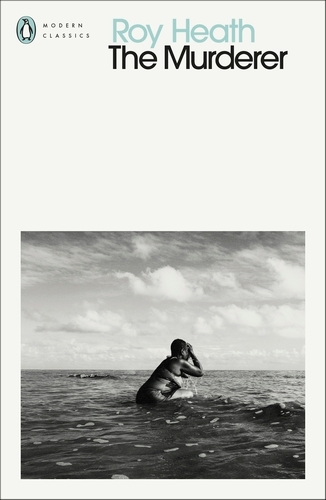
The Murderer
'For me life hasn't got dreams, success and all that damn nonsense. Life is full of shadows: some of them soft and others conceal a hammer.'
Galton Flood is a lonely man, restless and ill at ease with his family. He leaves his home in Guyana's capital, Georgetown, for a remote township, and the first of a string of precarious jobs. Meeting Gemma, his landlord's daughter, appears to offer a first chance of meaningful connection - maybe even happiness. But there is a darkness inside Galton, and soon jealousy and paranoia lead him to fatally, violently unravel.
With this haunting portrait of a mind undone, celebrated Guyanese writer Roy Heath evocatively recreates the country of his youth: its rivers, townships and tenement yards, and the tensions shimmering below the surface of a community.
Galton Flood is a lonely man, restless and ill at ease with his family. He leaves his home in Guyana's capital, Georgetown, for a remote township, and the first of a string of precarious jobs. Meeting Gemma, his landlord's daughter, appears to offer a first chance of meaningful connection - maybe even happiness. But there is a darkness inside Galton, and soon jealousy and paranoia lead him to fatally, violently unravel.
With this haunting portrait of a mind undone, celebrated Guyanese writer Roy Heath evocatively recreates the country of his youth: its rivers, townships and tenement yards, and the tensions shimmering below the surface of a community.
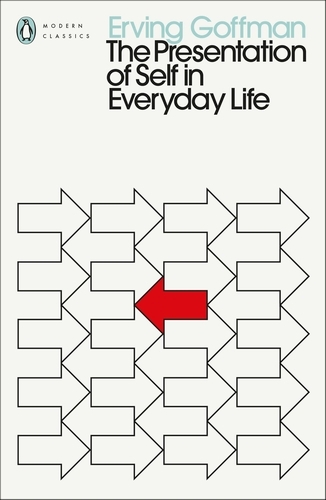
The Presentation of Self in Everyday Life
Acclaimed on first publication and today considered one of the defining works of the sociology, The Presentation of the Self in Everyday Life is Erving Goffman's extraordinary analysis of the structure of our social interactions.
Blurring the line between workaday life and theatrical performance, Goffman argues that our behaviour with others is defined by how we wish to be perceived - resulting in displays bearing a startling similarity to those of an actor on the stage. From the houses and clothes that we use as 'fixed props' to the 'backstage' of the solitude in which our personas are rehearsed and relaxed, Goffman's insight reveals human character to be not fixed or stable, but liquid and consciously maintained.
Blurring the line between workaday life and theatrical performance, Goffman argues that our behaviour with others is defined by how we wish to be perceived - resulting in displays bearing a startling similarity to those of an actor on the stage. From the houses and clothes that we use as 'fixed props' to the 'backstage' of the solitude in which our personas are rehearsed and relaxed, Goffman's insight reveals human character to be not fixed or stable, but liquid and consciously maintained.

Stigma
In this groundbreaking work, acclaimed sociologist Erving Goffman examines how society treats those who it considers abnormal. Forced to adjust their social identities from situation to situation, Goffman analyses the variety of strategies that stigmatised individuals deploy to deal with the rejection of others, as well as the complex image of themselves they subsequently project.
Relying extensively on biography and the lived experience of those who have found themselves on the edges of society, Goffman lays out the ways in which stigma dramatically alters the way the person affected feels about themselves, and the ways in which it can often violently shatter their relationships with 'normal' people.
Relying extensively on biography and the lived experience of those who have found themselves on the edges of society, Goffman lays out the ways in which stigma dramatically alters the way the person affected feels about themselves, and the ways in which it can often violently shatter their relationships with 'normal' people.

Beautiful Star
The Osugi family have come to a realization. Each of them hails from a different planet. Father from Mars, mother from Jupiter, son from Mercury and daughter from Venus. Already seen as oddballs in their small Japanese town in the 1960s, this extra-terrestrial knowledge brings them closer together; they climb mountains to wait for UFOs, study at home together and regard their human neighbours with a kindly benevolence.
But Father, Juichiro, is worried about the bomb. He writes letters to Khrushchev, trying to warn everyone he can of the terrible threat. After all, humans may be terribly flawed, but aren't they worth saving? He sends out a coded message in the newspaper to find other aliens. But there are other extra-terrestrials out there, ones who do not look so kindly on the flaws and foibles of humans. And a charming young man, who claims to be from Venus too, tempts daughter Akiko away from the family . . .
But Father, Juichiro, is worried about the bomb. He writes letters to Khrushchev, trying to warn everyone he can of the terrible threat. After all, humans may be terribly flawed, but aren't they worth saving? He sends out a coded message in the newspaper to find other aliens. But there are other extra-terrestrials out there, ones who do not look so kindly on the flaws and foibles of humans. And a charming young man, who claims to be from Venus too, tempts daughter Akiko away from the family . . .

The House of Hunger
Dambudzo Marechera burst onto the English literary scene with a bang in 1978 with this vivid roar of a book exploring township life in pre-independence Zimbabwe.
Irreverent and uncompromising, Dambudzo Marechera rejected what he saw as the narrow stereotypes of African literature, and was a fearless critic of his country. The narrator expresses his desperate alienation - from his family, from his student friends, from township life and from Zimbabwe itself. This novella, and the other short stories here, portray an explosive world that flashes with both violence and humour.
Irreverent and uncompromising, Dambudzo Marechera rejected what he saw as the narrow stereotypes of African literature, and was a fearless critic of his country. The narrator expresses his desperate alienation - from his family, from his student friends, from township life and from Zimbabwe itself. This novella, and the other short stories here, portray an explosive world that flashes with both violence and humour.
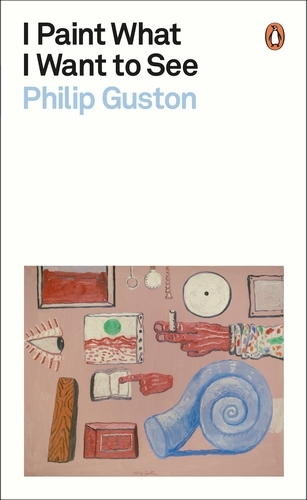
I Paint What I Want to See
'Thank God for yellow ochre, cadmium red medium, and permanent green light'
How does a painter see the world? Philip Guston, one of the most significant artists of the twentieth century, spoke about art with unparalleled candour and commitment. Touching on work from across his career as well as that of his fellow artists and Renaissance heroes, this selection of his writings, talks and interviews draws together some of his most incisive reflections on iconography and abstraction, metaphysics and mysticism, and, above all, the nature of painting and drawing.
'Among the most important, powerful and influential American painters of the last 100 years ... he's an art world hero' Jerry Saltz, New York Magazine
How does a painter see the world? Philip Guston, one of the most significant artists of the twentieth century, spoke about art with unparalleled candour and commitment. Touching on work from across his career as well as that of his fellow artists and Renaissance heroes, this selection of his writings, talks and interviews draws together some of his most incisive reflections on iconography and abstraction, metaphysics and mysticism, and, above all, the nature of painting and drawing.
'Among the most important, powerful and influential American painters of the last 100 years ... he's an art world hero' Jerry Saltz, New York Magazine
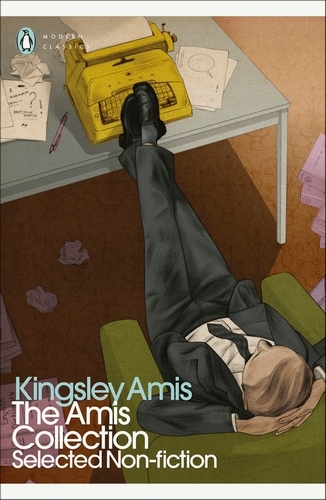
The Amis Collection
What advice can one give a green young author? What purpose do literary prizes serve? Where on earth can a man get a decent bite to eat? This entertaining collection is vintage Kingsley Amis, revealing him at his most robust and incisive, cutting a swathe through such subjects as writers and writing, 'Abroad', eating and drinking, music, language and education. He turns a clear and critical eye on Evelyn Waugh, Anthony Powell, Anthony Burgess, Ian Fleming and Philip Larkin, and does not spare their potential readers in 'Sod the Public: A Consumer's Guide'. In typically razor-sharp, wicked and witty prose, Amis tackles the culture and conceits of his era.

Collect the Penguin Modern Classics
Choose three Penguin Modern Classics for only £21 over on the Penguin Shop.