Twentieth-Century Classics
13 books in this series
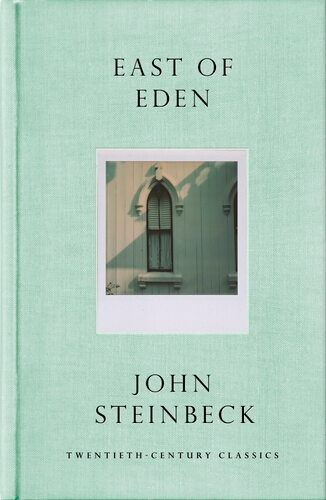
East of Eden
Set in the rich farmland of the Salinas Valley, California, this powerful, often brutal novel, follows the interwined destinies of two families - the Trasks and the Hamiltons - whose generations hopelessly re-enact the fall of Adam and Eve and the poisonous rivalry of Cain and Abel. Here Steinbeck created some of his most memorable characters and explored his most enduring themes: the mystery of indentity; the inexplicability of love, and the murderous consequences of love's absence.
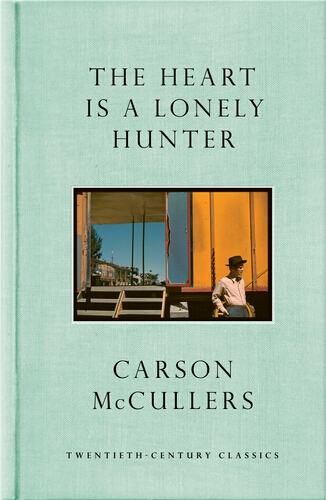
The Heart is a Lonely Hunter
Carson McCullers' prodigious first novel was published to instant acclaim when she was just twenty-three. Set in a small town in the middle of the deep South, it is the story of John Singer, a lonely deaf-mute, and a disparate group of people who are drawn towards his kind, sympathetic nature. The owner of the café where Singer eats every day, a young girl desperate to grow up, an angry socialist drunkard, a frustrated black doctor: each pours their heart out to Singer, their silent confidant, and he in turn changes their disenchanted lives in ways they could never imagine. Moving, sensitive and deeply humane, The Heart is a Lonely Hunter explores loneliness, the human need for understanding and the search for love.
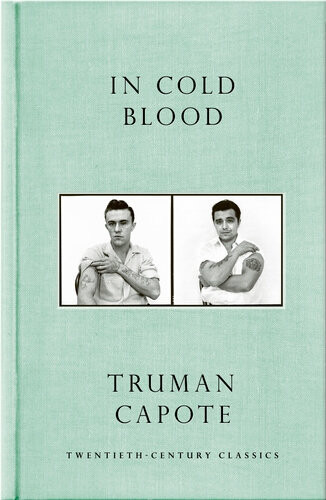
In Cold Blood
Controversial and compelling, In Cold Blood reconstructs the murder in 1959 of a Kansas farmer, his wife and both their children. Truman Capote's comprehensive study of the killings and subsequent investigation explores the circumstances surrounding this terrible crime and the effect it had on those involved. At the centre of his study are the amoral young killers Perry Smith and Dick Hickcock, who, vividly drawn by Capote, are shown to be reprehensible yet entirely and frighteningly human.
The book that made Capote's name, In Cold Blood is a seminal work of modern prose, a remarkable synthesis of journalistic skill and powerfully evocative narrative.
The book that made Capote's name, In Cold Blood is a seminal work of modern prose, a remarkable synthesis of journalistic skill and powerfully evocative narrative.
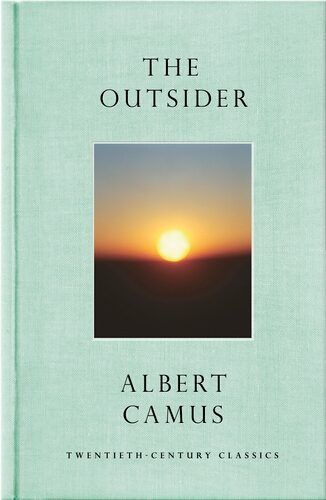
The Outsider
In The Outsider, Camus explores the alienation of an individual who refuses to conform to social norms. Meursault, his anti-hero, will not lie. When his mother dies, he refuses to show his emotions simply to satisfy the expectations of others. And when he commits a random act of violence on a sun-drenched beach near Algiers, his lack of remorse compounds his guilt in the eyes of society and the law. Yet he is as much a victim as a criminal.
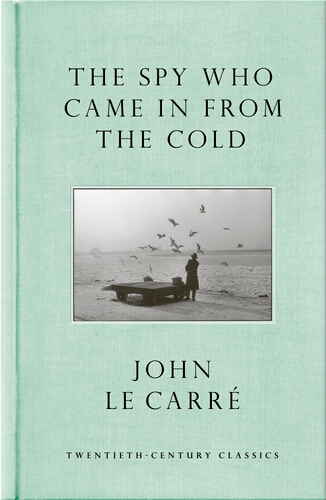
The Spy Who Came in from the Cold
Alec Leamas is tired. It's the 1960s, he's been out in the cold for years, spying in the shadow of the Berlin Wall for his British masters. He has seen too many good agents murdered for their troubles. Now Control wants to bring him in at last - but only after one final assignment. He must travel deep into the heart of Communist Germany and betray his country, a job that he will do with his usual cynical professionalism. But when George Smiley tries to help a young woman Leamas has befriended, Leamas's mission may prove to be the worst thing he could ever have done. In le Carré's breakthrough work of 1963, the spy story is reborn as a gritty and terrible tale of men who are caught up in politics beyond their imagining.

Bonjour Tristesse
Published when she was only nineteen, Françoise Sagan’s astonishing first novel Bonjour Tristesse became an instant bestseller. It tells the story of Cécile, who leads a carefree life with her widowed father and his young mistresses until, one hot summer on the Riviera, he decides to remarry – with devastating consequences. In A Certain Smile Dominique, a young woman bored with her lover, begins an encounter with an older man that unfolds in unexpected and troubling ways. These two acerbically witty and delightfully amoral tales about the nature of love are shimmering masterpieces of cool-headed, brilliant observation.
On the Road
On the Road chronicles Jack Kerouac's years traveling the North American continent with his friend Neal Cassady, "a sideburned hero of the snowy West." As "Sal Paradise" and "Dean Moriarty," the two roam the country in a quest for self-knowledge and experience. Kerouac's love of America, his compassion for humanity, and his sense of language as jazz combine to make On the Road an inspirational work of lasting importance.
A Spy In The House Of Love
Beautiful, bored and bourgeoise, Sabina leads a double life inspired by her relentless desire for brief encounters with near-strangers. Fired into faithlessness by a desperate longing for sexual fulfilment, she weaves a sensual web of deceit across New York. But when the secrecy of her affairs becomes too much to bear, Sabina makes a late night phone-call to a stranger from a bar, and begins a confession that captivates the unknown man and soon inspires him to seek her out...
To the Lighthouse
To the Lighthouse is at once a vivid impressionistic depiction of a family holiday, and a meditation on marriage, on parenthood and childhood, on grief, tyranny and bitterness. For years now the Ramsays have spent every summer in their holiday home in Scotland, and they expect these summers will go on forever; but as the First World War looms, the integrity of family and society will be fatally challenged. The novel's use of stream of consciousness, reminiscence and shifting perspectives gives it an intimate, poetic essence, and at the time of publication in 1927 it represented an utter rejection of Victorian and Edwardian literary values.
Wide Sargasso Sea
Jean Rhys's late, literary masterpiece Wide Sargasso Sea was inspired by Charlotte Brontë's Jane Eyre, and is set in the lush, beguiling landscape of Jamaica in the 1830s. Born into an oppressive, colonialist society, Creole heiress Antoinette Cosway meets a young Englishman who is drawn to her innocent sensuality and beauty. After their marriage the rumours begin, poisoning her husband against her. Caught between his demands and her own precarious sense of belonging, Antoinette is driven towards madness.
One Flew Over the Cuckoo's Nest
Boisterous, ribald, and ultimately shattering, Ken Kesey's One Flew Over the Cuckoo's Nest is the seminal novel of the 1960s that has left an indelible mark on the literature of our time. Here is the unforgettable story of a mental ward and its inhabitants, especially the tyrannical Big Nurse Ratched and Randle Patrick McMurphy, the brawling, fun-loving new inmate who resolves to oppose her. We see the struggle through the eyes of Chief Bromden, the seemingly mute half-Indian patient who witnesses and understands McMurphy's heroic attempt to do battle with the awesome powers that keep them all imprisoned.
The Philosophy of Andy Warhol
In his autobiography, published in 1975, the private Andy Warhol talks about love, sex, food, beauty, fame, work, money, success; about New York and America; about himself - his childhood in McKeesport, Pennsylvania, good times and bad times in the Big Apple, the explosion of his career in the Sixties, and life among celebrities.