What’s wrong with reading to look smart? with Abir Mukherjee

Has modern forensics taken away the power of the murder mystery genre? How does a career in corporate finance prepare you to write about a killer? Is narrative voice more important than plot? And is there really such a thing as a reliable narrator?
In this episode of Ask Penguin, Rihanna Dillon sits down with bestselling author and crime fiction favourite Abir Mukherjee to discuss his new Mumbai-set satire The Pinnacle, alongside brilliant book recommendations from Abir and the Penguin team.
About the book
George Abercrombie, a washed-up American heart-throb, hates India, even from the rarified heights of his apartment on the 68th floor of the Pinnacle, Mumbai’s grandest luxury skyscraper. When George wakes from a drunken stupor to find his wife Sweety murdered in their bedroom, he knows he will be the prime suspect. Welcome to the Pinnacle. A place where murder meets luxury and the world’s most privileged depend on the most desperate.
About the author
Abir Mukherjee is the bestselling author of the award-winning Wyndham & Banerjee series of crime novels set in 1920s India and the British Book Awards Crime Thriller of the Year 2025 Hunted. His books have been translated into sixteen languages and won various awards including the CWA Dagger for best Historical Novel, the Prix du Polar Européen, and the Wilbur Smith Award for Adventure Writing.
Listen to the episode and subscribe to Ask Penguin wherever you get your podcasts.




Non-Penguin titles
Episode Transcript
Episode Transcript – Abir Mukherjee
Rhianna Dhillon: Hello and welcome to Ask Penguin, the podcast for all things books and book-related. I’m Rhianna Dhillon, and my first guest today is the bestselling and multi-award-winning crime and thriller author, Abir Mukherjee. Abir’s the writer behind the Wyndham and Banerjee series of crime novels set in 1920s India, as well as the British Book Awards crime thriller of the year, Hunted. His latest title is The Pinnacle, a crime thriller that unravels the murder of a Bollywood sweetheart in Mumbai's most exclusive apartment complex. Abir, we are so thrilled to have you on the podcast. Thank you for joining us.
Abir Mukherjee: Oh it's lovely to be here.
Rhianna Dhillon: It’s such a gorgeous studio, as well. We’ve kind of had an update.
Abir Mukherjee: It is. I was going to say. It’s — I mean — it’s not a studio, it’s actually your house, isn’t it Rhianna?
Rhianna Dhillon: It’s basically my front room. Yeah, it is covered with this many books.
Abir Mukherjee: It’s beautiful. I mean I don't see any of my own unfortunately, but hey, what can you —
Rhianna Dhillon: Uh, there’s one right here! Right here!
Abir Mukherjee: Oh yeah, there’s actually one right here! Yes! Well that was a stroke of luck! You can’t see the wood for the trees.
Rhianna Dhillon: Um, now, the team here at Ask Penguin absolutely love a thriller, so was this a genre that you always wanted to write in?
Abir Mukherjee: You know, I — I started off writing what I wanted to write, which was stories about empire and the end of empire and stories about identity. Um, but it felt right to write in the — in the crime and thriller genre to start with, because that’s what I grew up reading, that’s what I love. I mean I read quite widely, you know, I — I read the classics, I read — I even read some romantic fiction, which I’m not proud of.
Rhianna Dhillon: Even!
Abir Mukherjee: Yeah, I know. Hey come on, this is Glasgow in the eighties, right?
Rhianna Dhillon: Oh I see.
Abir Mukherjee: It’s a — it was a different time and place. Um, but what I really enjoyed were crime novels and thriller novels, and I grew up in the spirit of Tartan Noir, where writers like William McIlvanney and Val McDermid were using the crime novel as a vehicle for social commentary. Um, so it just felt natural that when I came to write my stories, um, the crime novel, um, was the vehicle that I should use. Um, because even though it was historical literature I was writing, um, I was too lazy to write a history book. And and I wanted people to read it as well. So I thought —
Rhianna Dhillon: Less fact-checking.
Abir Mukherjee: Yeah, exactly. Who needs that, right? Make it up! If you don’t know, make it up. Um, and that seems to have been the mor — the motto of my life. Um, so that’s how I got into it, but over the years I’ve sort of moved from writing historical fiction into now writing the occasional thriller, um, which this new one most definitely is.
Rhianna Dhillon: Yes! And a listener wanted to know, what book did you read that made you feel most inspired to start your writing journey?
Abir Mukherjee: Oh, that’s — that’s a good question. Well it was actually — I’m going to give you three for the price of one, right? He said only being able to remember two in his head. Um, the — the — you see, the — there were two writers that I sort of read and I thought wow, this is amazing, this is the sort of thing that I love, which was intelligent historical fiction, but with characters with a bit of — a bit of a dark side, but a humorous dark side to them, with a — sort of — a gallows sense of humor. Um, and the first writer was a guy called Martin Cruz Smith who wrote the Arkady Renko novels, um, about a detective in communist Russia. Um, and that really appealed to me because it was — it was dealing with the darker side — how does a good man uphold an evil system? Um, and the second writer was doing a similar thing, um, that was Philip Kerr, the late great Philip Kerr who wrote the Bernie Gunther novels, which are about to be televised. And again, this was a good man, a detective, working in Nazi Germany. Um, and that again appealed to me, but the great thing about both of these characters was just the way they tried to rationalize the — the despicable systems that they worked in. But they did it with a humor, as though that was their release valve. Um, and I loved that. And and when I came to write my own books it was a question of, you know, these — we had these Western writers pointing at totalitarian systems. But nobody was looking at our own history. Nobody was looking at what British people had done, you know, upholding an evil colonial system. And and that always intrigued me. So I thought, this is — this is the sort of book I want to write. But the book that actually made me put pen to paper was — um, was a book called Doors Open by Ian Rankin, which is a standalone heist novel. And I think with the best thriller novels you have something really simple at its core. Um, and it’s all about an art theft. Um, and I read it and I thought it was just so beautifully done and so self-contained that I thought — I want to try this. And I tried and I failed. Um, but I kept going. Um, and —
Rhianna Dhillon: That’s a great message.
Abir Mukherjee: Well it is, yeah! Try again, right? That’s the way forward. You’re never too old!
Rhianna Dhillon: Um, so what do you consider to be some of the best examples then of the genre of thriller? And especially if somebody’s coming at it — you know, it is — it is quite overwhelming, there are so many in that, so if you’re coming at it, you don’t really know that much, where do you recommend starting?
Abir Mukherjee: What I like is intelligent thriller and crime fiction. And one of the best, um, sort of writers at the moment is — um, Denise Mina. Um, and, you know, one of my favorite books by her is a book called The Long Drop, which is set in the seventies or sixties, I think, in Glasgow and it involves a real-life serial killer called Peter Manuel. Um, everything Denise writes is amazing, by the way, nobody — nobody can explain human nature in two sentences in the way that she can, I find. And it’s a real gift. It’s a gift that I don't have. But she’s amazing at it. But this book, The Long Drop, has to be one of the best I've read. And I read it, what, a decade ago? But it s — it stays with me. Um, and it’s about a fictional — because this — being Glasgow, right, this actually happened — so the serial killer Peter Manuel went on a bender with one of the guys whose wife and child he killed, right? They went and got drunk together afterwards, right? And this could only happen in Glasgow. Um, but nobody quite knows what happened in that twenty-four-hour period. So she’s sort of fictionalized this time and then what happens after. And it’s a remarkable novel. So I would say if you — if you like that sort of thing, start with Denise, you can't go wrong.
Rhianna Dhillon: That’s a great recommendation. Let’s get to The Pinnacle. You — well tell us a bit about it first before we get into it.
Abir Mukherjee: Sorry, I’m just — my phone, it’s — it’s my mum, I’m just going to tell her — hold on just a second. Mum, Mum, I can’t talk now, I’m just — I’m being interviewed, I’ll give you a shout later. Oh, I haven’t even answered the call. Hold on — no she is there. I’ll talk later. Bye. There we are. Sorry about that, ladies and gentlemen. But come on, everyone understands.
Rhianna Dhillon: Oh, absolutely, she’s your mum!
Abir Mukherjee: It’s my mum! She’s in India right now.
Rhianna Dhillon: Is she?
Abir Mukherjee: I — well I hope, unless she’s telling me she’s at the airport.
Rhianna Dhillon: Oh no, you’re late to pick her up.
Abir Mukherjee: Well I’m early, because she’s not back until next month. But anyway.
Rhianna Dhillon: Um, tell us about your new novel, The Pinnacle.
Abir Mukherjee: The Pinnacle, you know what, The Pinnacle has — has been the most fun experience writing. Let me tell you a wee bit about it. Yes. So imagine a slightly over the hill American Hollywood actor by the name of George, right? Okay.
Rhianna Dhillon: And is there a specific actor that you had in mind?
Abir Mukherjee: When I started there was an actor called George Clooney who was at the — at the foremost in my mind, but as I wrote the book, even though the character is called George Abercrombie, he becomes an amalgam of of several Hollywood actors. Um, so anyway there’s this actor, George Abercrombie, he’s pat — slightly past his best, you know, his — his films aren’t doing as well, he’s making commercials, you know, to supplement —
Rhianna Dhillon: Of crap whiskey.
Abir Mukherjee: Yes, a — we’ll come to the whiskey, right? Um, so he is married to a much younger woman, a Bollywood sweetheart called Sweety Sahota. Now her career is on the up and his is on the way down. And so, and also because George has sort of pissed off the US President, we won’t say who that is, they end up moving to Mumbai and moving into this fabulous tower block called The Pinnacle, which you would think was one tower but it’s actually two, but that doesn't matter for the name. And George doesn't much like it there. Um, but then Sweety is murdered and suddenly 1.4 billion people hate George’s guts because he’s the prime suspect. And he’s not even sure if he’s innocent or not! He thinks he’s innocent.
Rhianna Dhillon: But he’s not 100%.
Abir Mukherjee: But he’s not 100% sure! Um, so there’s really the story revolves around him, Gemma — Gemma Kearns who was firstly his PA and then became Sweety’s PA, and their manservant Amit. So these three characters are at the heart of this story, all trying to figure out what actually happened, but all trying to do what’s best for them. Um, and yeah go on ask a question about the whiskey because the whiskey is quite — I wouldn’t say central, but it is central to why George doesn't remember much of what happened.
Rhianna Dhillon: Um, I really love how immediately immersive The Pinnacle is. You — you kind of — you set the place, the smells, the feel of the heat so well and so quickly. So tell us about writing with the backdrop of Mumbai and do you have to be there to kind of —
Abir Mukherjee: Absolutely you need to be — if you’re going to write a book about a place, go there. Well I — I was very fortunate in that, you know, in a previous life before I came up — became a writer I used to work — I was a very evil person — I worked in — in finance, in global finance, and I spent a lot of time —
Rhianna Dhillon: Corporate shill.
Abir Mukherjee: Sort of — well yeah I was I was basically — um — what’s his name — Richard Gere in Pretty Woman but without the prostitute. Um, so I used to go — I used to travel a lot internationally and spent a lot of time in Mumbai with work and I met a lot of very rich people. So I know the city quite well and I know the environment that we’re talking about which is the very wealthy. In fact, it was two of my billionaire friends from Mumbai who were the inspiration for the book.
Rhianna Dhillon: Amazing.
Abir Mukherjee: So they — they came over and we — this was just after lockdown and they came over and we were having lunch and they were telling me the sorts of things that would go on during lockdown in these massive skyscrapers that only the rich lived in. Because it isn't just the rich that live there. Um, the thing about Indian society is that it is based upon the shoulders of the lower orders, right? And during lockdown, you had all these — you know, the laws didn’t apply to the the very rich. So you would have cases of people sending their servants to do their their COVID tests for them! And and it reached a situation where, you know, the rich were — were leaving Mumbai and going off to their hill — their summer houses in the hills to essentially be safe. Um, and the servants across India were all essentially sent home without pay. And many of them walked hundreds of miles, you know, during this period. And so I wanted to capture that — that dynamic of the rich in India and the people that service them. Um, and that’s a big part of this book, the relationship between George and his servant Amit. Um, but too often, you know, when people look at that sort of relationship, it’s, you know, the the master is terrible and the servant is innocent. It’s not always the case. Often the case is everybody is is at least a bit gray, I find. And I wanted to reflect that in this book because Amit is certainly no saint.
Rhianna Dhillon: No.
Abir Mukherjee: Um, but by his own moral compass he’s a good guy. Um, it’s just that his moral compass is different from everyone else’s. But by George’s moral compass he’s a good guy. Um, and so I wanted to explore all of these. Um, going back to Mumbai it’s a fascinating city. It is one of my favorite cities in India. It is the, you know, it’s the financial hub but it’s also the hub for Bollywood. It’s India’s most modern city, it’s most forward-looking city, and yet it’s still India. So you have this these huge tensions and you have this great exciting vibrant city but it is still plagued by all of India’s prejudices and vices and to agree — to a degree — the issues that are affecting India today around religious fundamentalism and nationalism that we’re seeing across the world.
Rhianna Dhillon: Um, George Abercrombie is — he is a really interesting character and he is quite a sympathetic character at times and he’s also ugh at times. Um —
Abir Mukherjee: Well he’s basically me, right? I’m not even joking. This is the thing. People go oh he’s such an idiot, I’m going yeah he was the easiest character I’ve ever had to write. He’s essentially he’s vain.
Rhianna Dhillon: He’s very vain.
Abir Mukherjee: He’s insecure. He — his heart’s in the right place.
Rhianna Dhillon: But yeah, he’s very relatable! He’s very recognizable.
Abir Mukherjee: It’s me! It literally is — it’s me. If I was to have a love child with George Clooney, right, that’s who George Abercrombie is. Um, so yeah. But I — you know, I loved writing him. He was a very easy character for me to write even though I’m not a film star and and never will be unfortunately. But it was — it was because he — he basically has all of my flaws, right? And that’s why it was quite easy to write him.
Rhianna Dhillon: I think it’s so interesting that you have these different — you write from different perspectives. Um, but you don’t — it’s not a — they’re not first person accounts so they they there is a narrator but they they change — it’s sort of like an internal monologue, almost. Like there are even like the little yeahs — like it’s like you’re kind of he’s like referring to himself and having little conversations in his head and we’re in his head but it’s not an I.
Abir Mukherjee: No, no, it’s all — it’s what I suppose you’d call closed third person. So each chapter you essentially have the viewpoint of one of the three characters but told from a third person standpoint.
Rhianna Dhillon: Yeah. And I really enjoyed that.
Abir Mukherjee: You know what, I’ve had so much fun doing that! But it — it’s taken me a lot — I mean because most of my books were in the first person and then I wrote Hunted a few years ago and that’s where I sort — that’s the first time I’d written in the third person and that was a long learning experience. Me — three years to write — well the first two times I wrote it it was rubbish.
Rhianna Dhillon: So what? Because specifically because of that change?
Abir Mukherjee: No there was a lot of things. There was — I mean I hadn’t written a an all-out thriller before so I didn’t know about the right pacing, um, it was — I was writing from more points of view than I ever had and so getting the characters right took time, but also the voice of each of these. So there was a number of things but, you know, I think that was a necessary learning curve for me to be able to write The Pinnacle. Um, and whereas I sweated blood over over Hunted, with The Pinnacle it was just a joy. It just — the — you know, I wrote the first draft in eight months which is, you know, ridiculously fast for me, I — you know normally takes me about twelve to fifteen months to do a first draft but this one it just felt natural but the story came together a lot quicker as well.
Rhianna Dhillon: Okay. How did you plot out the story because it is complicated. Drink a lot of whiskey? Do you, yeah, how do you tell us about how you plot it out and do you start with characters, plot, the ending, you know, all that sort of thing?
Abir Mukherjee: Well as I say, this — this started with just a desire to tell the story of of Mumbai, the the rich and those upon whom their lives are based. And and it came from — you know, it came from certain places, it came from that, you know, lunch with my friends who essentially live that lifestyle or can comment on that lifestyle. It also came from a true crime story that I was researching. I wrote a novella about a couple of years ago and it’s called the Nithari Murders, which took place just outside of Delhi. And in the end it was — it was a very rich man and his illiterate manservant were accused and of of murdering lots of kids. Um, and it turned out that the the rich businessman was out of town for about half of those and he claimed he knew nothing about it. He wasn't — he wasn't even there for half of the murders. Um, but the judge held him just as accountable as his servant. The judge — the the female judge said basically you have taken this guy from the village, you have corrupted him with your lifestyle of alcohol and women and all this, and so we’re going to hand down the — you’re the — you’re responsible morally even if you weren’t there. And they were both given the death penalty.
Rhianna Dhillon: Oh my goodness.
Abir Mukherjee: Um, and then obviously — and it was really interesting how India reacted to that. So these kids had been going over going missing for a period of a year or two years but because they were all poor children from poor families the police didn’t do anything about it until a middle-class or a middle-caste or an upper-caste person went missing. And then they got involved and that’s how it all unraveled. Um, but even after they were arrested, the way they've been treated, the the fact that the businessman can bring in lawyers and he’s the the case against him has been thrown out — all of that’s really interesting to me, the — you know, and and a lot of the relationship between George and Amit has its origins in that actual case. Um, so so those were the starting points for the novel, as well as the MeToo movement, because one of the things — I mean I always write about things that upset me or anger me — and when I was starting to write this novel it was the MeToo movement was in my head because just like here and in America — um — after the Weinstein affair, there was this in India, in Bollywood, there was the start of this MeToo movement because if you think Hollywood is bad, Bollywood I can tell you is worse. And at the beginning these women — these very brave women — came forward and for a small amount of time it looked as if the same thing was going to happen — you know certain men were accused, they were, you know, charged, they had to step back. But within a year everything flipped round. Everybody closed ranks and it was the women who had actually stood up who were ostracized, and the men were back working.
Rhianna Dhillon: Yeah.
Abir Mukherjee: And and that’s something I wanted to comment about. I wanted to comment about the sexism that goes on in Bollywood — and it’s not just sexism, it’s — it’s abuse. And so I wanted that to be one of the the strands of this book as well, because what happened? How did it all go quiet again? Why do these women live in fear? To the extent that I think at least one actress has committed suicide, another actress was hounded because her boyfriend who was a very famous actor, a guy called — um — oh he’s gone from my head, but he was a — a famous actor, he committed suicide for other reasons. But she was vilified by his family as being responsible for that. And again, it’s these attitudes that I wanted to to really look at. I think his name was Sushant Singh Rajput. But yeah, so I wanted to to highlight this as well. So despite the fact that we have Mumbai being this cosmopolitan forward-looking international city, you still have these prejudices whether it be caste or or wealth or gender. Um, and it seems that, you know, old rich men can do what they like wherever they are in the world. So that was another thing I wanted to look at.
Rhianna Dhillon: And were there any of those worlds that you either found like a challenge to really get into or get your head into or research? Because as you say, you’re in the world of Bollywood, you’re in the world of billionaires, politicians, but also servants, and so kind of doing your research what does that look like?
Abir Mukherjee: Um, well so much of it is — is actually being there. You have to — you have to — because the the employer-servant relationship in India is quite different to the way it is here. I mean my mum called a wee while ago. So she spends four-five months a year in India and when she goes — um — she will have her maidservant will come in in the morning, she’ll squeeze her her orange juice and she’ll, you know, give my mum her orange juice, she’ll make Mum's breakfast and then she’ll give Mum a massage. The cook will come and then the afternoon, the maidservant, my mum, will sit on the — my mum will sit on the sofa, the maidservant will sit on the floor and they’ll watch soap operas together, right? And they’ll have a conversation about it. It’s a really, really bizarre relationship. I’ve got relatives and friends who have who essentially, you know, organize the education of their employees — not just education, but then their marriages, right? So it’s a — it’s a really strange relationship. It’s — it’s semi-familial. But the boundaries are always there, right? So as I say, my mum will be there, the servant will be sitting not on the chair but on the floor.
Rhianna Dhillon: And is that a choice? Like who — where does that choice come from?
Abir Mukherjee: It’s ingrained, right? And and everybody seems to know the rules, right? Um, so that’s fascinating to me. So writing that is something that’s quite interesting. There’s a scene early on where you have these two servants, you have Amit and Aisha who is the maidservant, having an argument in George’s flat and George is sitting there unsure what to do because his two servants are having an argument as if he’s not even there! And that’s quite an Indian thing, right? So it’s — it’s kind of weird. So I wanted to try and get some of that across. The hardest aspect probably was the Bollywood angle because I mean I don’t really watch that much Bollywood. My family’s from the other side of India, we come from Bengal and Bengali cinema likes to think of itself as — as a bit more superior. So — um — Bengali cinema is people like Satyajit Ray who won — um — an Oscar for the Apu Trilogy and things like that. So we have our noses in the air. Also I don’t speak Hindi, I understand Hindi but I don’t speak it, whereas I speak Bengali, so I’ve never really sort of watched that much Bollywood. Um, so I as you do in such a situation, I went to some of my other British Asian um author friends for advice and they were all useless.
Rhianna Dhillon: What? Why? Because none of them —
Abir Mukherjee: No they all watched a lot more, but they just were useless, because whenever I found whenever I go to advice — and I’ll tell you who the people are, right?
Rhianna Dhillon: Yeah, drop them in it.
Abir Mukherjee: I will. So Imran Mahmood, right? Ayisha Malik, um, Amit Dhand, Vaseem Khan who’s the worst, and — um — Nadeem Khan or Alex Khan. And they’re all characters, you know, all five of them have their names in the book. They are characters. Although Vaseem Khan is mentioned by name, right?
Rhianna Dhillon: Wow.
Abir Mukherjee: Yes, a great line for him, um, but yeah they were all useless. So thanks, guys.
Rhianna Dhillon: Um, are there any kind of genre tropes that you wanted to specifically avoid when you’re writing The Pinnacle?
Abir Mukherjee: Not specifically for this book but there are some that I always try to avoid.
Rhianna Dhillon: Like?
Abir Mukherjee: Although he said — he was just about to mention the one that he does fall into which is the sort of dodgy memory.
Rhianna Dhillon: Oh, yeah, yeah.
Abir Mukherjee: But this is just — I mean it’s a slight device, I don’t use much of it, he just went out and got drunk, right, as opposed to being an unreliable narrator all the way through. So that always gets me when you — I don't really like the, you know, can you trust the narrator? Even though I've done it — um — in this book to a wee degree. Um, yeah but it’s George, he’s an idiot, right? So it’s allowed.
Rhianna Dhillon: I think you — do you kind of want audiences to know from the beginning like who — who they can trust?
Abir Mukherjee: I've always written that way. But the — the — the more sophisticated I get, and it’s from a low bar, ladies and gentlemen, the more I think that’s — that’s something that I will play with more in the future. Um, that’s more in the realm of psychological crime and I've never really written psychological — this is not a psychological crime novel, this is a satire, um, it’s a satire and it’s — it’s what I would like to call a a real sort of thriller. Um, so an unreliable narrator you can use, but I don't think it’s the be-all and end-all for a novel like this. Um, if I were to write a psychological novel then I think very much so — um — I would write. But in terms of tropes, did you have any others in mind?
Rhianna Dhillon: When you’re talking about class and um those tropes — the butler did it, you know, and then in I guess in this case it’s Amit. But —
Abir Mukherjee: Ah, well there’s a good one — oh well I never actually thought about it in that sense, but you’re right, there is that trope of the butler doing it and Amit very much is a potential suspect. Did he do it? Read the book, find out.
Rhianna Dhillon: And you want your — you want to keep your reader sort of guessing until the final pages.
Abir Mukherjee: Absolutely. Absolutely. And I think there’s — there’s a couple of things, there’s a lot of people who — well there’s some people who are my early readers who were saying by this the penultimate chapter I was going — no the — I was going to be shouting at you — um — and then you do something in that last chapter and I sort — it sort of changes everything. Um, and I’m very pleased with that because I don't normally do that last-minute twist. It’s not something I've done. Um, but it felt natural for this book and and hopefully touch wood it works.
Rhianna Dhillon: I was wondering also, um, Agatha Christie didn’t have this issue, but how has technology changed the way that you have to write a murder mystery because actually Apple products or, you know, products like that are at the core of The Pinnacle?
Abir Mukherjee: Absolutely. Absolutely. And in in certain respects it helps, right? I mean this book wouldn’t work if it wasn’t for technology. Um, at the same time, you know, technology is also the bane of our lives as as authors, well as thriller authors, because so much tension can be, you know, essentially removed by going, don't go into the cellar, right? Picking up the phone and go don't go into the cellar, you know? So, you know, you have to — it’s swings and roundabouts. Um, you know most of my novels are historical novels so I’ve not faced that. So it’s interesting to do something different where you have to deal with technology, you have to deal with forensics. Um, but you’ll notice that even in my modern novels there’s very little forensics because I’m bored about that sort of thing. It doesn't interest me. For me what’s, you know, these — these are not police procedurals, these are, you know, books hopefully with a message and and books that still take you on a journey. And the forensics don’t really interest me. They don’t excite me. Um, but that’s fine, you know, there are books like that for other people who who like that sort of thing. But, you know, I — which is why I don't think if I — if I’m writing modern-day books it won’t be from the point of view of the police or the because —
Rhianna Dhillon: Procedural is not —
Abir Mukherjee: That’s not interesting to me! I’d much rather write it from the point of view of an idiot like myself, um, because I understand that and that’s interesting to me. Um, so yeah.
Rhianna Dhillon: Yeah. I’ve got a listener question actually. Um, have you considered another historical series of books?
Abir Mukherjee: Well, um, not — I have — I’ve considered other series. And there’s one that I’m — I’m very keen on writing set in Scotland. But I can't say anymore about that.
Rhianna Dhillon: Oh what?
Abir Mukherjee: I can’t — I’ve got — if I — because I haven’t written it, I’m lazy. If I say it on air somebody will steal the idea because it’s brilliant. Um, so I can’t, but um I will get to that. But in terms of a historical series, I’ve not really thought about doing anoth — I think the time and place that I’m writing about historically, you know, 1920s to thirties India, is a place and time that not just interests me but it’s also a period that I know about. It’s a period that um a lot of it is still there today. If I’m going to write about a place or a time I’m going to have to tell you something about it that other people can’t. Um, and and that goes for for everything I write, you know, and I think in certain senses authors like like me who are British but from, you know, ethnic minority communities — or minority communities — when you sit between cultures or you sit between — you can comment. Um, and so I can write a book like The Pinnacle, whereas I don't think a white writer who may know just as much or more would have the same leeway to write this sort of book. Um, which is interesting and maybe slight payback for — you know — centuries of oppression. I don’t know. Um, but it, you know, I think I — if I’m not writing that sort of book then what’s the point? Um, if I was to write a book set in Tudor England, what — what — what would what would I tell you about that time and place that another ten authors couldn't do or a hundred authors couldn’t do better than I could? Um, so yeah.
Rhianna Dhillon: I’d be interested to find out.
Abir Mukherjee: So would I! It would be a terrible novel, let me tell you. Um, but yeah, no, I will write the novels where I feel that what I’m writing about is something that other people can’t give you, which is why I’ve never written a book set in Scotland so far, because I’ve not had an angle that is different from a from — you know — dozens of phenomenal authors, right? So unless I have that differentiated quality, something that, you know, I can see that others can’t because I sit in a different place, um, then then I’m not going to write about it.
Rhianna Dhillon: But it sounds like you have and so you will.
Abir Mukherjee: Well, sort of, I’ve got an idea.
Rhianna Dhillon: I’m holding you to it. Um, we have another question, this is from Madeleine a listener. In the pro — in the process of creating your characters, is there a moment when you begin to hear their voices and then does that influence your writing?
Abir Mukherjee: Um, yes, yes. And and it’s really weird. It’s — it’s sort of — I don't know if it’s some sort of mental sickness or or magic. There’s — there’s something amazing about when you do hear those voices. Um, and I think when you hear the voices, it improves the writing. Um, the more I write the — you know I used to start off from the position of plot. We were talking about plot or whatever earlier. Now I think the the more I write the more I think, yeah I’ll have an initial idea which might be plot-related, but the most important thing for me to get right before I start writing generally now is voice. Unless I hear the voice of the character, unless I can put down the voice — unless I can write in that voice, even if it’s in the third person, right, I still need to hear the voice of that character before I can write. Otherwise, you know, you’re getting something that’s quite two-dimensional. Um, so yeah.
Rhianna Dhillon: There’s a — in your in The Pinnacle there’s a the lovely, is it Gulu? Who’s like the sort of bodyguard kind of character and he feels he’s just there to be like a brute and, you know, enforce violence for his boss. And then there’s a moment where you take him into a snowy area and he feels snow for the first time. I found — I got really emotional about that because I finally you find like another side of this character you just think is a side character and is only there to do one thing and then you feel his humanity.
Abir Mukherjee: Well there is that and also you’ve got to remember Gulu is trying to raise money to pay for his, you know, sister’s education as well! He feels like he’s a good guy, right? He thinks all these — um — tutors who charge an arm and a leg, he thinks they’re the real villains, right? So yeah and and that’s you’re right, all of these characters have to be thought through because they can't just be two-dimensional. Even, you know, the the kingpin, Fat Moiz, right? He comes from a certain place of of wanting to wanting security, wanting to be at a higher rung in society. Um, and that it — it stems from insecurity. So all of these characters are insecure. Um, and I think I don't think we spend enough I don't think we spend enough time discussing insecurity, because it — it forms who we are in a way that, you know, maybe other other factors don't.
Rhianna Dhillon: That’s a very good point. Um, I’ve got to ask — so this is a very big year for books. We’re celebrating the National Year of Reading which is a very big campaign designed to ignite people’s passion for reading and books. So we want to ask you, which book sparked your love of reading?
Abir Mukherjee: Oh my goodness, that’s a good question. Well I’m going to start by saying the Tintin series, because my dad used to drop me off at the library on a Saturday in Hamilton, in Scotland, and he would go off to do whatever it was he needed and he’d leave me there for two-three hours. Um, and Hamilton had this wonderful children’s section downstairs and it was massive, it was a whole floor. Um, and I would wander around that and at the age of about six or seven I discovered Tintin. And it was so — I mean the adventures were brilliant but it was so colorful as well. And so yeah, so my love of reading probably starts with that, then goes into Enid Blyton.
Rhianna Dhillon: You’re literally describing my childhood.
Abir Mukherjee: I’ll tell you — the first Enid Blyton I picked up didn’t have a cover, it was in Calcutta. I was at my uncle’s house and we used to go there for like six weeks every three years, because we’d save up to go and then Mum and Dad would have to get their money’s worth — they’d go and stay for as long as we can! And we’d be there for like six-seven weeks and I’d go mental, I’d be bored! And I would read, you know, whatever came to hand and I remember reading an Enid Blyton book and her just talking about crumpets and jam. Almost cried because it’d been like eight weeks since I’d had like toast, right? I mean not crumpets — I was in Glasgow, there was no crumpets involved, but I could still picture, you know, those crumpets.
Rhianna Dhillon: You’re having like aloo paratha and then you’re like, oh where are my crumpets?
Abir Mukherjee: Yeah! Exactly.
Rhianna Dhillon: Um, another question is, what is your favorite habit to make sure that you can fit reading into your life?
Abir Mukherjee: Oh that’s — that’s a really good question. Um, my my favorite habit for making sure I can get reading into my — is boring my wife so that she won't talk to me and that gives me a wee bit of time to read. It’s — no to be serious with it, it’s really tough to find time to read. Um, and also I’ve got to this point where I find it very hard to read for pleasure now, because I’m — if I’m reading crime or thrillers, I’m looking at structure. I’m looking at, you know, how they’ve done things and and that’s — that’s difficult. So I read now really for — if I’m reading for pleasure it’s for words, it’s for sentence construction, it’s for beauty in the prose. Um, that gives me a lot of satisfaction. Um, there’s a great book called Afternoon Raag by Amit Chaudhuri, and literally nothing happens. It’s about a hundred pages long but it’s the most beautiful book ever and it’s — it’s set in Calcutta in the eighties and it’s just describing a a day or two that the the author spent there. And it’s beautiful but absolutely nothing happens! And it’s probably the most beautiful book I've ever read.
Rhianna Dhillon: That’s lovely. Um, Abir it’s been so lovely to have you on the Ask Penguin podcast!
Abir Mukherjee: Well it’s been lovely talking to you. Thank you. Thank you for having me on. Sorry about my mum calling halfway through.
Rhianna Dhillon: That’s okay. I sort of feel like we could have edited that out but now you’ve talked about it, I don't think we should.
Abir Mukherjee: No I don't think we should. One-take Mukherjee is — they don't call me that for nothing, right? So I think we just — we leave it as it is, we just go.
Rhianna Dhillon: We just plow on through.
Abir Mukherjee: We just go. Derek’s — look the — I should tell you ladies and gentlemen that the the technical staff here — what do you call you guys what do you call yourselves? They don't call themselves anything, they’re just laughing right now. What do you call yourselves?
Staff: The Penguins.
Abir Mukherjee: The Penguins! The Penguins are melting down um in fits of of hysterics. Um, it’s just unprofessional, ladies and gentlemen, I apologize on behalf of the entire Penguin team. There we are.
Rhianna Dhillon: I’m going to bring it back to professional and say that The Pinnacle and all of Abir’s other novels are available now wherever you buy your books.
Abir Mukherjee: And please do because my kids need shoes.
Rhianna Dhillon: And also Waitrose trips.
Abir Mukherjee: Waitrose trips! Yeah.
Rhianna Dhillon: Um, but Abir you’re going to stick around and ask — answer some listener questions.
Abir Mukherjee: I’m going to ask listener a question? Probably will ask. Knowing you, yeah, you will ask.
Rhianna Dhillon: Abir and I have been joined in the studio by some Penguin colleagues, so welcome Cam and Izzy, thanks for joining us. Um, so we’re going to try and collectively solve our listener’s book dilemmas. Um, what are you — are we like book doctors?
Abir Mukherjee: Yes! Do you want to be a book doctor? Well my mum wants me to be a doctor, so —
Rhianna Dhillon: I guess yeah, well she is Indian so yeah of course.
Abir Mukherjee: Any form of doctor is fine I think. Yeah.
Rhianna Dhillon: We’ll call you a book doctor just for your mum. Yeah. Solving dilemmas.
Abir Mukherjee: This is — this is like the high point of my life right now! Thank you. Carry on, sorry.
Rhianna Dhillon: What are you reading at the moment Cam?
Cam: Oh, that’s a really good question. Um, I am reading The Seven Moons of Maali Almeida. I don't know if I’m pronouncing that right and it’s — it’s by a Sri Lankan author, it’s about sort of set during the Sri Lankan civil war and it’s about someone who’s like got seven moons in the afterlife to sort of make a decision about their future and um it’s brilliant. I think it won the Booker in like 2022, something like that, and it’s just — I mean the voice, the sort of depiction of the afterlife, it’s brilliant.
Rhianna Dhillon: Nice. Izzy?
Izzy: Um, I’m reading Trespasses by Louise Kennedy, which I think has just been a TV show, not seen it, read it before you see it kind of vibe.
Rhianna Dhillon: It is a good TV show.
Izzy: Um, and it’s basically set in Northern Ireland sort of in the midst of the troubles and it’s about a Catholic girl who’s sort of has like unprompted affair with an older Protestant man and the sort of dynamics um between them and she just has such a good voice. I’m really, really loving it.
Rhianna Dhillon: Great. Good recommendations. Okay, so to start us off, um, somebody has asked, I’m really interested in British colonialism — doesn't say from which side — can you recommend novels that explore the perspective of any colonized country?
Cam: Yeah sure, I mean I could jump in here, so it’s a book that I read a couple years ago and absolutely love which is The Road to the Country by Chigozie Obioma, and it’s sort of set during the Biafran War which is like the Nigerian civil war after like I mean it’s — it’s so much to do with like British colonialism and what they did over there and sort of the legacies that that left and I think it’s really it’s really fascinating reading a war novel from sort of Africa, because I’d only ever really read war novels I guess mainly based on World War II or um — so it was just like that different yeah perspective. I mean and then you just it’s heartbreaking you just not only is war heartbreaking and sort of the personal stories but just the legacy of what the British did like it kind of makes you mad when you reading it and and you see like all these people died because I guess a nation halfway across the world sort of drew some lines on a map and made some decisions and sort of put peoples who had like really distinct cultures and histories and just like put them in a box. Um, but I mean the writing's wonderful Chigozie wrote The Fishermen as well which um I haven’t had a chance to read yet but I think that’s going to be on my list very soon.
Rhianna Dhillon: Great. Thank you. Abir?
Abir Mukherjee: Well let’s go for the — the classic Indian one, Midnight's Children by Salman Rushdie, which um is about a — you know — it essentially looks at the lives of people who are born on the stroke of midnight when India became independent and it really talks about identity and the legacy of of the British in India. Because one of the things that I’ve sort of noticed over the years is that even though colonialism physically ended in India in say forty-seven — um — I think this such thing as called colonization of the mind takes a lot longer to dissipate. And and in the Indian context even in the nineties, I think, you know, India was still um mentally colonized a lot of people were and I think it’s only since the turn of the century and with economic growth in India that you are seeing a different India — not always a better India, but but certainly one which is a lot more sure of itself. Um, so yeah Midnight’s Children would be my recommendation.
Rhianna Dhillon: Very good one. Izzy?
Izzy: Um, so mine is a book called We Are All Birds of Uganda, which is a — was a debut novel that actually won the first ever Merky Books New Writers Prize — it jointly won it actually. Um, and it is a gorgeous sort of sweeping novel and it’s sort of set between the backdrop in 1960s Uganda and in modern-day London and it sort of explores how they sort of intertwine with each other and sort of the legacy of the past in the present, um, and it sort of deals with ideas of the law because Hafsa’s a lawyer herself. Um, so yeah, really been enjoying that one.
Rhianna Dhillon: Good. I like that, I like that a lot. Um, I’ve got a next question which I think is one of my favorites that we’ve ever been asked. I’m looking for a thriller where the main character is always making wisecracks in serious situations. I just feel like this is such a loaded question because somebody clearly loves to do that and wants to find protagonists that also do that. Any ideas?
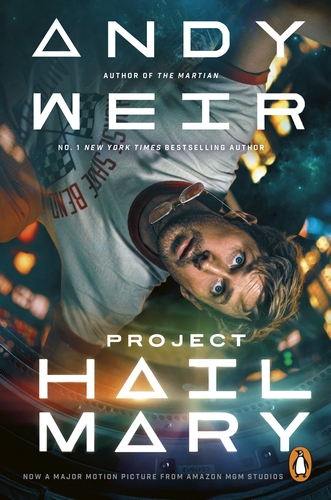
Izzy: I’ve got a bit of a left-field one! Because it’s not like thriller crime thriller, but it’s sort of like sci-fi thriller, which is Project Hail Mary. Collective ah excitement! Nice. Um, essentially — it basically only has one really kind of character, Ryland Grace who’s essentially the sun is dying and he’s sort of sent out to sit — sent out of into space to save the world, which is, you know, pretty dire circumstances. And Andy is just so brilliant at this across his books, it just like brilliant voice, humor, and lots of wisecracks especially as he sort of makes an unexpected friend out there which I don't want to spoil anything too much. Um, and Andy —
Staff: Andy Weir.
Izzy: Yeah Andy Weir. He is just like brilliant voice, humor, and lots of wisecracks, and they've just made a film with Ryan Gosling!
Rhianna Dhillon: Oh, yes!
Izzy: So —
Rhianna Dhillon: Would you recommend reading the book before the film?
Izzy: Absolutely! Always. Always. But I do think if anyone’s going to bring like that character to life it would be Ryan Gosling, it’s just like a perfect perfect fit.
Rhianna Dhillon: Very dry. Very dry. Yeah, very witty. Nice. Abir?
Abir Mukherjee: Well I I would have to recommend — um — my good friend Mark Billingham. Um, for those of you who have not read Mark's work Mark um is best known for his Tom Thorne novels. Um, he’s also a former comedian and he was one of the henchmen in Maid Marian, so he’s —
Rhianna Dhillon: Oh yes!
Abir Mukherjee: Yeah, so he’s — so he’s got a long and storied career, does Mark. But I would recommend the series I would recommend is his new series — um — which features DI Declan Miller and it’s set in Blackpool and I think the first one was called The Lon — The Last Dance. Um, and this is Mark being Mark, I think the the Tom Thorne novels are are great and they're pacey but the humor in the Declan Miller novels is Mark, um, this is a detective whose wife has been murdered and he’s coming back to the force — um — but he still sees her in his head, um, and his internal monologue is — is very sharp, it’s very funny, but because he’s lost his wife he doesn't care anymore. So he’s just says what he feels. Um, and this series is — is wonderful, it’s a breath of fresh air. Um, and I’m loving it. So yeah, the first one is called The Last Dance, the second one’s called The Wrong Hands, and I think there’s a new one out later this year.
Rhianna Dhillon: Oh great. Even more wisecracking. Thank you. Somebody’s asked, I’m looking for a novel in any genre where the twist leaves your mouth wide open. Now Abir and I were kind of talking earlier about the fact that you really don't like that as a trope. So maybe you’re not the first person to come to.
Abir Mukherjee: I’m not the person to ask at all.
Rhianna Dhillon: Okay.
Abir Mukherjee: I’m just going to think about dystopian romance for a while.
Rhianna Dhillon: Fine. Just stay in your little bubble. Cam?
Cam: Yes, so — this is kind of out of left field, but one of my friends works at Vintage and he I — I went to visit him and I saw a book on his desk and I was like, oh, can I — can I read that I’ve never read it before? It’s Planet of the Apes by Pierre Boulle something and um — I mean for one I didn't realize it was a novel, two I didn't realize it was originally written in French in like the sixties. But I’d also never seen this maybe show my age a little I’ve never seen the original Planet of the Apes films.
Abir Mukherjee: I’m just leaving. You guys are ridiculously young. This is just wrong.
Rhianna Dhillon: I’ve seen it!
Cam: I’ve seen the new ones of like with Caesar. I mean — when he says no —
Abir Mukherjee: The the CGI one! That’s not real. Unless the unless the apes are wearing latex masks. No.
Cam: The the reason I've not seen it is because it’s so creepy. It looks — it looks scary. But like in the — in the book, the twist — I’m sure everyone kind of knows the twist —
Rhianna Dhillon: Izzy won't.
Cam: Izzy won't. Do you — the Simpsons, the Simpsons did a parody on it.
Izzy: I have seen episodes of the Simpsons but I don't think that specific one.
Cam: But yeah you sort of realize everything’s not as it seems and they go on this journey and then come back to Earth and it’s like wow what happened? Um, and that was just kind of crazy. That was a really fun book and just sort of like reading like I don't know it’s just what I think what’s so interesting about reading old science fiction is kind of their imagining a future that we’re sort of either living or what they imagined isn't exactly what it is now and seeing like what sort of like political — I know it’s way worse but like seeing the political thoughts that are behind science fiction like back in the day. Um, but yeah that twist is really good and it was a fun read.
Rhianna Dhillon: Yeah. Good. I liked that actually, excavating old classics!
Abir Mukherjee: I didn’t know it was French!
Rhianna Dhillon: No neither did I! Izzy?
Izzy: Okay, again, a bit of a — a mood shift. Um, so I’ve picked for one for the romance fantasy girlies out there. Great. I’m sure there are many listening. There are. Like me, who love these genres. Um, so my mine is Silver Elite, which is a dystopian romance and it’s a little bit spicy. Um, and you have like such a sort of tense environment where everyone who has magical abilities are sort of seen as a lower caste and their veins actually glow silver. Um, and our main character Wren is forced to like infiltrate what is called Silver Elites, which is sort of like the highest form of government that’s supposed to be oppressing people like her. Um, she falls in love while she’s there with a very handsome commander. But there’s a twist at the end which is — Cameron has also read this book, we did a whole team buddy read. And yeah the twist is — the girls online are not happy but they are because Broken Dove, follow-up to Silver Elite, is coming out in May. So —
Rhianna Dhillon: This is a good sell! I want to buddy read! Yeah. I don't know what that means, but if we —
Abir Mukherjee: I was thinking of dystopian romance and then you know I’m married now but before that all of my romances were dystopian. Mine too. Yeah. Maybe I should read these books. What’s it called?
Izzy: Silver Elite. Danny Francis. Silver Elite. Danny Francis.
Rhianna Dhillon: Can we buddy read it? Absolutely! Don't know what that means but yes. If we —
Abir Mukherjee: I guess we — if we —
Rhianna Dhillon: Okay, well that’s quite exciting then because it means Izzy can watch The Sixth Sense and then text us all and tell us —
Izzy: Yeah! I promise you I do not — oh my goodness! I don't — I did not, okay. See so maybe that’s my —
Abir Mukherjee: Just tell us where your jaw ends up, right? When your jaw ends up. Cam.
Rhianna Dhillon: You just —
Cam: You just spent your life telling me to watch films. Yeah. She’s not a film watcher. I’m not a film watcher. You’ve just mentioned two things that films — I mean you’re reading the book of both of them, yeah, yeah. Fair point.
Izzy: But you should watch this — no the reason I've not seen it is because it’s so creepy. It looks — it looks scary. But like in the — in the book, the twist — I’m sure everyone kind of knows the twist —
Rhianna Dhillon: Izzy won't.
Cam: Izzy won't. Do you — the Simpsons, the Simpsons did a parody on it.
Izzy: I have seen episodes of the Simpsons but I don't think that specific one.
Cam: But yeah you sort of realize everything’s not as it seems and they go on this journey and then come back to Earth and it’s like wow what happened? Um, and that was just kind of crazy. That was a really fun book and just sort of like reading like I don't know it’s just what I think what’s so interesting about reading old science fiction is kind of their imagining a future that we’re sort of either living or what they imagined isn't exactly what it is now and seeing like what sort of like political — I know it’s way worse but like seeing the political thoughts that are behind science fiction like back in the day. Um, but yeah that twist is really good and it was a fun read.
Rhianna Dhillon: Yeah. Good. I liked that actually, excavating old classics!
Abir Mukherjee: I didn’t know it was French!
Rhianna Dhillon: No neither did I! Izzy?
Izzy: Okay, again, a bit of a — a mood shift. Um, so I’ve picked for one for the romance fantasy girlies out there. Great. I’m sure there are many listening. There are. Like me, who love these genres. Um, so my mine is Silver Elite, which is a dystopian romance and it’s a little bit spicy. Um, and you have like such a sort of tense environment where everyone who has magical abilities are sort of seen as a lower caste and their veins actually glow silver. Um, and our main character Wren is forced to like infiltrate what is called Silver Elites, which is sort of like the highest form of government that’s supposed to be oppressing people like her. Um, she falls in love while she’s there with a very handsome commander. But there’s a twist at the end which is — Cameron has also read this book, we did a whole team buddy read. And yeah the twist is — the girls online are not happy but they are because Broken Dove, follow-up to Silver Elite, is coming out in May. So —
Rhianna Dhillon: This is a good sell! I want to buddy read! Yeah. I don't know what that means, but if we —
Abir Mukherjee: I was thinking of dystopian romance and then you know I’m married now but before that all of my romances were dystopian. Mine too. Yeah. Maybe I should read these books. What’s it called?
Izzy: Silver Elite. Danny Francis. Silver Elite. Danny Francis.
Rhianna Dhillon: Can we buddy read it? Absolutely! Don't know what that means but yes. If we —
Abir Mukherjee: I guess we — if we —
Rhianna Dhillon: Okay, well that’s quite exciting then because it means Izzy can watch The Sixth Sense and then text us all and tell us —
Izzy: Yeah! I promise you I do not — oh my goodness! I don't — I did not, okay. See so maybe that’s my —
Abir Mukherjee: Just tell us where your jaw ends up, right? When your jaw ends up. Cam.
Cam: You just spent your life telling me to watch films. Yeah. She’s not a film watcher. I’m not a film watcher. You’ve just mentioned two things that films — I mean you’re reading the book of both of them, yeah, yeah. Fair point.
Rhianna Dhillon: Finally, someone’s asked, I’m looking for a really long novel that will make me feel accomplished once I’ve finished it. What would you recommend? Now this is such an interesting one because it’s like reading it to look like you’re being smart instead of just reading it for the enjoyment of it. Um, but maybe it’s more about like what you learn along the way. Um, but yeah you’re right it does look it doesn't look great, does it?
Cam: Oh this is one for the sort of performative men in the audience I feel like that’s a thing at the moment. Um, I mean I see people on like the tube reading like War and Peace and like oh are you enjoying it?
Rhianna Dhillon: To be fair, I read War and Peace on the tube. Because I had a —
Abir Mukherjee: What bit did you like?
Rhianna Dhillon: I read it years ago because I had a really long commute and it was a brilliant way to because it’s so dense that you just the time just flew because you’re so in it. Um, but yeah you’re right it does look it doesn't look great, does it? It’s just like almost before Kindles were huge though. Because I’m also quite old. I don’t believe a word of that. Um, so yeah any ideas?
Cam: Yeah, I mean for one it’s kind of a conversation on like what is deemed long? And like I think nowadays there’s so many people who love books that are less than like 300, less than 200 pages. So like I feel like the meaning of a long book has kind of shifted. Like The Alchemist which is behind you is long. Oh my gosh I’ve got a copy on my desk and I’ve just not got into it yet. It’s kind of long. I can’t even take it home because it’s so heavy! You can use it for exercise! Yeah go down the gym with your mum. But I always think um kind of anything Russian is that you get an accomplishment from that. So I recently read The Master and Margarita and that is a chunky book and it’s not just that it’s like chunky it’s that the prose is kind of it’s quite dense so like you’re it’s a long book but you also reading it slowly because you want to pick up every word and there’s a ton of Russian names where I’m like who’s this person who’s that person? You got to flip back and forth. But that made me feel very accomplished, it’s kind of one that I wanted to tick off my list and it’s absolutely insane. Like it’s just the weirdest most —
Rhianna Dhillon: In a good way?
Cam: In a in a great way. Like there’s a —
Abir Mukherjee: It’s a magical cat. Yeah magical cat that’s actually Satan.
Cam: It’s also set during —
Abir Mukherjee: Or Santa I can't remember which.
Cam: Yeah and it’s like a mix between Russia in like oh I can't remember the time period maybe like the 1910s —
Abir Mukherjee: The twenties.
Cam: The twenties and then like Pontius Pilate back in sort of the biblical world. So it’s just this whole it’s a it’s a mind-altering kind of book but that made me feel very accomplished.
Rhianna Dhillon: Oh wow.
Abir Mukherjee: Basically the devil comes to Moscow in this in the shape of a cat. Um, and it’s a satire on communism and I tried to read it four times and I still haven’t finished it. That’s making me feel even more but this one book that I hate myself for not finishing it’s that.
Rhianna Dhillon: What stopped you from being able to get through it?
Abir Mukherjee: I don’t know.
Rhianna Dhillon: Was it boredom? Or was it like difficulty? Or —
Abir Mukherjee: I don’t know. It’s one of those things I think probably I just reached a point in it where I just thought oh I’ve got other things to do or whatever. And and you should stick it but and that’s the problem with these big books, right? Yes, you will get a sense of accomplishment from reading them if you get to the end but as you say there’s more to it —
Cam: You just keep the momentum going like I put it down the first time I tried to read it and then didn't pick up for a while and I was like no I just have to finish this and I was like oh my God it was worth it honestly.
Abir Mukherjee: Yeah. It’ll be worth it honestly. It better be! Well it better be, right! Um, the one I would choose is um again well it’s a similar thing I would choose A Suitable Boy as as the big book to pretend you’re reading on the tube. But behind that put actually read An Equal Music by Vikram Seth which in my opinion is a much better book and it’s a lot shorter. Um, and it’s brilliant, it’s about love lost and found and lost again and all in the world of string quartets. It’s a beautiful book. So An Equal Music but with um you know A Suitable Boy outside so people think that’s what you’re reading.
Rhianna Dhillon: Excellent. Thank you.
Izzy: Long book. Mm, unless it’s a fantasy book I can't even think of anything. Just read a long series instead.
Rhianna Dhillon: That’s true. I mean what’s the one that you’re always banging on about? Outlander.
Izzy: Oh yeah! Yeah. They big books. Diana Gabaldon. Yeah.
Rhianna Dhillon: Yeah.
Izzy: She’s sort of like the original queen of romance fantasy so —
Rhianna Dhillon: And they’re hefty!
Izzy: And they are hefty.
Rhianna Dhillon: And will you feel accomplished when you’ve finished them?
Izzy: I think so!
Abir Mukherjee: Yeah. Romance fan — is that what they call romantasy?
Izzy: That is, yeah.
Abir Mukherjee: See because I thought when when I first heard the term I thought that was romance and accountancy. And I thought I could write that because I was in finance. You know what, you joke but I reckon there’s definitely a strand people nowadays —
Izzy: Oh my gosh I’ve seen some of these books.
Abir Mukherjee: Love between the spreadsheet! Oh it’s — so the title right itself ladies and gentlemen. I — I people —
Rhianna Dhillon: I mean so many recommendations there and also a lot of film and TV recommendations as well. I’m glad we managed to shoehorn some of those in. Thank you so much to everyone who submitted a question to us this week and to my brilliant guests Cam, Abir, Izzy. Thank you so much for joining us! Really great recommendations. And you can find links and information for all of the books that we've mentioned in today's show in the episode notes. And if you’d like to submit a question of your own for a future podcast, then follow us on Instagram @PenguinUKBooks. Thank you so much for listening and in the meantime, happy reading! Bye!