Try The Pursuit of Love by Nancy Mitford. It’s witty, sharp, and the writing style is accessible, making it easy to devour in a weekend. Set against the elegance of an English country house, the story sees Linda and her sisters on a quest to find the perfect partner – and the mishaps and stuffy suitors they meet along the way.
Penguin Modern Classics
1294 books in this series
New to Penguin Modern Classics?
Looking for a hidden gem?
Try Nothing Grows by Moonlight by Torborg Nedreaas. It's a Norwegian classic about a woman's life-destroying love, confessed to a stranger over a long night of wine and cigarettes. It’s tender and rage-inducing in equal measure, and will stay with you long after you’ve turned the last page.
Buying a gift?
Choose The Apple in the Dark by Clarice Lispector. The surreal artwork makes it the kind of book people pick up before they've even read the blurb, but the story of a man attempting to reinvent himself after committing murder means it more than lives up to first impressions.
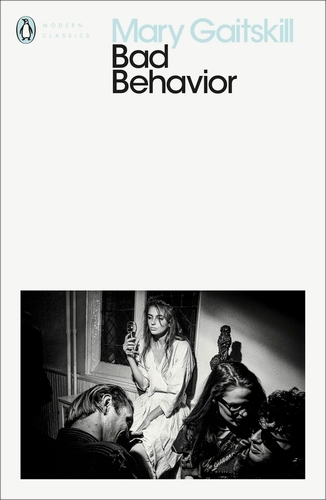
Bad Behavior
A young woman anxiously waits for her date on a street corner in New York City; he sits in a pizza parlour across the street, watching her discomfort.
A middle-aged woman returns to a New York that is haunted by the passion and intensity of her former relationship with her estranged best friend.
A secretarial graduate starts her first job at a lawyer's office and quietly keeps her cruel experiences at his hands locked inside herself.
The stories in this collection peer deep into the inner lives of men and women, explore the cavernous spaces between what we say and what can be expressed, and are full of tenderness and cruelty. Published for the first time in Penguin Modern Classics, Bad Behaviour provides a devastatingly insightful and urgently necessary view of our times.
A middle-aged woman returns to a New York that is haunted by the passion and intensity of her former relationship with her estranged best friend.
A secretarial graduate starts her first job at a lawyer's office and quietly keeps her cruel experiences at his hands locked inside herself.
The stories in this collection peer deep into the inner lives of men and women, explore the cavernous spaces between what we say and what can be expressed, and are full of tenderness and cruelty. Published for the first time in Penguin Modern Classics, Bad Behaviour provides a devastatingly insightful and urgently necessary view of our times.

Dandelions
In a dreamlike Japanese town on the banks of the Ikuta River, Ineko loses the ability to see certain things. It begins with a ping-pong ball and progresses to her fiancé, whom she cannot see at all. The doctors call it somagnosia, and Ineko's mother and her fiancé place her in a psychiatric clinic to recover. As they walk home along the riverbank, they consider: is her condition really a form of madness? Is Ineko's selective blindness an expression of her love? Are the trees around them weeping?
Delicate, strange and spare, this novella carries the art of the novel into tantalizing and mysterious new realms.
Delicate, strange and spare, this novella carries the art of the novel into tantalizing and mysterious new realms.

The Frolic of the Beasts
Set in rural Japan shortly after World War II, The Frolic of the Beasts tells the story of a strange and utterly absorbing love triangle between a former university student, Koji; his would-be mentor, the eminent literary critic Ippei Kusakado; and Ippei's beautiful, enigmatic wife, Yuko. When brought face-to-face with one of Ippei's many marital indiscretions, Koji finds his growing desire for Yuko compels him to action in a way that changes all three of their lives profoundly. Originally published in 1961 and now available in English for the first time, The Frolic of the Beasts is a haunting examination of the various guises we assume throughout our lives, and a tale of psychological self-entrapment, seduction, and violence.
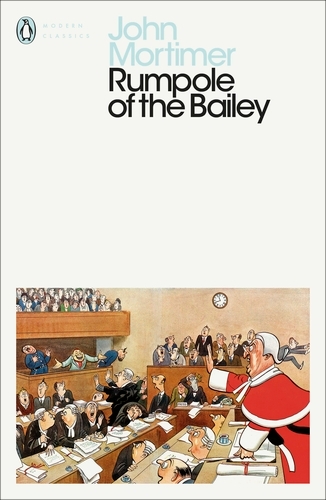
Rumpole of the Bailey
Horace Rumpole, the old boy committed to defending the apparently indefensible, trusting of a jury, scornful of the law's pomposities, appears here in a new edition of the 1978 iconic Rumpole debut.
This volume collects the much-loved stories 'Rumpole and the Younger Generation', 'Rumpole and the Alternative Society', 'Rumpole and the Honourable Member', 'Rumpole and the Married Lady', 'Rumpole and the Learned Friends' and 'Rumpole and the Heavy Brigade'.
This volume collects the much-loved stories 'Rumpole and the Younger Generation', 'Rumpole and the Alternative Society', 'Rumpole and the Honourable Member', 'Rumpole and the Married Lady', 'Rumpole and the Learned Friends' and 'Rumpole and the Heavy Brigade'.
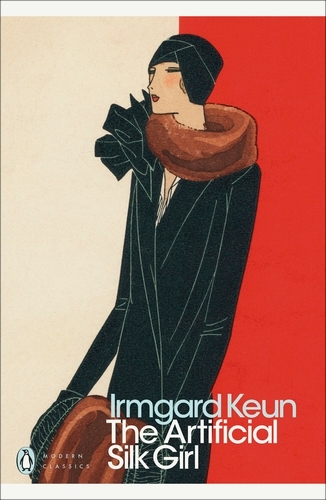
The Artificial Silk Girl
Doris is going to be a big star. Wearing a stolen fur coat and recently fired from her office job, she takes an all-night train to Berlin to make it in the movies. But what she encounters in the city is not fame and fortune, but gnawing hunger, seedy bars, and exploitative men - and as Doris sinks ever lower, she resorts to desperate measures to survive. Very funny and intensely moving, this is a dazzling portrait of roaring Berlin in the 1920s, and a poignant exploration of the doomed pursuit of fame and glamour.
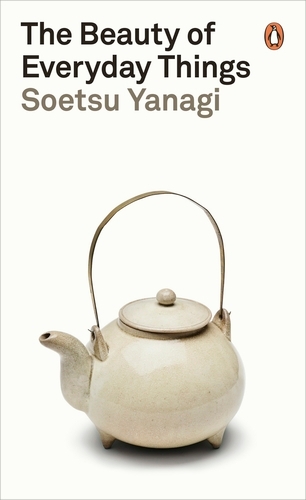
The Beauty of Everyday Things
Our lives are filled with objects. Everyday things used in everyday settings, they are our constant companions. As such, writes Soetsu Yanagi, they should be made with care and built to last, treated with respect and even affection. They should be natural and simple, sturdy and safe - an aesthetic fulfilment of our practical needs. They should, in short, be things of beauty.
Long revered as the authority on craftsmanship and Japanese aesthetics, Yanagi devoted his life and writing to defend the value of craft. In an age of feeble and ugly machine-made things, this now-classic book is a call for each of us to deepen our relationship with the objects that surround us. Inspired by the work of the simple artisans Yanagi encountered on his lifelong travels through Japan and Korea, it is a heartfelt defence of modest, honest, handcrafted objects, from traditional teacups to jars to paper. Objects that exemplify the beauty of everyday things.
"Radical and inspiring ... Yanagi's vision puts the connection between heart and hand before the transient and commercial" - Edmund de Waal
"Soetsu Yanagi's unerring eye has influenced generations of makers. His notion of Zen and the art of design continues to inspire all those involved in shaping our everyday world" - Jasper Morrison
Long revered as the authority on craftsmanship and Japanese aesthetics, Yanagi devoted his life and writing to defend the value of craft. In an age of feeble and ugly machine-made things, this now-classic book is a call for each of us to deepen our relationship with the objects that surround us. Inspired by the work of the simple artisans Yanagi encountered on his lifelong travels through Japan and Korea, it is a heartfelt defence of modest, honest, handcrafted objects, from traditional teacups to jars to paper. Objects that exemplify the beauty of everyday things.
"Radical and inspiring ... Yanagi's vision puts the connection between heart and hand before the transient and commercial" - Edmund de Waal
"Soetsu Yanagi's unerring eye has influenced generations of makers. His notion of Zen and the art of design continues to inspire all those involved in shaping our everyday world" - Jasper Morrison
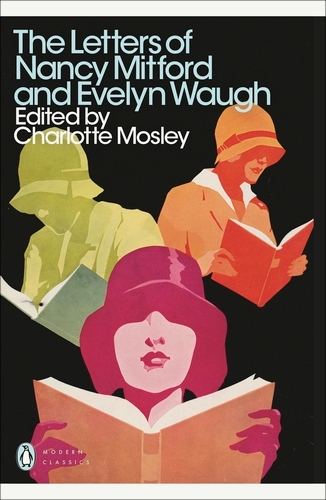
The Letters of Nancy Mitford and Evelyn Waugh
Nancy Mitford and Evelyn Waugh were two of the twentieth century's most amusing and gifted writers, who matched wits and traded literary advice in more than five hundred letters over twenty-two years. Dissecting their friends, criticizing each other's books and concealing their true feelings beneath a barrage of hilarious and knowing repartee, they found it far easier to conduct a friendship on paper than in person. This correspondence provides a colourful glimpse into the literary and social circles of London and Paris, during the Second World War and for twenty years after.
Life with a Capital L
For D. H. Lawrence the novel was the pinnacle, 'the one bright book of life', yet his non-fiction shows him at his most freewheeling and playful. This is a selection of his brilliantly varied essays, on subjects including art, morality, obscenity, songbirds, Italy, Thomas Hardy, the death of a porcupine in the Rocky Mountains and the narcissism of photographing ourselves. Arranged chronologically to illuminate the patterns of Lawrence's thought over time, and including many little-known pieces, they reveal a writer of enduring freshness and force.
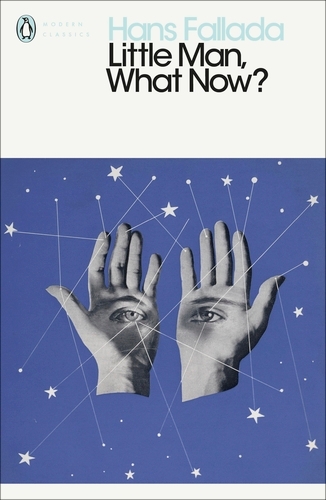
Little Man, What Now?
The book that made Hans Fallada famous, Little Man, What Now? is filled with an extraordinary mixture of comedy and desperation. It tells the story of one of European literature's most sympathetic young couples - 'Boy' and 'Lämmchen' - as they battle indomitably through a world of grotesque threats in Depression Berlin. A rich gallery of hulking crooks, maternity nurses, nudists, a terrible mother and Nazi streetfighters cannot shake their love for each other. But is love enough in a city as cold and indifferent as Berlin in 1932?
The great novel of Weimar Germany, Little Man, What Now? is full of men and women trying to keep ahead of their bills and hang on to their daydreams, from harrassed men's clothing assistants to a very unlucky chocolate shop owner. This brilliant new translation by Michael Hofmann brings to life an entire era, one that was - as neither Fallada nor his characters knew - just about to be swept away.
The great novel of Weimar Germany, Little Man, What Now? is full of men and women trying to keep ahead of their bills and hang on to their daydreams, from harrassed men's clothing assistants to a very unlucky chocolate shop owner. This brilliant new translation by Michael Hofmann brings to life an entire era, one that was - as neither Fallada nor his characters knew - just about to be swept away.

Lady Sings the Blues
"I've been told that no one sings the word 'hunger' like I do. Or the word 'love'."
Lady Sings the Blues is the inimitable autobiography of one of the greatest icons of the twentieth century. Born to a single mother in 1915 Baltimore, Billie Holiday had her first run-in with the law at aged 13. But Billie Holiday is no victim. Her memoir tells the story of her life spent in jazz, smoky Harlem clubs and packed-out concert halls, her love affairs, her wildly creative friends, her struggles with addiction and her adventures in love. Billie Holiday is a wise and aphoristic guide to the story of her unforgettable life.
Lady Sings the Blues is the inimitable autobiography of one of the greatest icons of the twentieth century. Born to a single mother in 1915 Baltimore, Billie Holiday had her first run-in with the law at aged 13. But Billie Holiday is no victim. Her memoir tells the story of her life spent in jazz, smoky Harlem clubs and packed-out concert halls, her love affairs, her wildly creative friends, her struggles with addiction and her adventures in love. Billie Holiday is a wise and aphoristic guide to the story of her unforgettable life.

Advertisements for Myself
Advertisements for Myself is a comprehensive collection of the best of Norman Mailer's essays, stories, interviews and journalism from the Forties and Fifties, linked by anarchic and riotous autobiographical commentary. Laying bare the heart of a witty, belligerent and vigorous writer, this manifesto of Mailer's key beliefs contains pieces on his war experiences in the Philippines (the basis for his famous first novel The Naked and the Dead), tributes to fellow novelists William Styron, Saul Bellow, Truman Capote and Gore Vidal and magnificent polemics against pornography, advertising, drugs and politics. Also included is his notorious exposition of the phenomenon of the 'White Negro', the Beat Generation's existentialist hero whose life, like Mailer's, is 'an unchartered journey into the rebellious imperatives of the self'

An American Dream
As Stephen Rojack, a decorated war hero and former congressman who murders his wife in a fashionable New York City high-rise, runs amok through the city in which he was once a privileged citizen, Mailer peels away the layers of our social norms to reveal a world of pure appetite and relentless cruelty. One part Nietzsche, one part de Sade, and one part Charlie Parker, An American Dream grabs the reader by the throat and refuses to let go.
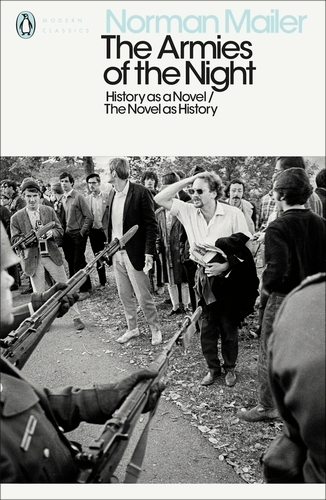
The Armies of the Night
October 21, 1967, Washington, D.C. 20,000 to 200,000 protesters are marching to end the war in Vietnam, while helicopters hover overhead and federal marshals and soldiers with fixed bayonets await them on the Pentagon steps. Among the marchers is Norman Mailer. From his own singular participation in the day's events and his even more extraordinary perceptions comes a classic work that shatters the mould of traditional reportage. Intellectuals and hippies, clergymen and cops, poets and army MPs crowd the pages of a book in which facts are fused with techniques of fiction to create the nerve-end reality of experiential truth.
The Armies of the Night uniquely and unforgettably captures the Sixties' tidal wave of love and rage at its crest and a towering genius at his peak.
The Armies of the Night uniquely and unforgettably captures the Sixties' tidal wave of love and rage at its crest and a towering genius at his peak.
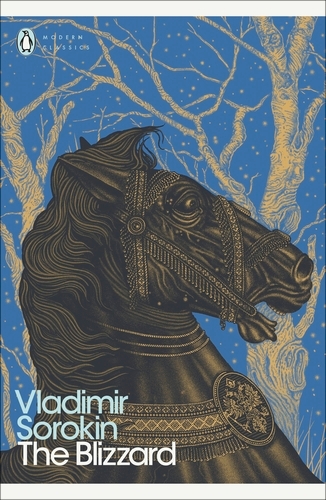
The Blizzard
Garin, a country doctor, is desperately trying to reach the village of Dolgoye, where a mysterious epidemic is transforming the villagers into zombies. He has with him a vaccine which will prevent the spread of this epidemic, but a terrible blizzard turns his journey into the stuff of nightmare. A trip that should take hours turns into a metaphysical odyssey, in which he encounters strange beasts, apparitions, hallucinations and dangerous fellow men. Trapped in this existential storm, Sorokin's characters fight their way through a landscape that owes as much to Chekhov's 19th-century Russia as it does to near-future, post-apocalyptic literature. Fantastical, comic and richly drawn, The Blizzard at once answers to the canon of Russian writers and makes a fierce statement about life in contemporary Russia.

Day of the Oprichnik
Moscow 2028: Andrei Danilovich Komiaga, oprichnik, member of the czar's inner circle of trusted courtiers, rouses himself from a drunken stupor and prepares for another day of debauchery, violence, terror and beauty. In this New Russia, futuristic technology combine with the draconian world of Ivan the Terrible to create a dystopia chillingly akin to reality. Over the twenty-four-hour span of the novel, Komiaga will rape, pillage and torture, in the name of the czar he fears and adores. Shimmering with invention, fierce social commentary and razor-sharp wit, Day of the Oprichnik imagines a near future too disturbing to contemplate and too close to reality to ignore.
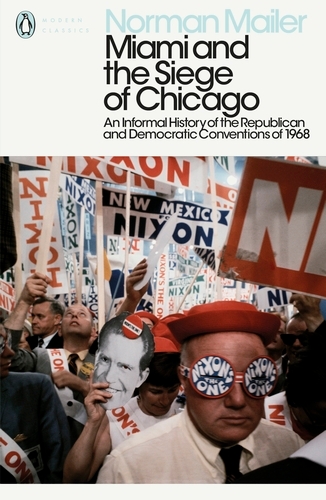
Miami and the Siege of Chicago
Miami, Summer 1968. The Vietnam War is raging; Martin Luther King, Jr., and Bobby Kennedy have just been assassinated. The Republican Party meets in Miami and picks Richard Nixon as its candidate, to little fanfare. But when the Democrats back Lyndon Johnson's ineffectual vice president, Hubert Humphrey, the city of Chicago erupts. Antiwar protesters fill the streets and the police run amok, beating and arresting demonstrators and delegates alike, all broadcast on live television, and captured in these pages by one of America's fiercest intellects.

Collect the Penguin Modern Classics
Choose three Penguin Modern Classics for only £21 over on the Penguin Shop.