Try The Pursuit of Love by Nancy Mitford. It’s witty, sharp, and the writing style is accessible, making it easy to devour in a weekend. Set against the elegance of an English country house, the story sees Linda and her sisters on a quest to find the perfect partner – and the mishaps and stuffy suitors they meet along the way.
Penguin Modern Classics
1289 books in this series
New to Penguin Modern Classics?
Looking for a hidden gem?
Try Nothing Grows by Moonlight by Torborg Nedreaas. It's a Norwegian classic about a woman's life-destroying love, confessed to a stranger over a long night of wine and cigarettes. It’s tender and rage-inducing in equal measure, and will stay with you long after you’ve turned the last page.
Buying a gift?
Choose The Apple in the Dark by Clarice Lispector. The surreal artwork makes it the kind of book people pick up before they've even read the blurb, but the story of a man attempting to reinvent himself after committing murder means it more than lives up to first impressions.

The Making of the English Working Class
Fifty years since first publication, E. P. Thompson's revolutionary account of working-class culture and ideals is published in Penguin Modern Classics, with a new introduction by historian Michael Kenny
This classic and imaginative account of working-class society in its formative years, 1780 to 1832, revolutionized our understanding of English social history. E. P. Thompson shows how the working class took part in its own making and re-creates the whole-life experience of people who suffered loss of status and freedom, who underwent degradation, and who yet created a cultured and political consciousness of great vitality.
Reviews:
'A dazzling vindication of the lives and aspirations of the then - and now once again - neglected culture of working-class England' Martin Kettle, Observer
'Superbly readable . . . a moving account of the culture of the self-taught in an age of social and intellectual deprivation' Asa Briggs, Financial Times
'Thompson's work combines passion and intellect, the gifts of the poet, the narrator and the analyst' E. J. Hobsbawm, Independent
'An event not merely in the writing of English history but in the politics of our century' Michael Foot, Times Literary Supplement
'The greatest of our socialist historians' Terry Eagleton, New Statesman
About the author:
E. P. Thompson was born in 1924 and read history at Corpus Christi, Cambridge, graduating in 1946. An academic, writer and acclaimed historian, his first major work was a biography of William Morris. The Making of the English Working Class was instantly recognized as a classic on its publication in 1963 and secured his position as one of the leading social historians of his time. Thompson was also an active campaigner and key figure in the ending of the Cold War. He died in 1993, survived by his wife and two sons.
This classic and imaginative account of working-class society in its formative years, 1780 to 1832, revolutionized our understanding of English social history. E. P. Thompson shows how the working class took part in its own making and re-creates the whole-life experience of people who suffered loss of status and freedom, who underwent degradation, and who yet created a cultured and political consciousness of great vitality.
Reviews:
'A dazzling vindication of the lives and aspirations of the then - and now once again - neglected culture of working-class England' Martin Kettle, Observer
'Superbly readable . . . a moving account of the culture of the self-taught in an age of social and intellectual deprivation' Asa Briggs, Financial Times
'Thompson's work combines passion and intellect, the gifts of the poet, the narrator and the analyst' E. J. Hobsbawm, Independent
'An event not merely in the writing of English history but in the politics of our century' Michael Foot, Times Literary Supplement
'The greatest of our socialist historians' Terry Eagleton, New Statesman
About the author:
E. P. Thompson was born in 1924 and read history at Corpus Christi, Cambridge, graduating in 1946. An academic, writer and acclaimed historian, his first major work was a biography of William Morris. The Making of the English Working Class was instantly recognized as a classic on its publication in 1963 and secured his position as one of the leading social historians of his time. Thompson was also an active campaigner and key figure in the ending of the Cold War. He died in 1993, survived by his wife and two sons.
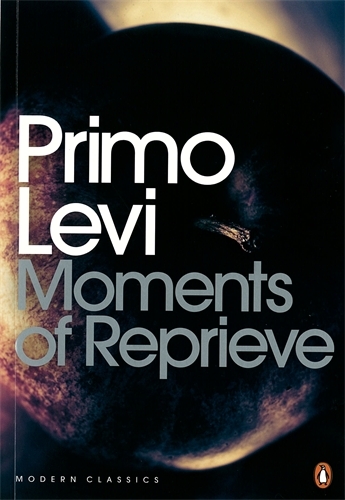
Moments of Reprieve
Primo Levi was one of the most astonishing voices to emerge from the twentieth century: a man who survived one of the ugliest times in history, yet who was able to describe his own Auschwitz experience with an unaffected tenderness.
Levi was a master storyteller but he did not write fairytales. These stories are an elegy to the human figures who stood out against the tragic background of Auschwitz, 'the ones in whom I had recognized the will and capacity to react, and hence a rudiment of virtue'. Each centres on an individual who - whether it be through a juggling trick, a slice of apple or a letter - discovers one of the 'bizarre, marginal moments of reprieve'.
Levi was a master storyteller but he did not write fairytales. These stories are an elegy to the human figures who stood out against the tragic background of Auschwitz, 'the ones in whom I had recognized the will and capacity to react, and hence a rudiment of virtue'. Each centres on an individual who - whether it be through a juggling trick, a slice of apple or a letter - discovers one of the 'bizarre, marginal moments of reprieve'.
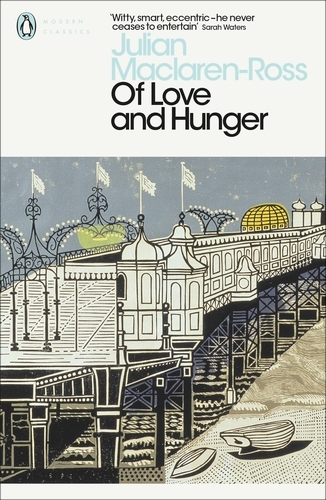
Of Love and Hunger
The key literary figure in the pubs of post-war Fitzrovia, Maclaren-Ross pulled together his dispersed energies to write two great books: the posthumously published Memoirs of the Forties and this spectacular novel of the Depression, Of Love and Hunger - harsh, vivid, louche and slangy it deserves a permanent place alongside Coming Up for Air and Hangover Square.

Civilization and Its Discontents
In what remains one of his most seminal papers, Freud considers the incompatibility of civilisation and individual happiness, and the tensions between the claims of society and the individual. We all know that living in civilised groups means sacrificing a degree of personal interest, but couldn't you argue that it in fact creates the conditions for our happiness? Freud explores the arguments and counter-arguments surrounding this proposition, focusing on what he perceives to be one of society's greatest dangers; 'civilised' sexual morality. After all, doesn't repression of sexuality deeply affect people and compromise their chances of happiness?
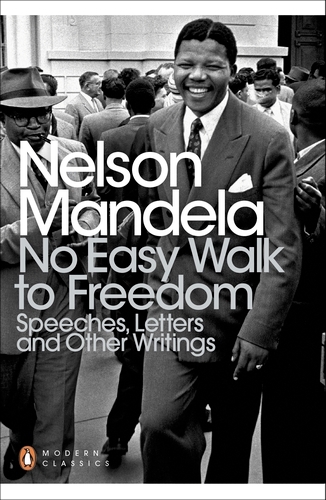
No Easy Walk to Freedom
'There is no easy walk to freedom anywhere and many of us will have to pass through the valley of the shadow of death again and again before we reach the mountain tops of our desires.'
After twenty-seven years in prison, Nelson Mandela finally walked free in February 1990. This collection of his articles, speeches, letters from underground, and the transcripts from his trials vividly demonstrates the charisma and determination of a towering figure in the struggle for racial equality in South Africa. Now in a new edition, No Easy Walk to Freedom is both a vital historical document and a chronicle of the life and thoughts of one of the greatest campaigners for freedom the world has known.
After twenty-seven years in prison, Nelson Mandela finally walked free in February 1990. This collection of his articles, speeches, letters from underground, and the transcripts from his trials vividly demonstrates the charisma and determination of a towering figure in the struggle for racial equality in South Africa. Now in a new edition, No Easy Walk to Freedom is both a vital historical document and a chronicle of the life and thoughts of one of the greatest campaigners for freedom the world has known.

The Psychopathology of Everyday Life
This collection of writings is famous for giving us the phrase 'Freudian slip'. It also builds up a strong social history of Vienna and the middle-class social milieu of Freud and his patients. Through a series of case histories, some no longer than a few lines long, Freud explores how it is that normal people make slips of speech, writing, reading and remembering in their everyday life, and reveals what it is that they betray about the existence of a sub-text or subliminal motive to our conscious actions. As he explains, most of these slips tend of be of a relatively anodyne nature, but some are a little more sinister, particularly those where pride or thwarted love are concerned...

The Schreber Case
The Schreber Case is distinctive from the other case histories in that it's based on the memoirs of a conjectural patient. Schreber was a judge and doctor of law who lived according to a strict set of principles. His nervous illness first manifested itself as hypochondria and insomnia - which he put down to his excessive workload - but gradually deteriorated into pathological delusion. Believing himself to be dead and rotting, Schreber attempted suicide, and then went on to experience bizarre delusional epsiodes whereby he belived he was being turned into a woman. The course of this extraordinary illness is analysed by Freud in his search for a root cause - could it have been caused by homesexual impulses that Schreber tried to repress?

The Book of Disquiet
With its astounding hardcover reviews Richard Zenith's new complete translation of THE BOOK OF DISQUIET has now taken on a similar iconic status to ULYSSES, THE TRIAL or IN SEARCH OF LOST TIME as one of the greatest but also strangest modernist texts. An assembly of sometimes linked fragments, it is a mesmerising, haunting 'novel' without parallel in any other culture.
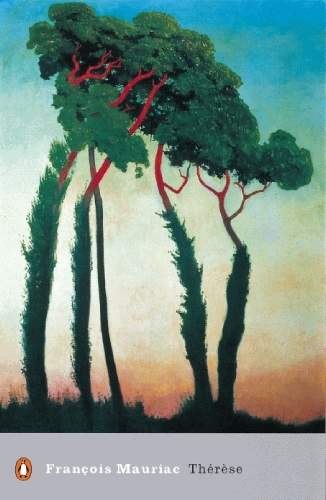
Thérèse
From the moment she walks from court having been charged with attempting to poison her husband, to her banishment, escape to Paris, and final years of solitude and waiting, the life of Thérèse Desqueyroux is passionate and tortured. The victim of a hostile fate, Thérèse, as Mauriac said of her ‘belongs to that class of human beings … for whom night can end only when life itself ends. All that is asked of them is that they should not resign themselves to night’s darkness.’ Thérèse’s moving and powerful story affirms the vitality of the human spirit, making her an unforgettable heroine.
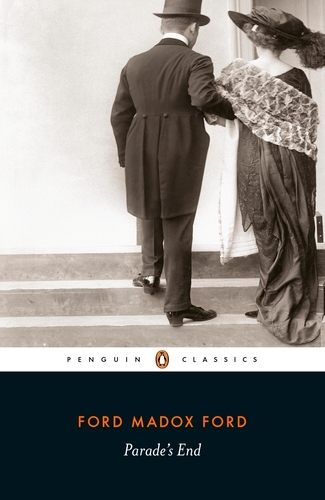
Parade's End
Consisting of four novels - SOME DO NOT..., NO MORE PARADES, A MAN COULD STAND UP and THE LAST POST - PARADE'S END is the story of Christopher Tietjens and his progress from the secure world of Edwardian England into the First World War and beyond. Tietjens embodies the values of that ordered, predictable, hierarchic society of pre-1914. Contrasted with him and portrayed with equal clarity and depth is his wife Sylvia--beautiful, arrogant, reckless--a symbol of the new times. Their conflict, the chronicle of a family and of an era, makes PARADE'S END both a gripping study of character and a work of amazing subtlety and depth.
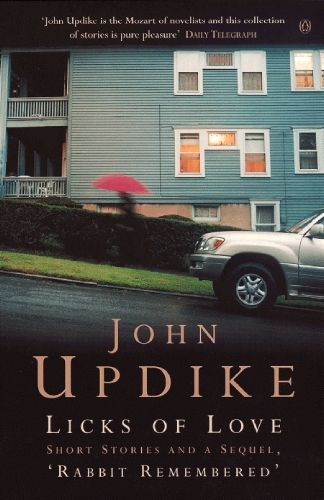
Licks of Love
Collected with a dozen wonderful stories, all set in classic Updike territory, the short novel 'RABBIT REMEMBERED' is a major work in its own right - a riveting return to Updike's most celebrated fictional world. Janice and Nelson Angstrom, plus several other survivors of the irreducible Rabbit, fitfully entertain his memory while pursuing their own happiness over the edge of the millennium, as a number of old strands come together in entirely unexpected ways.
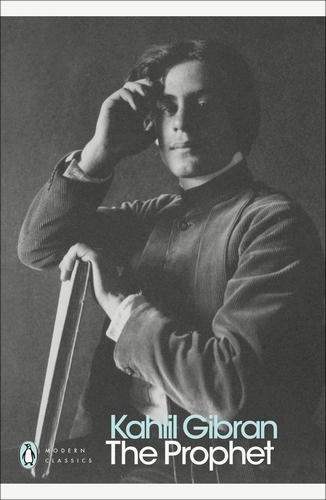
The Prophet
First published in the 1920's, THE PROPHET an inspirational, allegorical guide to living, the book is perhaps the most famous work of religious fiction of the Twentieth Century and has sold millions of copies in more than twenty languages. Gibran'sprotagonist, called simply 'the Prophet', delivers spiritual, yet practical, homilies on a wide variety of topics central to daily life: love, marriage and children; work and play; possessions, beauty, truth, joy and sorrow, death and many many more.
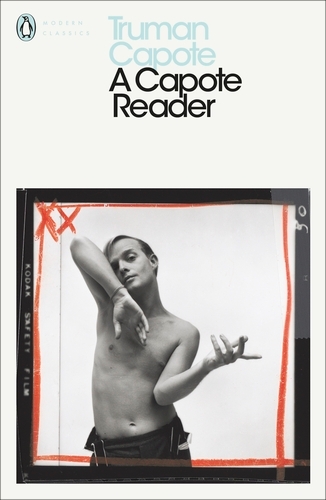
A Capote Reader
'The only four things that interested me were: reading books, going to the movies, tap-dancing and drawing pictures. Then one day I started writing . . .' Truman Capote began writing at the age of eight, and never looked back. A Capote Reader contains much of the author's published work: his brilliant and prolific oeuvre of fiction, travel sketches, portraits, reportage and essays. It includes all twelve of his celebrated short stories, together with The Grass Harp and Breakfast at Tiffany's. There are vivid sketches of places from Tangiers to Brooklyn, and fascinating insights into the lives of his contemporaries, from Jane Bowles and Cecil Beaton to Marilyn Monroe and Tennessee Williams. Generous space is devoted to reportage including 'The Muses Are Heard', on his trip to Communist Europe in the 1950s with the cast of Porgy and Bess. In all, A Capote Reader demonstrates the chameleon talents of one of America's most versatile and gifted writers.
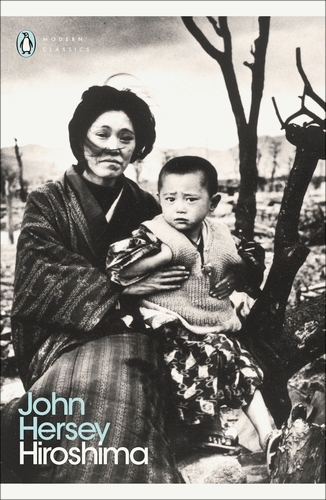
Hiroshima
The explosion over Hiroshima of the first nuclear bomb reduced, in an instant, an entire city to rubble and killed over 100,000 men, women and children. It also announced a new era in human history: the Atomic Age.
Written only a year after the event, John Hersey's Hiroshima was an immediate phenomenon. Originally published in the New Yorker magazine - the only single article to ever fill an entire edition - it quickly became a bestseller and established itself as the definitive account of the bombing. Hersey's lucid prose and focus on eye-witness experience made plain the horror of nuclear weapons, clearly demonstrating the incredible danger this new technology posed to humanity.
This edition includes an additional chapter, written forty after Hiroshima was first published, exploring the devastating long-term effects of the bomb on survivors, as well as how a city can begin to rebuild after such a catastrophe.
Written only a year after the event, John Hersey's Hiroshima was an immediate phenomenon. Originally published in the New Yorker magazine - the only single article to ever fill an entire edition - it quickly became a bestseller and established itself as the definitive account of the bombing. Hersey's lucid prose and focus on eye-witness experience made plain the horror of nuclear weapons, clearly demonstrating the incredible danger this new technology posed to humanity.
This edition includes an additional chapter, written forty after Hiroshima was first published, exploring the devastating long-term effects of the bomb on survivors, as well as how a city can begin to rebuild after such a catastrophe.
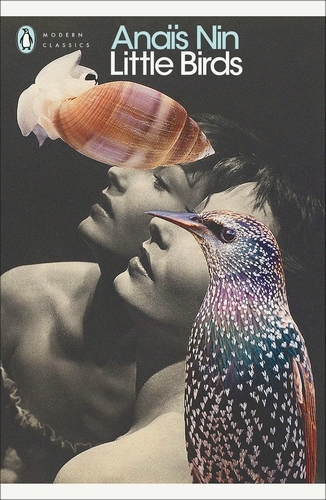
Little Birds
Combining startling lyricism with what often seems like the entire breadth of human sensuality, Little Birds is Anais Nin's masterwork. Each of the volume's thirteen stories builds on the other, embracing desire in all its variety, its complexity, its paradoxical simplicity.
Anais Nin's Little Birds is now a major series on Sky Atlantic.
Anais Nin's Little Birds is now a major series on Sky Atlantic.

A Room of One's Own
A Room of One's Own, based on a lecture given at Girton College Cambridge, is one of the great feminist polemics. Woolf's blazing writing on female creativity, the role of the writer, and the silent fate of Shakespeare's imaginary sister remains a powerful reminder of a woman's need for financial independence and intellectual freedom.

Collect the Penguin Modern Classics
Choose three Penguin Modern Classics for only £21 over on the Penguin Shop.