Which books emotionally wrecked you? With Dawn French

How does artist Kae Tempest inspire Dawn French? Do editors always know best? What is the impact of grief on those we love most? And what really happened when Dawn French came face to face with a hippo while filming Harry Potter?
In this episode of Ask Penguin, Rhianna Dhillon sits down with bestselling author and comedy legend Dawn French to discuss her moving new novel Enough, alongside brilliant book recommendations from Dawn and the Penguin team.
Listen to the episode and subscribe to Ask Penguin wherever you get your podcasts.


Episode Transcript
Rhianna Dhillon: Hello, and welcome back to Ask Penguin, the podcast all about books and the people who write and publish them. I'm Rhianna Dhillon and today I'll be sitting down with author, actor and bonafide comedy legend, Dawn French, to talk about her latest novel, "Enough". We'll then be putting some of your brilliant listener questions to Dawn and some of our Penguin colleagues to top your reading pile with even more great reads. Just a heads-up that this episode contains content about suicide and suicidal feelings.
With seven BAFTA nominations and a BAFTA fellowship to her name, Dawn is just a little bit of a national treasure. She's best known for starring in and writing her brilliant comedy sketch show, "French and Saunders", and for playing beloved Geraldine Granger in the sitcom, "The Vicar of Dibley". Dawn began making us laugh on the page in 2007 with her hilarious and heartwarming memoir, "Dear Fatty". Dawn has since become a best-selling author of fiction, including "A Tiny Bit Marvellous", "Oh Dear Silvia", "According to Yes" and "Because of You". Dawn's latest memoir, "The Me. You. A Diary", became a Sunday Times bestseller.
"Enough" is Dawn French's fifth and latest work of fiction. It's a personal novel about suicide, partly inspired by the loss of Dawn's father, Denys, who died when Dawn was 19. In Dawn's own words, it contains her very heart and soul.
Dawn, massive congratulations on the book, and welcome to Ask Penguin. Thank you so much for coming in.
Dawn French: Of course.
Rhianna Dhillon: So, for a novel ostensibly about suicide, "Enough" is also such a warm read about love and about family and about aging and motherhood. So, tell us about your protagonist, Emma, and her family.
Dawn French: Well, um I wanted to write a character that, well, first of all, is my age. That's pretty much where the similarities end with me. But I did that really for two reasons: one was being a little bit lazy, um, because I wouldn't have to do any research, because I know what it's like to be my age, I know the politics and the music and whatever. And the second reason really was that she could be sort of controversially a bit young to make this decision.
Rhianna Dhillon: Mhm.
Dawn French: Uh, so, yeah. I wanted to write a character that loves to have some control.
Rhianna Dhillon: Mm.
Dawn French: And I think that is most of us, actually. But this character has taken that to the extreme, really. And I also wanted to write a person who doesn't have particularly traumatic life, she's not a depressive, she's not ill, she's not mentally ill, well, only as much as most of us are. Um, which is a lot. She's been loved, she has loved many, and she's had a good, rich life, full of sensual and erotic and crazy, unusual adventures. And she's come to this decision, so it was very important for me to make sure that we knew Emma.
Rhianna Dhillon: Mm.
Dawn French: And that really influenced how I wrote the form of the book, if you like. So, I chose to write this book over 24 hours, that this family experienced this odd situation in 24 hours. But I knew that in order to tell you more about Emma, I would need to write these slices of her life.
Rhianna Dhillon: Yeah.
Dawn French: Um, and I called them slices as a working title and then I just, as so often happens, you just sort of get used to it or fall in love with it and that's that. But they are exactly that, so this is about a big, wide sweep of a messy life with occasional shards of bright memory.
Rhianna Dhillon: Yeah.
Dawn French: So that you know who she is and how she's come to this decision, for all her flaws and all her strengths.
Rhianna Dhillon: Was there a, um, one of the kind of past slices that you particularly loved delving back into, an era that you loved returning to?
Dawn French: Well, it's funny because originally I decided to write a slice from every decade
Rhianna Dhillon: Mm.
Dawn French: of her life, and so, of course, I started with her as very young, I think she's seven or something like that in that very first one, she's in the garden and she's hiding. Um, so that was the first one that I wrote, and I wanted to write something really in the in the mind of a seven-year-old, you know, "this is hot, what's behind me?", "this is horrible, there's a spider". You know, it's a, you know, something really visceral.
Rhianna Dhillon: Yeah.
Dawn French: And something descriptive, and being able to spy on your family and thinking that you're a bit of a ninja. You know, so I wanted to bring, yeah, I wanted to be inside that seven-year-old brain. So, that was very enjoyable to write.
A curious thing happened which was that I'm a person who craves order. I quite like a neatness in a way, which is not great for writing sometimes, because you can write yourself out of things because you just have a need for it to be nice and neat. So, of course, I wrote wrote those slices chronologically. And then Louise Moore, you may have heard of her, she is my editor, um when we read through the book, this is what part of my, I'm sure we're going to get on to talk about this later, but part of my process is that I want to, when I've done a first draft, I want to sit and read it aloud, but I want to have it read to me.
Rhianna Dhillon: Oh, interesting.
Dawn French: And so, I ask these guys here, usually Jill and Liz and Louise, we sit in a room with lots of chocolate and coffee, and they read it aloud to me. That tells me what they're reading directly off the page.
Rhianna Dhillon: Mhm.
Dawn French: Tells me what first eyes on see and where emphasis is wrong, where narrative is wrong, where pace is wrong, all of that stuff. And it just gives me an idea of what's working, what isn't, what I need to cut down, what I need to speed up, what I've left out, where I've forgotten what age someone is. You know, just almost like copy editing. You know, I'm looking at practicalities as much as anything. But when we did that, Louise, who is very clever, I would I will never say that again. Um, but she, she,
Rhianna Dhillon: But it is now on record.
Dawn French: but it is on record. She just suddenly said, "Mmm, that slice later where Emma is a teenager." So, I think it was then like the third slice in or maybe the fourth. She gets caught in a wave.
Rhianna Dhillon: Mhm.
Dawn French: And she thinks she's going to die.
Rhianna Dhillon: Yeah.
Dawn French: And she comes out of the sea and she cycles home and no one ever saw her do that, but she had that experience of thinking, "I can't breathe, I can't this is it." And then she's delivered up by the sea back to her life. She said, "This needs to go first."
Rhianna Dhillon: Yeah.
Dawn French: I really railed against that, because that's not the right order.
Rhianna Dhillon: Right.
Dawn French: And I thought, "No, it can't, it can't, because she's older there, that belongs there, it belongs at that part of the book." And she went, "No, because it's a sort of metaphor for everything that's about to happen. And it's very um descriptive, and it's the sea, and it's all kinds of things and it tells you a lot about Emma."
Rhianna Dhillon: Mhm.
Dawn French: Um, but of course in my head I wanted to start with a seven-year-old, I didn't want to start with this. Um, and all the others are in order, and so that still sticks out to me, but she was right. When I put it there,
Rhianna Dhillon: Yeah.
Dawn French: I thought, "Yeah, okay, I get it." So, we're starting with a slice so, you know, again the neatness can be an enemy, because it doesn't hurt to have a bit of writing that you don't understand yet. You don't know why it's there or what the purpose of it is, but you're being introduced to something. Whereas I'm a bit of a stickler for, "let me tell you everything, and then we will get on with the story," and she's going, "no, do some story, and then we'll get on with everything, you know, do that." So, that was a good lesson. I don't know if I've answered your question though.
Rhianna Dhillon: But I also learned so much about you in a really short space of time, so that was really interesting.
Dawn French: Good, good.
Rhianna Dhillon: And the title is kind of deliberately ambiguous, so like Emma, has she had enough? Um, is it about being enough? What does enough mean to you?
Dawn French: Really, I I mean, you know, it always helps if the title can mean various things. And it does mean various things. She is enough, of course she is enough, and I think we all are enough.
Rhianna Dhillon: Yeah.
Dawn French: And it's a powerful word that Um, what it isn't, but people may think it is, and again, you will discover when you read that it isn't, it's not that Emma is saying, "I've had enough. It's just enough of all this." She's not fed up of life. That's not it at all. What she's saying is she's had enough. It is enough. She's full up of life.
Rhianna Dhillon: She's full up, and she's had a really good run.
Dawn French: And in Emma's mind, what she's come to the conclusion of, she's decided that she will excuse her children from the duties of the difficult next part of her life. And if she's 68, she's going into 70, 80, whatever, these are the tricky bits and until you get there, you don't and you start thinking about this, you don't know this stuff. I mean, you know, you witness grandparents and you witness things, but until it's actually you and you're facing that bit, what we all know for sure is there's decrepitude there. There's going to be health issues, there might be, there might not be, well, there will be, but but it depends at what pace, it depends, we none of us know any of this. But what she's saying is, "I watched my parents go through this. I don't want you to have to do this. So, I'm going to unburden you of this duty." She thinks she's doing a selfless thing. Her kids think she's doing a selfish thing.
Rhianna Dhillon: Mhm.
Dawn French: And it's really about who the confusion of who does your life actually belong to?
Rhianna Dhillon: Yeah.
Dawn French: You know, we all think we have agency over our life, and our life does belong to only we only we live in these bodies, only we make these decisions that we make, with influences, obviously. But actually, when you have children, I think you're kind of making a metaphorical contract with them.
Rhianna Dhillon: Mhm, mhm.
Dawn French: And your life doesn't any longer just belong to you.
Rhianna Dhillon: Yeah.
Dawn French: And this is what Emma has to realize as the book goes on.
Rhianna Dhillon: It's interesting that there are like sort of marked changes between how the children react to how like her best friend reacts.
Dawn French: Yeah.
Rhianna Dhillon: So, how did you sort of differentiate between like that ownership over a life, I suppose?
Dawn French: Well, she gives and by her best friend, you're referring to Adam, presumably.
Rhianna Dhillon: Yes. And the love of her life.
Dawn French: And the love of her life and the father of one of her children. She gives him time, which is a very important thing in this book. She gives him time to process it. She gives all her reasons. She says to him why, and that's in a slice, remember, as well.
Rhianna Dhillon: Yeah.
Dawn French: She tells him why he is the chosen one to help her. Because she will need somebody to help her. She could do this on her own, but she needs somebody to verify it and she's trying to protect her kids from the final moment. She also thinks he will understand, uh given time, to understand, and so she can flesh it out with him.
Rhianna Dhillon: Mhm.
Dawn French: So, she tells him. He doesn't like it, of course he doesn't like it, but as an act of extreme love, he agrees that he will help her, even though he's reluctant to, but he uh supports her, if you like.
Rhianna Dhillon: Yeah.
Dawn French: Because she's very convincing.
Rhianna Dhillon: Yeah.
Dawn French: Whereas she doesn't give her children time. And I'm aware that you could dislike Emma for that.
Rhianna Dhillon: Mhm.
Dawn French: It you could think it was cruel. And it in a way it is cruel, and it's massively unreasonable in many ways, but it is also the opposite for Emma, because she thinks, "Instead of doing this and leaving you a note, I'm going to tell you and I will answer anything you want to ask me. We will have this whole day where I belong to you and we talk about our lives and we say everything we want to say, and we close it up and I explain everything and and then I can go knowing that uh you guys know all my reasoning. You never have to think 'why, oh why did this happen?' I'm telling you why."
But, of course, for them, a bomb has exploded in their family, and they're panicked because they've only got certain amount of hours, and they need to persuade her otherwise or they need to wrap their understanding around it and accept it. So, it's a curious old thing cuz time really matters.
Rhianna Dhillon: Yeah.
Dawn French: in lots of ways in this book, and it's I'm trying to play with time a lot. You know, I literally wrote the hours out and I decided to to chop them up by using canonical hours. When I decided to do that, because they're just more poetic, in a way, it's better than just saying 9:00, 10:00. Um, but it does lend itself a little bit into religion a bit, um but without being too religious, you know, um but what what you're aware of is that the clock is ticking right from the beginning, and also you're dealing with a woman who has decided something.
Rhianna Dhillon: Mhm.
Dawn French: And she's decided it after a lot of consideration. And one of the big themes in this book for me, and it was a bit of a discovery, it wasn't something I knew I was going to write about, but when it presented itself to me, I thought, "Oh, okay." I don't know about other authors, but this is what happens to me is that as you start writing a book about one thing that you think is a rich theme, other stuff comes tumbling in and you have to make decisions about where you're going to focus. But one of the big themes for me is that when a person has decided that something is right for them or that they are right about it, it's very, very hard to climb off that mountain.
Rhianna Dhillon: Yeah.
Dawn French: It's very hard. I I know that from my own life, that if I think I know something for sure in my bones, you can't tell me I don't know it, or that I'm not right. But if you if you can prove to me that I'm not right, or if you can present an argument to me that makes me have to think, I still then have to have the courage to admit that I might be wrong.
Rhianna Dhillon: That was so relatable all the way through.
Dawn French: Good, good. And that's a difficult thing, and I know, you know, from my own life, this has been, you know, that has happened to me many times when I've had to admit that I might be wrong. Not often. Uh, but and only to people that I really trust, that's the other thing, isn't it, you know, you won't give in unless that person is somebody that you need to learn something from. Um, time, of course, is very important, but so is place, and the house that we meet the family in kind of feels like we're on the cliffs or the dunes overlooking Cornwall maybe. There's also this beautiful moment where Emma is talking about the earth tilting on its axis, um, and she's touring, uh, Gaudí's buildings in Barcelona.
Dawn French: Yes.
Rhianna Dhillon: So, tell us about that. Why was it important for you to ground your reader in a sense of place with these really evocative descriptions?
Dawn French: Yes. Um, well, I've never said that it is Cornwall, but everything about me it's Cornwall.
Rhianna Dhillon: Yeah.
Dawn French: Um, you know, it's where my family are from, it's where I live, it's where I love, you know, the most. And so, I know that beach, I know those dunes, although that's a separate beach, I know that garden, that's a friend of mine's garden. You know, so I've I've cherry-picked things and, you know, the light and the sky and just Cornwall and the air thick with clotted cream, you know, all of that is is in there. Which gets into places that you think it shouldn't. It's um, yeah. Um, but I think it should, actually.
Rhianna Dhillon: Yeah. Absolutely, check the recipes.
Dawn French: Um, But yeah, it's uh I haven't said it's Cornwall, but it probably is, you know, my head. The Barcelona incident happened to me.
Rhianna Dhillon: It felt like it must have because it felt so personal.
Dawn French: It happened to me. I wanted to write her at that age, after she'd had her children, but she was with a friend.
Rhianna Dhillon: Mhm.
Dawn French: It wasn't quite like that for me, but um, and I thought how can I write about a really wonderful, physical, and yet sort of spiritual experience that someone's had so, because I just wanted to write richness of her life.
Rhianna Dhillon: Yeah.
Dawn French: And also, I wanted to I'd slightly neglected friends.
Rhianna Dhillon: Mhm, mhm.
Dawn French: You know, because I kept thinking people will wonder why her are her friends not involved with this. So, I wanted to put a friend there. This friend doesn't come back, but she's there and she's important. And I went on a holiday with some friends of mine, God, lots of years ago with Lenny and two mates to Barcelona, and I'd never been there, and, you know, people said, "Oh, go and look at this, go and do that." And we did do a couple, you know, went into the Las Ramblas and, you know, down there, and went into the big market and stuff. And all of that is extraordinary, and suddenly you're in Spain and everything smells different and there's amazing food and it's all weird and wonderful.
But then, because we were interested in Gaudí's architecture, somebody told us to go to this particular place, the Güell Palace. And because it was a building that was made for a for a merchant, I thought, "Oh, really? We could be eating more cheese, why are we doing this?" Um anyway, we went to this place and I stood outside and thought, "Yeah, it's in a very unprepossessing little side street, you know, it's nothing much." But then you see these, you know, twirly sort of balustrades and think, "Ah, okay, okay, that's quite interesting. This is quite quite grand door, that's nice."
And honestly something odd happens when you get inside, it's like the TARDIS or something, where you go in and the proportions are not what you've looked at on the outside. You creep into a little hall, you come up some steps. But when you get into the main room, it's right to the ceiling. So, you're in a sort of small cathedral but in a townhouse. And it's all quite dark marble, and there's elements of there's some religious paintings and stuff, I didn't really quite understand those. But there's these beautiful, these parabolic arches and stuff, and something happened to me in the room, and I actually just didn't want anyone else to be there. I was really struck by it and I started to sob. It was very odd. It was like a um a little revelatory, almost religious experience I had, and I've never really experienced that anywhere else. So, I wanted to write about that. And I so I wrote my experience but put Emma in it, so that is quite close to me that that particular chapter.
Rhianna Dhillon: Yeah, that's really beautiful. Um, I mean, I suppose sort of talking about worship, the place that we we sort of see family worshipping, I mean everywhere, not just in this book but especially in this book, is like the kitchen, the home, the garden. So, you have like cooking pasties and you have the planting the flowers and I kind of loved how you build in these family traditions for another family.
Dawn French: Yes.
Rhianna Dhillon: So, tell us about what you really wanted to be at the heart of what has been passed down through generations within a family.
Dawn French: Well, you know, the kitchen is the heart, isn't it? It is, and that table has had that family and the family before them around it. And it's the venue for this terrible moment, but it's also been the venue for so many wonderful moments, which makes it in Emma's mind, you know, complete and right that that's where it is. And it's in this safe place that they've been through so much in, and that she's passed on to them neatly, organized everything so that, you know, it's all split between them after she's gone and all of that.
So, yes, family traditions, for me, certainly, and I hoped that this would happen for Emma and her family. Doing certain things together is your huge connection. Food is just massive, isn't it, for all of us. Your mother's cooking, I still now can't eat a pasty that is as wonderful as my mother's pasty, and my mum's gone. So, I will never have that pasty ever again. And even though my husband's mum also made pasties,
Rhianna Dhillon: Inferior.
Dawn French: Inferior. Inferior. Anything from a shop, inferior. I mean, it's still good, still better than almost any other food, uh but it's just it's not your mum's pasty because it's cooked that is cooked with love, and as it happens, an extra ingredient in my mother's pasty, which you have to read the book to understand.
But anyway, um also the thing about things like cooking and planting stuff in the garden, that's when you can talk. Um, it's a bit like I've experienced this in my life with my daughter, for instance. If we are driving somewhere together, and we're both looking ahead, she will tell me things, because we don't have to look at each other, but we're captive so this is a good time, it's safe time, you know how long you've got, you know, it's like this is a time when we can talk properly about difficult things. So, she I think our most difficult conversations have happened in the car.
And so, when you're doing something practical, so I wanted Emma to be making food. Practically, she wants her daughter to know how to do it. Practically also her daughter wants to know how to do it because she's only just heard that she will never have these pasties again, that she will never have that homemade sauce again, she will never have it. She doesn't know the recipe, she's panicked. You know, she wants to know. So, practically it works.
Rhianna Dhillon: Mhm.
Dawn French: But it also means they're kneading pastry, they are filling stuff. She's imparting knowledge, but they're also talking about the big stuff. And it is big stuff. And that's really what that stuff And the planting is so that she can talk to her daughter and her granddaughter and so that there's something for after. She plants these sunflowers so that something cheerful is there when she's gone.
Rhianna Dhillon: Mhm. We've heard that you didn't know how the book was going to end
Dawn French: Yeah.
Rhianna Dhillon: um, when you were writing it. And you know, the ending's pretty important
Dawn French: Yes.
Rhianna Dhillon: in this book. What was the process then and when did you decide how to end it?
Dawn French: Yeah, I started out with this decision and I I thought I knew what was going to happen, a bit like Emma.
Rhianna Dhillon: Mhm.
Dawn French: But then I thought, "I need to, if I'm really honest, I need to if my writing is honest, I need to climb inside these characters now, properly, and I need to argue their arguments. I need to posit their thoughts properly, and then I need to see if it works. If I can convince me Dawn and Emma out of this situation, if I can try to find a way to dissuade her." And I didn't know if I would or not, because she was decided.
Yeah, she made up her mind. And I wanted her to be decided in a really in a really present and truthful way. I wanted her to have to know, to have certainty. And in a funny way, that very certainty is the enemy of the children, in a way, because they can't get through to her um because she's had months and years even to decide this. They've had a few hours. They're on the back foot completely with their argument. But Vernon notices something very key.
Rhianna Dhillon: Her son, yeah.
Dawn French: Yeah, well, he notices all kinds of things but one of the things is that Emma in her certainty, there is still a crack. And because there's a crack which is doubt, a tiny tiny doubt, Emma has sees a white crow in her garden. She's told them about this, and she sees it uh the day before this, and she tells them about that. And this is because I wanted Vernon to be able to explain this theory to her,
Rhianna Dhillon: Mhm.
Dawn French: that it only takes one white crow to disprove the theory that all crows are black. And that's so true, isn't it? It's like Emma's certainty um only needs a crack.
Rhianna Dhillon: Mhm.
Dawn French: And that white crow is that crack. Also, Vernon identifies, and he's the more thoughtful of the children, really, he identifies that perhaps in Emma's life, at this age, she might feel purposeless. She might feel invisible.
Rhianna Dhillon: Mhm.
Dawn French: She might feel, woe betide the word, lonely. Now, Emma is not a lonely person in as much as she has a good family, she's got friends, she's connected socially. She's got all that, but that's never, I don't think particularly where loneliness comes from. It can do if you're utterly isolated. Emma is not utterly isolated, and she's vibrant and she's vital and there's all kinds of interesting things in her, all kinds of reasons we might think for her to continue. But in her head, her purpose is questionable. And he notices that and he points that out.
And then my job was to find to find a purpose. And so that's where I throw into the novel about two-thirds of the way through, maybe three-quarters of the way through, an incident that happens.
Rhianna Dhillon: Mhm, mhm.
Dawn French: And I was very stuck on this for a while, practically. Uh, and I thought, "Something needs to, something external needs to happen that jolts her." You know, I was thinking about Donnie Darko and things where strange, you know, a propeller falls on the house or eight Italians suddenly turn up on the beach. You know, I thought, "Is it that?" I thought, "That's not this book. This book is intimate and small and in- interior." So, it needs to be something seismic but inside the family, so that's what I had to find.
Rhianna Dhillon: Yeah. What have other people's reactions been like to you saying that you're writing a book centered around suicide?
Dawn French: Yeah. Well, those who know me are not at all surprised. I'm the child of suicide, my dad took his life when I was 19. And that was, you know, a just the most awful awful sad experience, the worst experience that's ever happened to me. And, of course, at 19, my fury, my anger, my resentment of my dad, my utter confusion, all of these things were part of it. I went through every stage of grief you can imagine and back and forth with all of it, as my family did. You know, there's four of us, we were a square and then we were a triangle, and that's extraordinary.
But, of course, as I've gotten older and understood so much more, my dad had, you know, he was properly experiencing depression. Emma is not, I hasten to add, but my dad was. And so, my dad had those black dogs, he did, and he had episodes that were absolutely terrible, and I have since found out he had this since he was 16. You know, and had battled this. But the dad I knew was cheerful, uh awake, alive, connected, funny, all kinds of things, but with the occasional moment, maybe once or twice a year, when my dad had to go to bed or have a migraine. And actually, ironically, my dad did have migraines, but my mum would explain to us that dad was not very well and he's in bed. So, we'd creep around a bit for a day or so, and then he would be back. So, as far as I was concerned, I just had a dad who had migraines, and that's all, but clearly, this was other stuff.
But of course, my dad lived in a time when, you know, we're talking about all these years ago, when 19 I'm 68 now, all those years ago, talking medicine was not a thing, particularly. If you're going to see a shrink, that was absolutely shameful.
Rhianna Dhillon: Yeah.
Dawn French: And dreadful, and you'd have to be put in an insane asylum or something, so my father would never have agreed to that. My dad was given electro-convulsive stuff, you know, just to try and jolt him out of it. But we knew so little, there was not a conversation. So, all the things that I think were around my dad's death to do with shame, taboo, sin, illegal, you don't get your insurance, my mother was left, you know, high and dry, um financially, because the no payout. You know, the family are all whispering, the blame, why, you know, all of this that went on, I want to get rid of that shit. I want to be done with that and try to understand, like we should, like kind of humans, this is a state this person was in. This is an altered state. You have to be in an altered state to want to do that, especially if you're a depressive person. Where you think, "This is a favor to your family."
Rhianna Dhillon: Yeah, that. I suppose there's a similarity there with Emma. But Emma isn't a depressive, so that's very different.
Dawn French: But I think having experienced that, I genuinely do step into with no excuses whatsoever, a license to write about this. Although it's different. It's different, you know, this is not about assisted dying, it's not about mental ill health in any way.
Rhianna Dhillon: Mhm, mhm.
Dawn French: But I think it's a subject that we should not shy away from at all. And if we say, if anybody who is approaching their 70s, as I am, tells you that they're not thinking about the end game, they're lying, I think, or they're too afraid, or they don't want to piss on the chips. You know, they do you know, for some reason that, you know, people do not want to talk about this stuff that is inevitable.
Rhianna Dhillon: Yeah.
Dawn French: So, I'd rather let's have the conversation.
Rhianna Dhillon: Yeah.
Dawn French: Let's have the conversation and see. And, you know, what I challenged myself with in this book was let's write something life-affirming. and sometimes even joyful, about end of life.
Rhianna Dhillon: Mhm.
Dawn French: from both points of view.
Rhianna Dhillon: Yeah.
Dawn French: Emma is saying, "I've made the decision and I feel free now that I've made it. Let me make it. Let me go, because I want to go." And then they have to decide what they're going to do with that. It's tricky stuff, you know.
Rhianna Dhillon: Yeah. I mean, there is so much in there like the warmth and the humor is kind of like suffused through every single conversation, and it feels, you know, very alive on the page. So, have you thought about is this something that you would like to adapt for screen or stage?
Dawn French: Yes, absolutely. But do you know I've thought that about every single novel I've written, you know. We've had a go with a couple of things, I've given a couple of novels to friends that are writers and said, "you know, what do you think?" But we've never really gone very far, but this of all of them,
Rhianna Dhillon: Yeah.
Dawn French: I think this is quite filmic.
Rhianna Dhillon: Mhm.
Dawn French: And, you know, I so I even know the people I would like to make it, I think I know the director I'd like to make it, but let's see, you know, let's just see. I can't I can't say, just in case it doesn't work out. Who? But I've certainly put it in the eye line of people that I am are interested in, and there's somebody there's a producer that has is sniffing around it, so let's hope it works out.
Rhianna Dhillon: Yeah. Yeah, of course. Um, some of the the relationships that you describe are so vivid, and as I said, so relatable as well, and I think especially Dolly.
Dawn French: Yes.
Rhianna Dhillon: And that mother-daughter relationship. There's that um There's this quote that I loved where Dolly, her daughter, says, "Everyone keeps mistaking me for an adult because of my age." And I just I was like we all I felt that so deeply.
Dawn French: Well, we we long, don't we? I I still now have a homesickness in a way for being a child to my mother. Because, you know, when I went back to my mum's house, I mean, my mum died, heaven knows, 13 years ago or something, even in my 50s, if I was in my mum's house, I just wanted to sort of be like that. You regress so much. And my my mum to understand that, and to make stew that I like, and stuff, and bring it to me, and look after me, even though that's absolutely mad. You know, it's mad. And only when you lose your parent do you step up the ladder, you know, I'm the matriarch now in my family, which is mad. I'm ill-equipped for that. But, you know, it's like it is an odd thing, that is called growing up.
Rhianna Dhillon: Yeah.
Dawn French: And you don't have to actually grow up much, but you do have to take your place on the ladder.
Rhianna Dhillon: Yeah.
Dawn French: And also, you know, that fractious warring with a daughter, I know about. And I like it.
Rhianna Dhillon: Yeah.
Dawn French: Some people have a smooth ride with their kids, I've had a very interesting time with my daughter, who is a tornado, and I love her for that. But, you know, it's a challenge, and in a way, I I personally in my real life feel sort of blessed for it, really, and I also think, "oh, I must have been given this kid because I'm able to do this somehow." I don't know how, but somehow we're going to get through. This isn't what I thought it was going to be, but okay, let's have it, you know, and let's see what we can do. We can only do our best.
Rhianna Dhillon: Yeah, of course. I also absolutely loved the like Titty and Pearly relationship, the grandmother-granddaughter.
Dawn French: Yes, yes.
Rhianna Dhillon: It's so beautifully written, it's so heartfelt, and it has how much were you thinking about legacy when you were writing that, about what we pass on deliberately to our next generation?
Dawn French: 100% that. 100% that. And, you know, it's funny, isn't it, that I think Emma can explain more easily, not easily but more easily to her offspring what she's planning, you cannot explain to a child. You cannot explain this to a child. And she doesn't explain it, but she learns from that child. And one of the things she learns that's very key is that the future is absolutely important, and she may not see a future beyond sunset, that child has her whole future ahead of her. And in her future, there is Titty. There is her grandmother, as a surety, 100%. She's going to be there because that's her best friend.
Rhianna Dhillon: Mhm.
Dawn French: So to suddenly realize that you might be pulling the plug on a a small innocent person's relationship with you that is so key is a big wake-up call for Emma.
Rhianna Dhillon: Yeah. So it's Titty not Titty? Cuz it was you, in my head it was Titty.
Dawn French: Oh was it? Yeah. I think it had to be a double T for that. It's Titty, yeah.
Rhianna Dhillon: Titty, that's fair enough. Um You thank Kat Tempest in the acknowledgements.
Dawn French: I do.
Rhianna Dhillon: For all of the inspiring work. And of course, there is like such a sense of poetry in your writing, lots of symbolism. Uh,
Dawn French: if only. If only. Yeah, I made a big mistake. I don't ordinarily read other um I don't read anything when I'm writing, which is a shame, in a way, because I miss it. But I can't because my brain is porous and I just can I fear stealing just any kind of influence. I mean, we all have influence from everything in life anyway, but it's very immediate and you're it's you're almost more open, you're a sponge when you're writing. And I just can't risk it, I can't risk it. Plus, I haven't got the bandwidth when I'm, you know, but I made an exception, because I know Kat a bit, and I've got a massive crush on Kat, you know, in every way I've got a crush.
Rhianna Dhillon: Mhm.
Dawn French: Um, mainly a word crush, you know, like a language crush.
Rhianna Dhillon: Yeah.
Dawn French: But um, anyway, I was sent Kat's new book, "Having Spent Life Seeking", by his publisher, who I think is in this building. Um, I thought, "Oh, hooray, I'm having a little advanced look at this." So, I thought, "Oh, I've got to read this because I really want to," so I stopped for a little while and it was a joy in one way because the book is magnificent. Of course, it's magnificent and it is about change and love and forgiveness and somebody returning differently to a life and fearing how they will be accepted, and it's so much of Kat's uh journey, but it's also this wonderful character called Rothko and, anyway, there's so much that is so good. But the writing, of course, is flawless. And um and that knocked my confidence.
Rhianna Dhillon: No!
Dawn French: So, in my admiration,
Rhianna Dhillon: Yeah.
Dawn French: I took a little step back from my own writing. I thought, "Oh, well, there's no point in any of us writing anything." We might as well all just give in, because Kat knows how to do this. He has got all the skills, he's just stolen all the skills and there's none left for any of the rest of us. So, I had a little moment where I thought, "Oh, my book's rubbish." But anyway, I crept back into it, and you know when you creep back into your own heart, and you just think, "yes, separate to his heart, it's different."
Rhianna Dhillon: Yeah. Yeah, I love that.
Advertisement / Voiceover: Whatever the kids are into, reading makes it come alive. Because if they like a pop princess, they'll love a fairy queen's audiobook. "She turned the naughty prince into a slimy frog." "Not again." And they might like online reels. "Unboxing the new T-Rex." But nothing reels them in like a bedtime story. "Suddenly, a big green jaw went roar." If you live it, read it. Go all in for the national year of reading.
Rhianna Dhillon: It's a big year for books, we're celebrating the National Year of Reading.
Dawn French: Yes.
Rhianna Dhillon: Um so we wanted to ask which book sparked your love of reading?
Dawn French: Okay, this is hard, really. As a kid, as a kid I'm going to forget all the authors now because my brain is just like a colander. I read a book, I think it was a school book, that I think we had all had to read it at school, but like the best books, I felt like it totally just belonged to me and not anybody else.
Rhianna Dhillon: Yes.
Dawn French: I read "I Am David". Do you know this book?
Rhianna Dhillon: No.
Dawn French: So, it's about a boy who escapes from a concentration camp and and travels and finds his mother who he was separated from. And it's so touching and so beautiful. That book was extraordinary. And at the same time, at the same sort of age, there was a a series of books called, and I might get this wrong, "The Family from One End Street", that which was a book about a very sort of robust, loud family, and that was the first time I saw family relationships that I recognized in a book, so that book was very key, that as a young person.
Rhianna Dhillon: Wow. Thank you so much, Dawn. And "Enough" and all of Dawn's other titles are available now wherever you buy your books. And you can also catch her on her podcast with Jennifer Saunders, "Titting About", available on Audible.
Dawn French: Yes. "Titting About". Titty about.
Rhianna Dhillon: Now, joining me and Dawn on our Ask Penguin sofa are our Penguin colleagues, Jill Taylor and Liz Smith. Welcome to you both.
Jill Taylor: Thank you.
Liz Smith: Thank you. Thanks for coming in.
Rhianna Dhillon: So, we're going to put our heads together to try and solve some listener reading requests. But before we begin, what are you reading right now? Liz.
Liz Smith: So, I'm reading Elizabeth Strout's "Tell Me Everything", which is her latest novel. I love Elizabeth Strout, she's just a master of the perfect sentence, you know, not too much detail but just all the characters are amazing and it's just another she never disappoints. I'm loving it.
Rhianna Dhillon: Love that. Dawn?
Dawn French: Well, weirdly, um although this touches a little bit on something we spoke about before, I am reading Kat Tempest's book, "Having Spent Life Seeking", because it is now the proper draft. I was sent the proof copy, now I want to read the proper draft.
Rhianna Dhillon: You're a very good student, I love it.
Dawn French: Well, well I'm just I'm just in love.
Rhianna Dhillon: Jill?
Jill Taylor: I am re-reading a book called "Embers", which is by a Hungarian novelist, uh from I think wrote this in 1948, Sándor Márai. And I'm re-reading it because they've just announced that Viggo Mortensen and Ralph Fiennes are going to star in the movie. And this is the most extraordinary novel. It takes place over one day and it's two friends who grew up kind of as closest brothers, and they haven't spoken for 40 years, and they come together for one evening in the recreated last night, and what we find out as this continues, it's basically a trial, where they were both in love with the same woman, and they realize that one of the friends might have tried to and pulled back from killing the other friend. And it is the most beautiful novel. It is elegiac, it is tense, it reads like a thriller in places, and it makes you think about forgiveness and loss and what we feel that we need to kind of claw back from another person, and someone who spent 40 years looking for their moment of revenge, and whether or not it's as satisfying in the end when they get there. I cannot wait to see this film, and I think it's wonderful.
Rhianna Dhillon: That's so cool. It sounds incredible. Wow. "Embers".
Jill Taylor: Embers.
Rhianna Dhillon: Um okay, listener questions. Our first one: Has a book ever emotionally wrecked you in the best way?
Liz Smith: Yes, it's such an interesting question, this. I love John Irving's book "A Prayer for Owen Meany", which I read on holiday with my husband a long time ago and I did not move off my sunbed the entire thing. I think he'd he'd been to the pool about eight times, but I I came back and it's a most incredibly story and the character Owen Meany, it's like he's going on a in the very first, it's not a spoiler, in the very first bit, he throws a baseball and kills his best friend's mum.
Rhianna Dhillon: Oh my god.
Liz Smith: With the baseball. And they stay friends, but all the way through the book, as he becomes a boy, to a teenager, to a young adult, to a man, he feels that he has to atone for this. And the thing about Owen is that he's he's quite an odd character and he's always described as having this really strange voice. And the way they do it, it's always in capitals. So every time Owen speaks, it's like this, "SHOUTY VOICE!" like this. And so you really get into that sort of cadence of him. And the story is just a story of friendship, it's a story of somebody trying to do penance for their whole life, and and you see that going all the way through until the moment where he basically sacrifices himself for that moment and it is just, oh my god, it's the most beautiful book in the world, I love it.
Rhianna Dhillon: Great. Yeah, it is so good. And it's a book I found out that Jill hasn't read, which makes me feel really smug. Doesn't happen very often. Um Dawn, what about you?
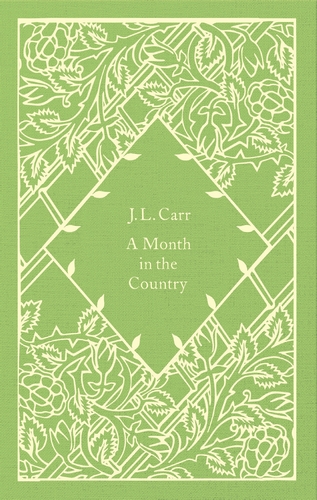
Dawn French: Um I've had a couple of experiences and reading recently as a result of a recommendation by Louise, I listened in the car on the way home to "A Month in the Country".
Liz Smith: Oh, I love A Month in the Country.
Dawn French: Oh, what a book!
Rhianna Dhillon: Yeah.
Dawn French: You know, this man's experience of after the war going into this small village and uncovering this medieval painting, but it's not about that at all, he's in that church and, you know, a a young woman comes in there's lots of funny characters in it, it's very funny.
Jill Taylor: It is very funny.
Dawn French: But the lost opportunities and the wrong people are with the wrong people, and it's just it's heartbreaking, absolutely heartbreaking book. And I listened to it and it's rare that I do do that, but in the car
Rhianna Dhillon: Yeah.
Dawn French: because I'm a bit of a true crime podcast freak, um but I thought, "oh, Louise has said do this, I'll do it," and I was like and stopped at the service stations and had to stay in the car to do more crying, you know, to make the journey last longer so I could hear the whole book, so recently, that.
Rhianna Dhillon: Can you remember the audio book narrator?
Dawn French: Yes, Alex Jennings.
Rhianna Dhillon: Wow. Tip-top. Wonderful.
Dawn French: Tip-top. But the other can am I allowed to say another little tiny one? which is John Berger's collection of stories, I'm always going to get the title wrong, it's something called like "And Our Faces, Photos, Brief as Time", it's called something like that, and it's the most beautiful collection of short stories, and I love short stories, absolutely love them. And there's a story in there about the color of leaves on the inside of a house and on the outside of a house, and I might have stolen a little bit from that idea in my book.
Rhianna Dhillon: Oh, I love that. And also, we always get questions about how to get out of reading slumps and short stories are such a great way of doing that.
Dawn French: Yes, short stories are right, yeah, yeah.
Rhianna Dhillon: So, the title is "And Our Faces, My Heart, Brief as Photos".
Dawn French: Thank you, well done.
Rhianna Dhillon: You're welcome.
Dawn French: That's correct. Well done.
Rhianna Dhillon: Jill?
Jill Taylor: I'm going to choose a marmite one, but for me, it's Middlemarch, and I know some people love this novel, some people loathe it. For me, that kind of reckoning with the life you think that you want for yourself and and wanting a life that is so full of purpose and creativity and love and finding yourself settled into a life that has trapped you in ways you you didn't even know you could be trapped in. It really breaks me, and and I just think it's an extraordinary portrait of a group of characters and the kind of the moment they find themselves living through, but for me it's our heroine and the scales falling off and what it means to then move forward in purpose with life. Mm.
Rhianna Dhillon: Oh, wow. I might read that again. Um Dawn, what is a book that genuinely made you laugh out loud? Jill?
Jill Taylor: Okay, I'm going to look like uh head girl material but it's "The Twa Files" by Dawn French. I'm not I'm not even joking, because like there are classics out there, um I love "Scoop", I love "A Confederacy of Dunces", I love "Cold Comfort Farm". And I wonder if you'll tell the story, but there some times I'll find myself at a really boring meeting and the story of Harry Potter and the Hippo will come into my mind and I will be crying with laughter. And it might be my favorite story that anyone has ever said.
Dawn French: Oh, bless you, bless you.
Jill Taylor: So, can you tell it?
Dawn French: Um, yes. Okay, I played the Fat Lady in Harry Potter and on the day that we I was literally only filming for half a day. And one of the scenes I had to shoot was with a hippo. And the director had asked me if I was okay with animals. I went, "Yeah." And he said, "Because there is a scene with a hippo." And then he kind of shut the door and I went, "What?" What, a hippo, an actual hippo? And I just I was like "Okay, an actual hippo?" And I just thought, "Uh okay, I've said I'm fine with this."
Anyway, we went into on the day, we went into the studio, which was like a great big hangar at Leavesden, and there was a, you know, sawdust on the floor and a big pen, and they led me in there, and the guy who was in charge of the hippo came in, he was quite rude, and he went, "Okay, look, you are look at me, you look at me, you don't move, you do not run. Whatever happens, you do not run." So I thought, "Yeah, okay, okay." Um, and they backed in this lorry, trailer, and they, and he was busy saying to me, "Whatever happens, do not run." And he said, "Now, listen, what you need to know about this hippo, they asked if it could be a female hippo but the only hippo we've got is male, so he may want to mate with you."
What?! "Uh now, the way you will know that he wants to mate with you is because his skin will froth." What?! "So, if you see that happening, alert me, but do not run." So I'm thinking, "Okay, I'm about to be mounted by by a hippo, with frothy skin." Okay, okay, I can do this, I can do this. And I had to hide behind it, right? That was the whole point of the scene. So in they they bring the trailer in and the back of the trailer goes down and my heart is beating like this, I think, "Oh my god, oh god, I just all I want to do is run now."
And out came the hippo and honestly, it was as big as a Labrador. It was very, very small, it was called a dwarf hippo, that's what they brought. And so he brought it up to me, "Okay, okay, I can manage this, I can manage this." And actually, because it was so small, in order to hide behind it, which is what I had to do, I had to be on all fours, on the ground, face-to-face with it like this, looking over the top of it.
But to my eternal regret, because that wasn't so frightening, to my eternal regret, its skin did not froth. So, I have I live with the the regret that I have failed to ignite the ardor of a pygmy hippo. How am I supposed to ignite the ardor of anybody if I can't ignite the ardor of a pygmy hippo? That That's the story she's talking about. Now, let's say the book is full of those. There's a pony club one, there it is my go-to. They are they are all stories of when I've been an idiot, so it's easy to to be funny about being an idiot.
Rhianna Dhillon: Thank you, thank you, Jill. Honey night. To essentially have a live excerpt as well. Yes, like my comfort go-to. Um Dawn, what is a book that you would pass on to the next generation, seeing as we were talking about legacy with "Enough"?
Liz Smith: There is, and it's a very well it's a very old book, but it's a very new book in my world. It is actually 82 years old, this book. And um Miss Taylor on the sofa has been literally banging me over the head with this a thousand-page book for a decade. You know, I work in a lot of backlist publishing, you've got to find a way to do this, and it's called "Forever Amber" and it's by a woman called Kathleen Winsor.
And I'm not a big historical fiction reader, but we are publishing a new series of books called the Mermaid Collection, which are about forgotten female voices, um and so I thought, "Oh, this might be the perfect opportunity." I have now banged on about this book non-stop since I got back from holiday. It is absolutely fantastic. I'm also a bit of a idiot when it comes to history, so I've learned an awful lot, as well. But it's set at the beginning of the Restoration and it's about a woman called Amber St. Clare who is the biggest social climber you will ever meet in your entire life. She lives in the countryside, one of the soldiers is coming through, and she falls in love instantly and sees him as her escape to London. That's the thread of the romance that she wants with and then she follows with an absolute, you know, sort of pistol kind of intensity.
But what you get all the way through, it follows you through the plague, the Great Fire of London, her social climbing via the king's bed, the infighting with the women trying to get into the king's bed is just amazing. The costumes are amazing, the the money she spends as she becomes a duchess and everything she's moving up in society and the secrets she's keeping. It is a thousand pages that just
Rhianna Dhillon: Oh, wow.
Liz Smith: go like that. It's absolutely fantastic, so I thank you. My favorite thing is, one of her I was talking to an agent about this book the other day and she said, "Oh my god, that's the book my mum gave me when I was 18, like 'you're a woman now'."
Rhianna Dhillon: Wow. Passed it over to her like a like a right of passage.
Liz Smith: Um, and so many people of different ages now, every time I mention it, sort of say, "Oh my god, yeah, my grandma loves that book" or "my my mum suggested that to me." So, I thank you, Jillian Taylor. It is my new favorite book. The gift was worth the wait.
Rhianna Dhillon: And then Jill, what about you?
Jill Taylor: So, I'm going to go even older. And I'm going to go with a book called "Le Morte d'Arthur" or "The Death of Arthur" and it's from the 15th century, and it is the original collection of the Arthurian myths. And I brought the the Vinavir translation, which is what everyone should read. But I know so many people have fallen in love with myth cycles recently, the Greek myths, which are absolutely fantastic. But for me, it's the Arthurian myths, and they are they are all of humanity.
And what I love about this book is it it has Arthur and the founding of Camelot, and it has Lancelot, who is the greatest warrior but is so torn apart by self-acknowledging his own insufficiencies as a kind of man and as a human being, and the great betrayal that he enacts upon king and country by falling in love with Guinevere. And for me, it has the most heartbreaking paragraph in English literature, which is Camelot has fallen, the dream is turned to dust, Guinevere has fled to a nunnery, and Lancelot has followed her there, and he kind of says, "Look, this is at an end, we can finally be together, and at least we will have that to take with us." And she she turns him aside and she says, "I I just have to look after myself at this point, and it is my soul, and it is my future, and as much as I love you, this has been too dark, we have to walk away from this." And and it breaks me, and I think it's wonderful.
And I think there's something about the Arthurian myths to me that struggle so much with some of the moralities that we struggle with nowadays about how to be a good person, about what it means to kind of live peacefully and live well. I just think they're the most gorgeous set of stories. And the great fun of this as well, it's written in 14 the 15th century, I think 14 uh 58. And you read it and it's written in Middle English. And if you're a terrible speller like I am, none of the words are ever spelled the same, and you have to kind of read it aloud and it all makes sense, and you think actually actually I know what every word is, I know what everything means, and it was written hundreds and hundreds and hundreds of years ago. And I think that is magic.
Rhianna Dhillon: That's so cool. I mean, Dawn, can you top that?
Dawn French: I've woken up. I've woken up. Completely. Um, Well, I initially started to think about "I Capture the Castle" by Dodie Smith. That that's what I'd pass on to a young person, possibly a young woman, maybe.
Rhianna Dhillon: Yeah.
Dawn French: But really for me, the r- the perfect perfect book is "Stoner".
Rhianna Dhillon: Yeah.
Dawn French: And this came to me, it was reprinted, again we were talking about this earlier, weren't we? It came to me much later than the first time around. I think it was in the '50s I think the first time. Um, it's so beautiful because it is small, it's very tiny. It's about a person's failings or their self-perception of being a very tiny man in a tiny world who just doesn't count, particularly. But inside that failed, kind of skin, lives a very full person who watches everything, who observes everything, who sees love for what it is and sees the paltry love that he's been given by his partner for what that is, actually, and forgives it. It's an interior book.
Rhianna Dhillon: Mhm.
Dawn French: It beautifully written, as you said about sentences, you know, when there are beautiful sentences, I'm just in awe of that completely. And furious.
Rhianna Dhillon: That has been such a wonderful experience listening to all of your recommendations, thank you so much, all three of you.
Jill Taylor: Thank you.
Liz Smith: Thank you.
Dawn French: I just wondering if we get a present? Do we get a present?
Rhianna Dhillon: Oh, yeah. You can have a penguin from that jar, does that count?
Dawn French: Oh, correct! Well done, nicely nicely maneuvered, well done. So she side-eyed the chocolate and then she was desperate like oh my god oh my god. Can I offer you "Enough"? No, I read it. I read it. I'll sign it.
Rhianna Dhillon: Thank you so much, Jill, Liz, and Dawn for all those amazing suggestions, I hope that some of those reading recommendations inspire you to give them a try. If you want more information on any of the books that we've mentioned today, you can find links to all of them in the show notes. And if you have a question for the Ask Penguin team, we have a new Insta handle for the podcast, so do follow us @askpenguinpodcast and message us there. I hope you've enjoyed this episode and you can find lots of other author conversations and of course, book chat on the Penguin podcast feed. Thank you so much for listening and we'll be back very soon. And in the meantime, happy reading. Bye.